
April 24, 2026
How to Watch Your Cravings Pass Like Clouds

The Science Behind Mindfulness-Based Relapse Prevention
Mindfulness-based relapse prevention (MBRP) is an 8-week, evidence-based group program that combines traditional relapse prevention skills with mindfulness meditation to help people in recovery avoid returning to substance use.
Here is what you need to know at a glance:
- What it is: A structured aftercare program blending cognitive-behavioral relapse prevention with mindfulness practices
- Who it is for: Adults who have completed initial substance use treatment and want to maintain recovery
- How it works: Teaches you to notice cravings, triggers, and automatic reactions without immediately acting on them
- How long it takes: 8 weekly sessions of about 2 hours each, plus daily home practice
- Does it work? Yes. Research shows MBRP reduces relapse risk by 54% and heavy drinking by 59% at 6 months compared to standard care
Recovery from a substance use disorder is genuinely hard. Relapse rates after treatment exceed 60%, and for many people, the biggest obstacle is not a lack of willpower. It is the automatic pull of cravings and emotional triggers that happen faster than conscious thought.
MBRP works by slowing that process down. Instead of reacting on autopilot, you learn to pause, observe, and choose. That small shift in awareness can make a significant difference in long-term recovery.
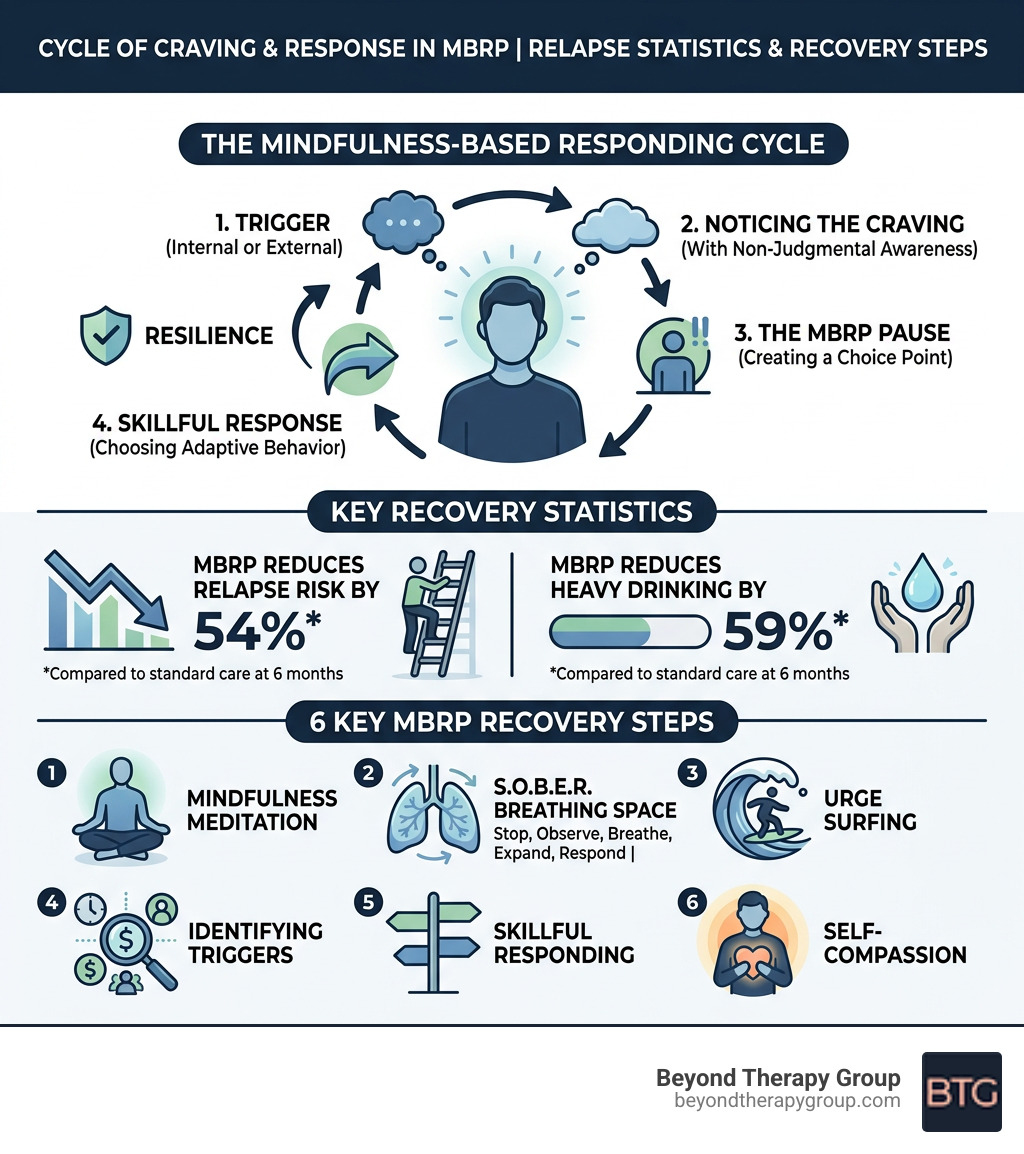
The foundation of mindfulness based relapse prevention lies in the work of G. Alan Marlatt and his colleagues at the University of Washington. Marlatt was a pioneer in the field of addiction treatment who recognized that traditional models often ignored the cognitive and behavioral processes that lead to a lapse. He developed Relapse Prevention (RP) based on Social Cognitive Theory. This theory suggests that our beliefs about our ability to handle high-risk situations (self-efficacy) and our expectations of what a substance will do for us (outcome expectancies) are major players in the recovery process.
In the early 2000s, researchers began integrating mindfulness practices from programs like Mindfulness-Based Stress Reduction (MBSR) and Mindfulness-Based Cognitive Therapy (MBCT) into the RP framework. This evolution was necessary because even when people have the “skills” to say no, they often find themselves relapsing before they even realize they are in danger. This happens because of “automatic pilot.”
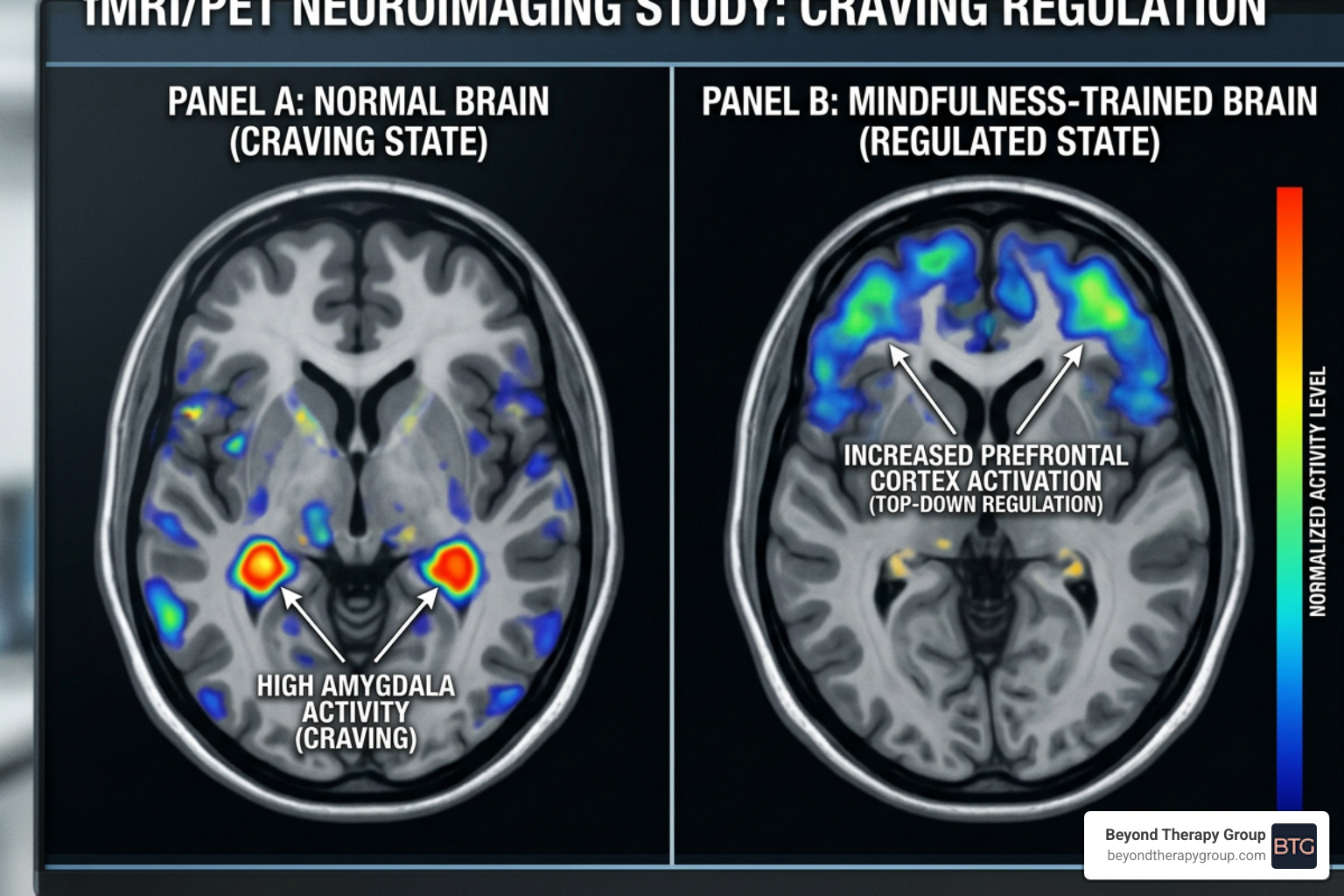
Mindfulness introduces a new way to relate to discomfort. Instead of trying to suppress a craving or run away from a difficult emotion, we learn non-judgmental observation. We stop fighting the feeling and instead observe it as a temporary event in the mind. This shift targets specific process outcomes like craving reduction and improved emotional regulation. By practicing acceptance, we reduce the power that a trigger has over us.
Research indicates that What makes someone relapse? often involves a combination of internal cues like negative emotions and external triggers like social pressure. Traditional RP teaches you to avoid these or use willpower to push through them. MBRP teaches you to sit with the discomfort until it passes on its own. While current research is robust, there are limitations. Many studies have smaller sample sizes or shorter follow-up periods. Future study areas are looking at how to make these gains last even longer and how to tailor the practice for different cultural backgrounds.
Efficacy of Mindfulness-Based Relapse Prevention in Clinical Trials
The evidence for MBRP is compelling. In a large randomized clinical trial (RCT) involving 286 participants, researchers compared Relative efficacy of mindfulness-based relapse prevention, standard relapse prevention, and treatment as usual for substance use disorders. The results showed that at the 6-month follow-up, both MBRP and standard RP significantly reduced the risk of relapse and heavy drinking compared to treatment as usual (TAU).
However, the long-term data revealed a unique advantage for mindfulness. At the 12-month follow-up, participants in the MBRP group reported 31 percent fewer days of substance use compared to those in standard RP or TAU. This suggests that the “mindfulness muscle” takes time to build but provides a more durable defense against relapse over the long haul.
Participants also report high levels of feasibility and acceptability. In one study, 86 percent of participants continued their meditation practice after the 8-week program ended, and over half were still practicing four months later. This shows that people in recovery find these tools genuinely useful and are willing to incorporate them into their daily lives.
Mindfulness-Based Relapse Prevention for Specific Populations
We have seen particularly strong results when looking at Efficacy of mindfulness-based relapse prevention in a sample of veterans. Veterans face unique challenges in recovery. The lifetime prevalence of substance use disorders (SUD) in veterans is about 38.7 percent, which is significantly higher than the 30.8 percent found in the general population. Veterans also often deal with comorbid conditions like PTSD, chronic pain, or depression.
In clinical trials with veterans, MBRP was compared to 12-Step Facilitation (TSF). Both groups showed significant reductions in substance use frequency over a 10-month follow-up. Interestingly, for veterans who struggled with high levels of negative affectivity (frequent negative emotions), MBRP was especially effective. This is because mindfulness promotes approach-based coping. Instead of using a substance to avoid a painful memory or feeling, the veteran learns to approach the experience with curiosity and kindness, which reduces the need to “numb out.”
Core Components and Thematic Practices
MBRP is typically delivered in a group therapy format. This setting is vital because it allows participants to realize they are not alone in their struggles. The standard structure involves 8 weekly sessions, each lasting about 2 hours. Between sessions, we ask participants to engage in home practice using meditation CDs or digital recordings.
| Feature | Mindfulness-Based Relapse Prevention (MBRP) | Traditional Relapse Prevention (RP) | 12-Step Facilitation (TSF) |
|---|---|---|---|
| Primary Goal | Awareness of triggers and responsive choice | Developing cognitive and behavioral coping skills | Engagement in AA/NA and spiritual growth |
| Core Technique | Mindfulness meditation and “urge surfing” | Identifying high-risk situations and role-playing | Working the steps and building a sober network |
| View of Cravings | Temporary mental events to be observed | Cues that require a specific behavioral skill | Symptoms of the disease that require support |
| Format | 8-week structured group | Varies, often 12 weekly sessions | Ongoing meetings and individual sponsorship |
A critical part of the program is the therapeutic alliance. The clinician leading the group must have their own consistent mindfulness practice. You cannot teach someone how to navigate a storm if you have never sat in the rain yourself. This authenticity helps build trust, especially for those who may have felt judged or misunderstood in other treatment settings. We also emphasize Post-treatment and aftercare support for addicts as a bridge between intensive treatment and long-term wellness.
Understanding the nuances of your condition is also helpful. We often discuss Addiction vs dependence: understanding the difference and why it matters to help participants understand the physiological and psychological layers of their recovery.
The Role of Mindfulness-Based Relapse Prevention in Identifying Triggers
Most relapses do not happen out of the blue. They are the result of a chain of events that often starts with “automatic pilot.” This is the state where we move through our day without being truly present. In this state, a trigger can lead directly to a substance use response before we even realize what happened.
MBRP helps you identify high-risk situations by increasing your sensory awareness. Triggers can be external, like a specific neighborhood or a group of friends, but they are often internal. Internal triggers include physical sensations like a tight chest or emotional states like loneliness or anger. We often explore How trauma and unresolved emotional pain contribute to addiction to understand why certain internal cues feel so threatening.
By learning to recognize early warning signs, you can move from a reactive state to a skillful responding state. Instead of the trigger being a command to use, it becomes a piece of information. It tells you that you are feeling stressed or vulnerable and that you need to use your tools. This is also helpful for families who are learning How to recognize early warning signs of substance use in a loved one.
Practical Exercises for Daily Recovery
The true power of mindfulness based relapse prevention is found in the exercises you can use when life gets messy. These are not just “relaxation techniques.” They are training for your brain to handle distress.
- The SOBER Breathing Space: This is a “portable” mindfulness tool you can use anywhere.
- S (Stop): Just pause whatever you are doing.
- O (Observe): Notice what is happening in your body and mind. What are you feeling? What are you thinking?
- B (Breathe): Bring your full attention to the breath for a few moments.
- E (Expand): Expand your awareness to your whole body and the environment around you.
- R (Respond): Choose how to move forward mindfully rather than reacting.
- Urge Surfing: Imagine your craving is like an ocean wave. It starts small, builds to a peak (the crest), and then inevitably breaks and dissipates. Instead of fighting the wave or being swept away by it, you “surf” it. You stay present with the physical sensations of the craving without acting on them, knowing the wave will eventually reach the shore and disappear.
- The Raisin Exercise: This is often the first exercise in MBRP. Participants are asked to eat a single raisin with total focus. You look at it, smell it, feel its texture, and finally taste it slowly. This teaches you how to bring awareness to even the most mundane activities, helping you break out of automatic pilot.
- Body Scan: This involves lying down and slowly moving your attention through every part of your body. It helps you reconnect with physical sensations and learn to tolerate discomfort without needing to “fix” it immediately.
Working with a Substance and alcohol therapist can help you refine these practices. These exercises build self-efficacy. Every time you successfully “surf” an urge, your confidence in your ability to stay sober grows. This is much more effective than just hoping you will have the willpower next time.
Frequently Asked Questions about MBRP
How does MBRP differ from traditional Relapse Prevention?
Traditional Relapse Prevention (RP) is largely focused on “avoid and replace.” It teaches you to identify triggers and then use cognitive-behavioral skills to avoid them or replace the addictive behavior with a healthy one. For example, if you feel stressed, you might be told to go for a run instead of drinking.
MBRP includes those skills but adds a layer of awareness. It focuses on the gap between the trigger and the action. By adding mindfulness, you increase your awareness of the thoughts and feelings that occur in that gap. You learn to accept the presence of a craving without needing to act on it or even distract yourself from it immediately. It is an acceptance-based approach rather than just a change-based approach.
Is MBRP a replacement for 12-Step programs like AA?
Not necessarily. Many people find that MBRP and 12-Step programs complement each other well. 12-Step programs provide a powerful social network and a spiritual framework for many. MBRP offers a secular, meditation-based set of tools that can be used alongside any recovery model.
For some individuals who are averse to the “disease model” or the spiritual elements of AA, MBRP offers a viable alternative that focuses on self-liberation and personal empowerment through awareness. It is about finding the combination of tools that works for your specific life.
Can I practice MBRP exercises at home without a therapist?
While the full 8-week protocol is designed for a group setting led by a trained professional, you can certainly use individual exercises on your own. Tools like the SOBER breathing space and urge surfing are meant to be used in your daily life.
Home practice is actually a core requirement of the 8-week program. We encourage people to use online resources, guided meditation apps, or workbooks to maintain their practice. However, the group dynamic and the guidance of a therapist can be very helpful when you are first learning these skills, as they can help you navigate the “traps” your mind might set for you.
Conclusion
At Beyond Therapy Group, we believe that recovery is not just about stopping a behavior. It is about building a life where you feel empowered and present. Mindfulness based relapse prevention offers a path to sustainable recovery by turning “automatic” reactions into conscious choices. This approach fosters long-term wellness and freedom from the ingrained patterns that keep people stuck in the cycle of addiction.
If you are looking for compassionate aftercare that respects your individual journey, we are here to help. We offer tailored consultations to ensure you find the right fit for your needs. We provide a free 15-minute consultation with our therapists to guide your booking and answer any questions you may have about our approach.
Our locations in Redondo Beach and the South Bay are ready to support you in developing the responsive behaviors necessary for a lasting recovery. You do not have to navigate the waves of craving alone. Whether you are looking for a Substance and alcohol therapist or simply want to learn more about how mindfulness can support your wellness, we invite you to reach out. Your journey toward a more aware and choice-filled life can start today.
Recent Posts


