
August 26, 2026
A Practical Guide to Coping with Anticipatory Grief

Anticipatory Grief Support Before a Loss
Key Takeaways
- Anticipatory grief support can help you cope with grief that begins while a loved one is still alive.
- It is common during terminal illness, dementia, serious medical decline, and major changes in a relationship.
- Feeling sad, anxious, angry, numb, or even relieved does not mean you love your person any less.
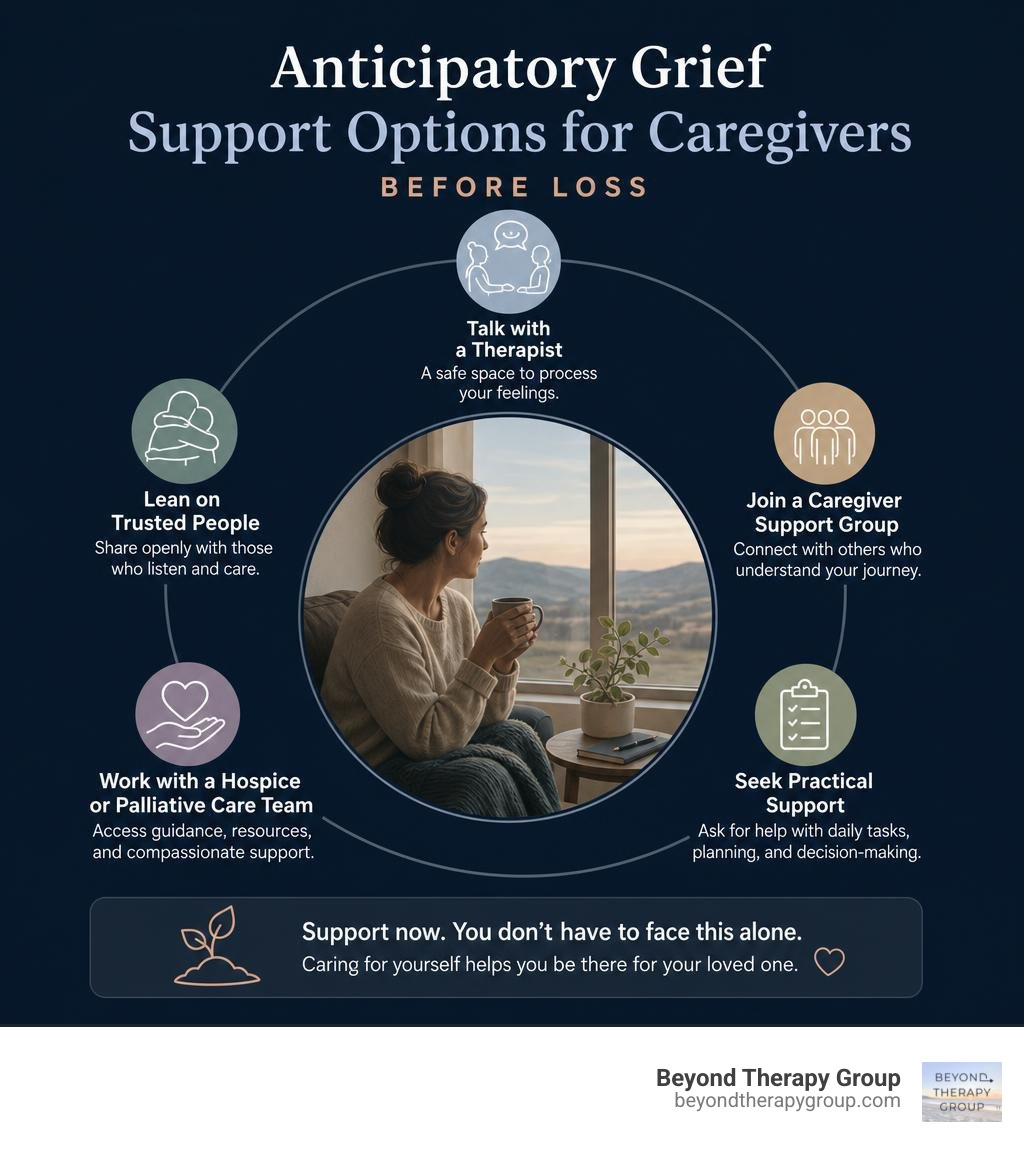
Anticipatory grief support means getting emotional and practical help before an expected loss occurs. It can include talking with a therapist, leaning on trusted people, joining a caregiver support network, or working with a hospice or palliative care team.
For many caregivers, grief starts long before the final goodbye. You may be watching someone change, lose abilities, or become less like the person you knew. At the same time, you may still hope for more time, comfort, or one more good day together.
This can be especially hard for busy professionals already managing work, family, appointments, and daily care. Naming what is happening can be a first step toward feeling less alone. Pre-loss grief is real, and support is available now, not only after a death.
What Is Anticipatory Grief? Understanding Loss Before Death
Grief is usually thought of as something that happens after someone passes away. However, human hearts begin processing loss the moment we recognize that someone we love is facing a serious, irreversible decline. Psychiatrist Erich Lindemann first described anticipatory grief in 1944 while working with families of soldiers deployed to war. He noticed that families were already going through emotional mourning before any actual loss occurred.
Conventional grief occurs after a death has taken place. Anticipatory grief, on the other hand, lives in the space where your loved one is physically present but your future with them is changing rapidly. You might feel grief mixed with hope for good days ahead. It affects your mind and your physical body. Caregivers often report muscle tension, digestive distress, trouble sleeping, exhaustion, and physical aches. To learn more about how pre-loss reactions develop, you can read about understanding pre-loss grief to recognize these early signs.
Key Symptoms and Stages of Pre-Death Grief
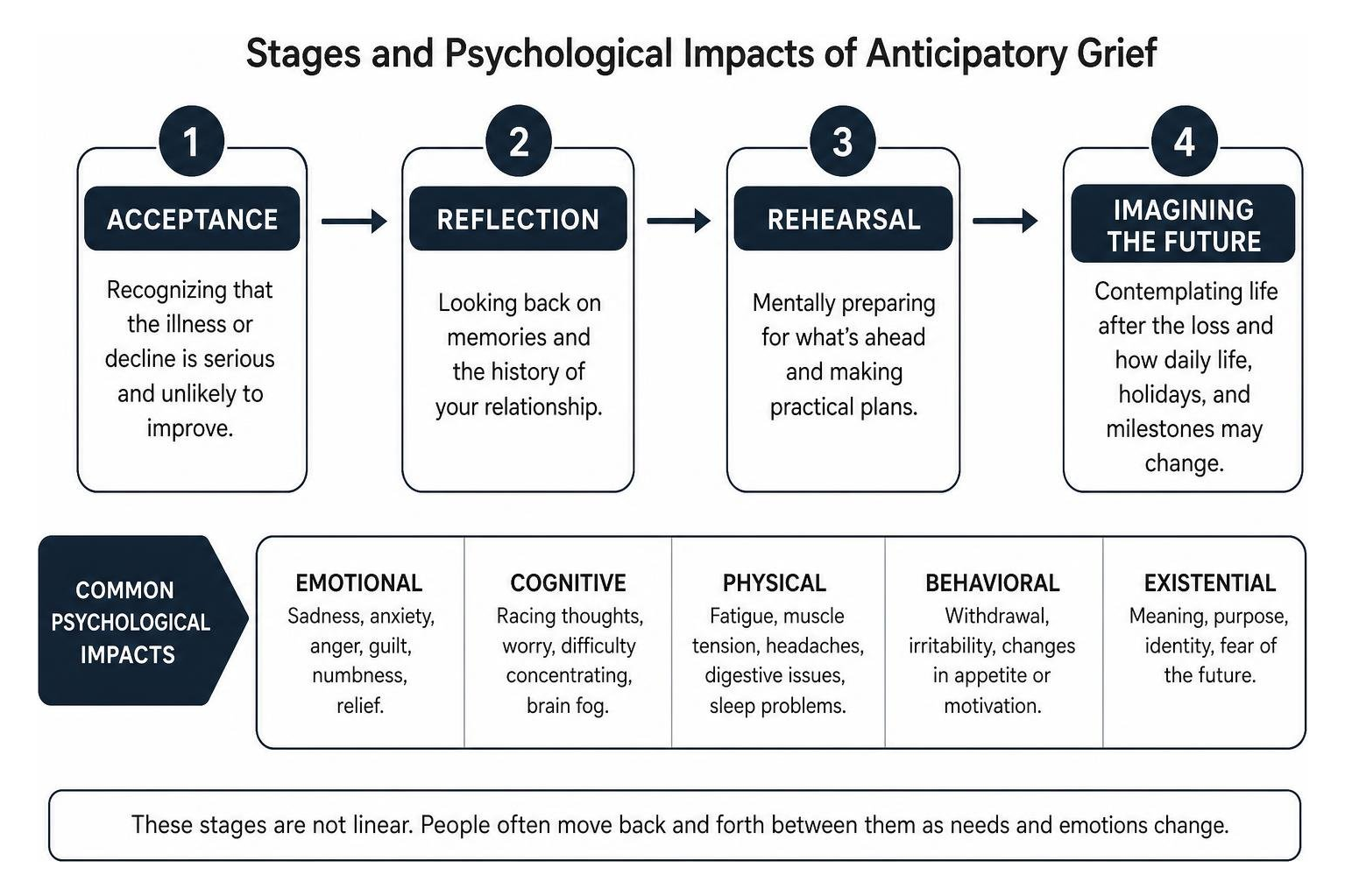
Anticipatory grief often unfolds across distinct emotional stages. These phases are not linear steps that you complete one by one. Instead, people tend to cycle back and forth through them as caregiving needs shift.
- Acceptance: Reaching an intellectual realization that a illness is terminal or that a health condition will not improve.
- Reflection: Looking back on shared memories, reflecting on the history of your relationship, and reviewing past experiences.
- Rehearsal: Mentally running through end-of-life scenarios, phone calls, hospice decisions, or funeral arrangements.
- Imagining the Future: Contemplating what daily life, holidays, and milestones will look like once your loved one is gone.
Physiologically, watching a loved one decline keeps your nervous system on high alert. Neuroscience shows that grief activates brain regions linked to physical pain, such as the amygdala and anterior cingulate cortex. This brain activity explains why caregivers experience sudden spikes of anxiety, unexpected irritability, and persistent brain fog. When you are processing heavy emotions while coordinating medical care, your brain is working on overdrive. You can explore insights on grieving someone who is still alive to understand these physical and emotional responses better.
Non-Death Losses and Ambiguous Loss in Dementia Care
Anticipatory loss is not limited to terminal physical illnesses like cancer. Research indicates that between 50% and 75% of dementia caregivers experience anticipatory grief. Family therapist Pauline Boss introduced the term ambiguous loss to describe situations where a person is physically present but psychologically absent.
When caring for a partner or parent living with Alzheimer’s or memory decline, you experience what many call a goodbye without leaving. You may grieve the gradual loss of their personality, shared jokes, mutual support, and mutual memories. You might also experience non-death losses such as losing financial security, personal independence, career momentum, or long-held retirement plans. Navigating these layered changes requires compassion and specialized guidance. Reading our article on Finding Your Way Through the Fog of Ambiguous Loss can offer deeper clarity on managing this unique type of heartbreak.
The Myth of Early Grieving: Does Grieving Before Loss Make It Easier?
Many caregivers believe a common myth: if I grieve now, it will hurt less later. You might assume that by processing all your sorrow today, you are paying an emotional down payment that spares you from deep pain after your loved one passes away.
Clinical research tells a very different story. A 2016 systematic review of research on caregiving grief found zero evidence that grieving before a loss reduces grief afterward. In fact, studies demonstrated that intense pre-loss grief was linked to harder, more complicated bereavement later on. A large study of over two thousand bereaved caregivers confirmed that high pre-death grief was one of the strongest predictors of prolonged, difficult grief after death. You can review detailed research on anticipatory grief myths to see how evidence-based care addresses these misconceptions.
The Science Behind Pre-Loss Grief and Post-Loss Bereavement
Why does intense pre-loss grief predict harder post-death recovery? When a caregiver experiences severe emotional distress prior to a loss, it often points to overwhelming caregiver burden, severe isolation, lack of support, or chronic trauma. High levels of strain exhaust your physical and psychological reserves long before bereavement officially begins.
In 2022, Prolonged Grief Disorder was formally added to the Diagnostic and Statistical Manual of Mental Disorders (DSM-5-TR). It applies when intense, disabling grief persists beyond 12 months for adults following a loss. Attempting to grieve prematurely to escape future pain does not protect your heart. The goal of anticipatory grief support is not to finish grieving early, but to process current emotions constructively so you can remain present today without destroying your own mental health.
Balancing Hope and Grief During Caregiving
Caring for someone with a life-limiting illness forces you to hold two opposing realities at the same time: accepting that a loss is coming while holding onto hope for the present moment. Coping effectively often means redefining what hope means. Early in a diagnosis, hope might mean wishing for a complete cure. As an illness advances, hope transforms into wishing for a painless afternoon, a good meal together, or a quiet moment of laughter.
Caregivers often struggle with taboo emotions that cause immense guilt. It is normal to feel intense anger at the illness, frustration over lost personal time, or sudden emotional relief when a difficult medical crisis subsides. Feeling relieved does not mean you wanted your loved one to suffer or pass away. It simply means your human nervous system is seeking relief from relentless tension. Normalizing these emotional swings is essential for your well-being.
Finding Effective Anticipatory Grief Support: Strategies for Caregivers and Families

Navigating pre-loss grief requires active coping strategies. Putting your entire life on pause during a prolonged caregiving journey leads directly to burnout. Building sustainable daily routines protects your ability to care for both your loved one and yourself.
- Set firm personal boundaries: Delegate care duties to relatives, friends, or paid aides so you get dedicated daily rest.
- Maintain basic health habits: Prioritize consistent sleep, nourishing meals, gentle physical movement, and outdoor time to calm your fight-or-flight response.
- Acknowledge non-death losses: Give yourself permission to mourn lost hobbies, uninterrupted work hours, or missed social gatherings without self-judgment.
- Keep personal interests alive: Retain at least one hobby or creative outlet that belongs entirely to you.
To explore further ways to regulate your stress, read about anticipatory grief symptoms and coping strategies for daily practical exercises.
Utilizing Professional Anticipatory Grief Support Services
Professional guidance offers a safe, non-judgmental space to unload heavy emotions. Palliative care social workers and hospice care teams provide emotional counseling, disease education, and practical end-of-life logistics beginning at enrollment.
One valuable tool used in professional care is legacy work. Doctor Ira Byock highlights four core phrases that help bring emotional closure and repair relationships before a loved one passes:
- “Please forgive me.”
- “I forgive you.”
- “Thank you.”
- “I love you.”
Engaging in life review conversations, recording audio stories, or looking through photo albums together creates lasting comfort. For comprehensive tools, refer to our Grief Treatment Survival Guide and review medical Bereavement Resources and Services for clinical support options.
Community and Peer-Led Anticipatory Support Networks
Caregiving can be profoundly isolating, especially when friends outside your situation struggle to understand your reality. Connecting with peers who are facing similar end-of-life or caregiving challenges breaks that isolation. Talking openly with people who truly understand provides validation that family members may not be able to offer.
In peer support circles, expressing frustration, grief, or fatigue is met with empathy rather than unsolicited advice. Listening to how others manage caregiver fatigue, doctor communications, and boundary setting offers practical inspiration. To learn more about peer counseling formats, explore our guide on Finding Your Way Back.
When to Seek Professional Mental Health Help
While pre-loss grief is a natural human response, it can sometimes cross the line into severe clinical depression, disabling anxiety, or complicated grief. Knowing when to seek individual professional therapy ensures you do not have to carry an unbearable burden alone.
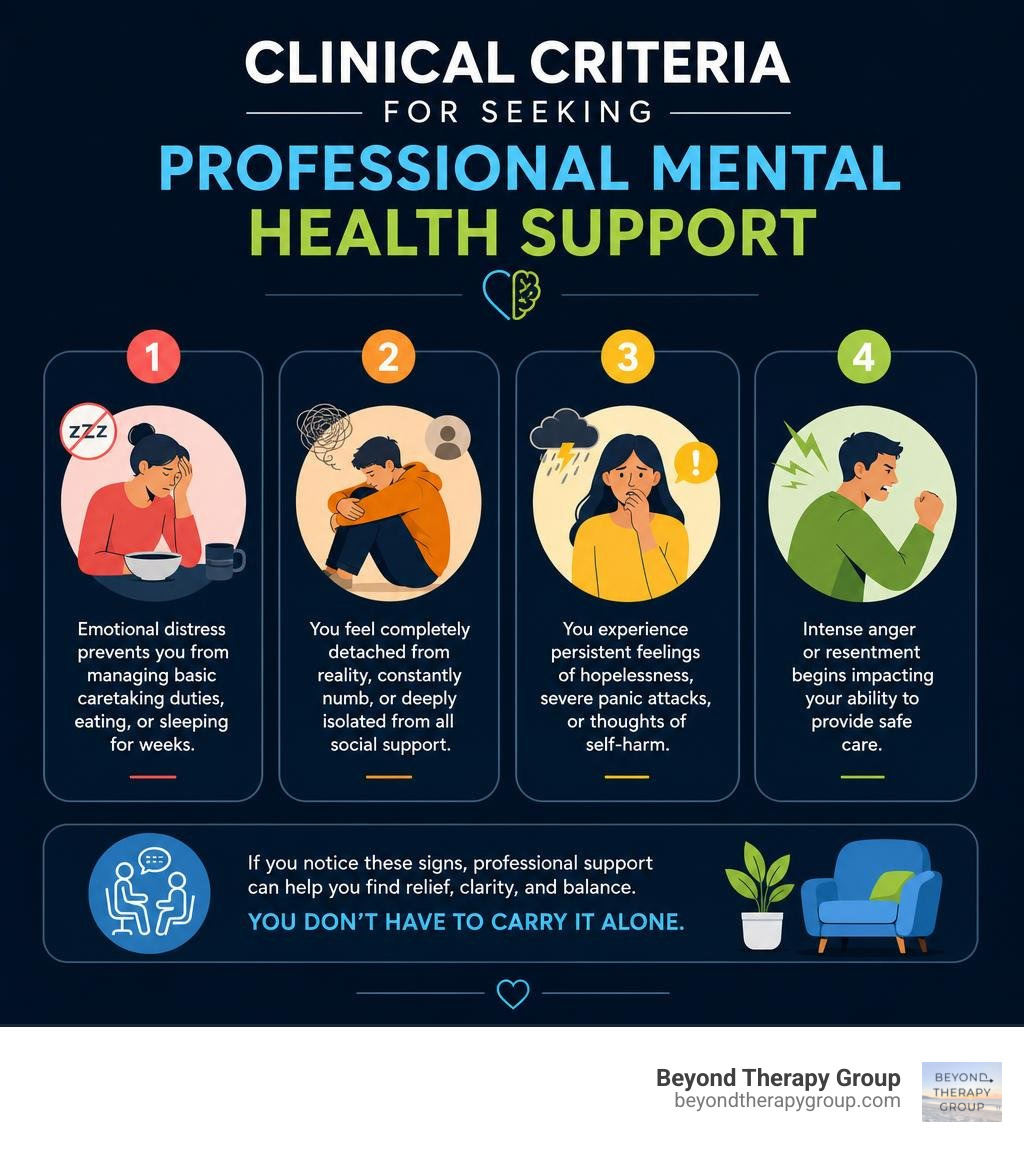
You should consider professional mental health therapy if:
- Emotional distress prevents you from managing basic caretaking duties, eating, or sleeping for weeks.
- You feel completely detached from reality, constantly numb, or deeply isolated from all social support.
- You experience persistent feelings of hopelessness, severe panic attacks, or thoughts of self-harm.
- Intense anger or resentment begins impacting your ability to provide safe care.
If you notice these red flags, professional intervention can stabilize your mental well-being. Check out our resources on Therapy for Anxiety and Depression to learn how clinical therapy helps restore stability.
Evidence-Based Modalities for Managing Pre-Loss Grief
Therapy provides structured, research-backed techniques tailored to pre-loss grief. Different therapeutic modalities help process complex emotions:
- Cognitive Behavioral Therapy (CBT): Helps identify catastrophizing thought patterns, unhelpful guilt, and perfectionist caregiving expectations, replacing them with manageable coping thoughts.
- Acceptance and Commitment Therapy (ACT): Teaches mindfulness techniques to help you accept painful thoughts without judgment while staying aligned with your personal values.
- Meaning-Centered Therapy: Focuses on finding purpose, honoring your relationship history, and preserving dignity during illness.
To understand how these therapeutic techniques are implemented in practice, read our overview on What Is Grief Counseling? Techniques and How It Helps.
Trauma-Informed Approaches and EMDR
Caregivers frequently experience medical trauma. Watching a loved one endure painful procedures, sudden hospital admissions, or shocking diagnoses creates hypervigilance. Caregivers often suffer from scanxiety, a state of intense anxiety triggered by waiting for lab results or scan reports.
Trauma-informed counseling addresses these autonomic nervous system reactions. Eye Movement Desensitization and Reprocessing (EMDR) can help reprocess distressing medical images, emergency room memories, or terrifying health scares so they no longer trigger acute panic. Discover how specialized care can assist you by exploring our page on Trauma-Informed Therapy.
How Friends and Family Can Support Someone Facing Anticipatory Loss

Supporting a friend or family member going through anticipatory loss can feel intimidating. Many people stay away because they fear saying the wrong thing. However, your consistent, practical presence matters far more than having perfect words.
Concrete Ways to Assist Grieving Caregivers
Vague offers like “let me know if you need anything” place the burden of planning back on the exhausted caregiver. Instead, offer specific, tangible assistance:
- Drop off home-cooked meals in disposable containers that do not need to be returned.
- Offer to sit with their loved one for two hours so the caregiver can run errands, get a haircut, or sleep.
- Handle routine chores like mowing the lawn, walking the dog, or picking up groceries.
- Provide transportation or take detailed notes during medical appointments.
- Listen without giving unsolicited medical advice, toxic positivity, or quick fixes.
Communicating with Compassion
When speaking with someone facing pre-loss grief, validate their emotions exactly as they are. Avoid phrases like “at least they lived a long life” or “everything happens for a reason.” Instead, simple statements like “I am so sorry you are going through this heavy time” or “I am here with you” bring genuine comfort.
When children are involved, use concrete, honest language. Avoid confusing euphemisms like “going to sleep,” which can spark severe sleep anxiety. Explain illnesses simply and reassure children that nothing they said or did caused the disease. For teenagers, offer an open dialogue, respect their need for space, and encourage creative emotional outlets.
Frequently Asked Questions About Anticipatory Grief Support
How long does anticipatory grief typically last?
Anticipatory grief does not follow a fixed timeline. It lasts as long as the period of illness or decline continues, which can range from a few weeks in acute illnesses to many years in progressive conditions like dementia. The intensity of symptoms fluctuates based on health updates, caregiving demands, and personal emotional resilience.
What is the difference between ambiguous loss and anticipatory grief?
Anticipatory grief is the overall emotional process of mourning an impending death or loss. Ambiguous loss is a specific type of loss where physical presence remains but psychological presence is lost, such as in advanced dementia or traumatic brain injury. Ambiguous loss often triggers intense anticipatory grief.
Does grieving before a death mean giving up on a loved one?
No. Experiencing grief before a loss does not mean you have given up, lost hope, or love your family member any less. It is a natural emotional preparation mechanism that allows your mind to process difficult realities while continuing to provide care and support in the present.
Conclusion
Coping with pre-loss grief is one of the most emotionally demanding journeys anyone can face. Balancing daily caregiving duties, holding onto moments of connection, and processing future loss takes a massive toll on your physical and mental health. Seeking dedicated anticipatory grief support is not a sign of weakness, but a compassionate step toward protecting your own mental resilience.
At Beyond Therapy, we serve clients across Redondo Beach and the South Bay, offering tailored individual counseling to guide you through complex losses. Our licensed therapists provide compassionate care to help you navigate caregiver burnout, ambiguous loss, and emotional stress. We offer a free 15-minute consultation with therapists to guide booking and answer all your questions. Reach out to our team today or explore our Professional Grief Loss Therapy options to get the guidance you deserve.
Recent Posts