
August 24, 2026
How to Master Grief Counseling Techniques in 7 Days

Key Takeaways
- Grief Counseling vs. Grief Therapy: Grief counseling helps individuals navigate normal, uncomplicated loss, whereas grief therapy addresses complicated or prolonged grief.
- Diverse Grieving Styles: Grief reactions vary widely, ranging from instrumental (task-oriented) to intuitive (emotion-oriented) styles.
- Core Frameworks: Evidence-based care utilizes models such as Worden’s Tasks of Mourning, the Dual Process Model, and Continuing Bonds Theory.
Theoretical Foundations and Typologies of Loss
Understanding how to help someone process loss begins with clear theoretical foundations. We need to evaluate the nature of the loss, the person’s coping style, and how their brain processes separation.
Differentiating Grief Counseling vs Grief Therapy
A common area of confusion is the distinction between grief counseling and grief therapy. We separate these two approaches based on symptom duration, functional impairment, and clinical complexity.
- Grief Counseling focuses on uncomplicated grief. It helps individuals process normal bereavement reactions following a significant death or life change. The primary treatment goals involve validating natural emotions, preventing developmental delays in mourning, and assisting the client as they adjust to a altered reality. You can learn more about these foundational approaches in our guide on What is Grief Counseling? Techniques and How It Helps.
- Grief Therapy involves specialized clinical interventions designed for complicated, prolonged, or traumatic grief. As outlined in A Systems-Based Approach to Supporting Individuals Who Have Experienced Grief and Loss, grief therapy addresses clinical pathology where the natural mourning process has stalled, creating severe emotional distress and functional impairment.
Typologies of Loss and Grieving Styles
Loss takes many forms, and every individual expresses their sorrow uniquely.
- Anticipatory Grief: Occurs before an impending loss, such as when a loved one receives a terminal medical diagnosis. While it allows families to prepare, anticipatory grief does not eliminate post-death emotional pain.
- Disenfranchised Grief: Experienced when a loss is not openly acknowledged, socially validated, or publicly mourned, such as the death of an ex-spouse, an early miscarriage, or an overdose death.
- Ambiguous Loss: Occurs without clear closure or finality, such as caring for a family member with advanced dementia or searching for a missing relative. To explore this dynamic deeper, read our resource on Finding Your Way Through the Fog of Ambiguous Loss.
In addition to the type of loss, individuals demonstrate different grieving styles:
- Instrumental Grieving: Characterized by cognitive problem solving, task accomplishment, and emotional restraint. These individuals process grief by doing, building, or organizing.
- Intuitive Grieving: Expressed through heightened emotionality, explicit weeping, and a need to verbally share feelings.
Effective care requires respecting both styles without assuming an instrumental griever is in denial or an intuitive griever is out of control.
Core Theoretical Frameworks
Modern bereavement care relies on three core evidence-based frameworks to conceptualize the grieving process.
| Framework | Key Developer | Core Mechanisms | Clinical Focus |
|---|---|---|---|
| Tasks of Mourning | J. William Worden | 1. Accept reality of loss 2. Process pain of grief 3. Adjust to world without deceased 4. Maintain enduring connection while moving forward |
Active progression through sequential cognitive and emotional adaptation tasks. |
| Dual Process Model | Margaret Stroebe & Henk Schut | Dynamic oscillation between Loss-Oriented coping (grief work) and Restoration-Oriented coping (new routines/identity). | Balance between confronting loss memories and attending to life changes without getting stuck in either extreme. |
| Continuing Bonds Theory | Dennis Klass | Shifting from relinquishing ties to transforming the bond into a meaningful internal relationship. | Cultivating symbolic connections, legacy work, and memorialization rather than pushing for detachment. |
Attachment systems play a major role here. When a primary attachment figure dies, our internal working model of safety is disrupted. This triggers powerful physiological separation distress that requires time and deliberate care to re-regulate.
Core Evidence-Based Grief Counseling Techniques
Translating theory into practice involves applying structured grief counseling techniques tailored to individual needs.

Cognitive Behavioral Grief Counseling Techniques
Cognitive behavioral methods target the unhelpful thought patterns and avoidance behaviors that keep individuals trapped in emotional pain.
- Cognitive Restructuring: Identifies guilt-based cognitive distortions such as “I should have known” or “It was my fault.” Therapists help reframe these thoughts to reduce self-blame.
- Emotional Regulation Skills: Diaphragmatic breathing, progressive muscle relaxation, and grounding exercises help regulate nervous system arousal during acute grief surges.
- Exposure Therapy and Behavioral Experiments: Systematic guidance helped clients confront avoided places, objects, or conversations. As detailed in the English CBT Grief Manual, controlled exposure reduces phobic avoidance of loss reminders.
Narrative and Meaning-Making Interventions
Narrative interventions assist clients in constructing a coherent story of their loss and discovering transformed life purpose.
- Narrative Retelling: Walking step-by-step through the details of the loss helps integrate painful memories into long-term autobiographical memory.
- Neimeyer Meaning Reconstruction: Explores how the loss impacted the client’s self-concept and core assumptions about the world.
- Identity Integration and Values Clarification: Helps individuals redefine their life purpose, career goals, and personal identity following a major loss.
For clinical application frameworks, review the recommendations in Grief Therapy Techniques: Assessment, Complicated Grief, and Meaning-Making.
Expressive and Experiential Grief Counseling Techniques
When direct verbal dialogue feels overwhelming, expressive techniques provide a useful alternative channel for processing deep emotion.
- Empty Chair Technique: Facilitates a simulated conversation with the deceased to resolve unfinished business, express unspoken affection, or work through unresolved conflict.
- Unsent Letters: Writing letters directly to the lost loved one allows clients to express complex emotions, seek forgiveness, or say goodbye at their own pace.
- Mindfulness and Somatic Grounding: Brings awareness to where physical grief lives in the body, helping clients sit with somatic tension safely.
Assessing and Treating Prolonged Grief Disorder
While most individuals adapt to loss over time, a significant minority experience prolonged, disabling symptoms that require clinical assessment and specialized protocols.
Screening Tools and Diagnostic Red Flags
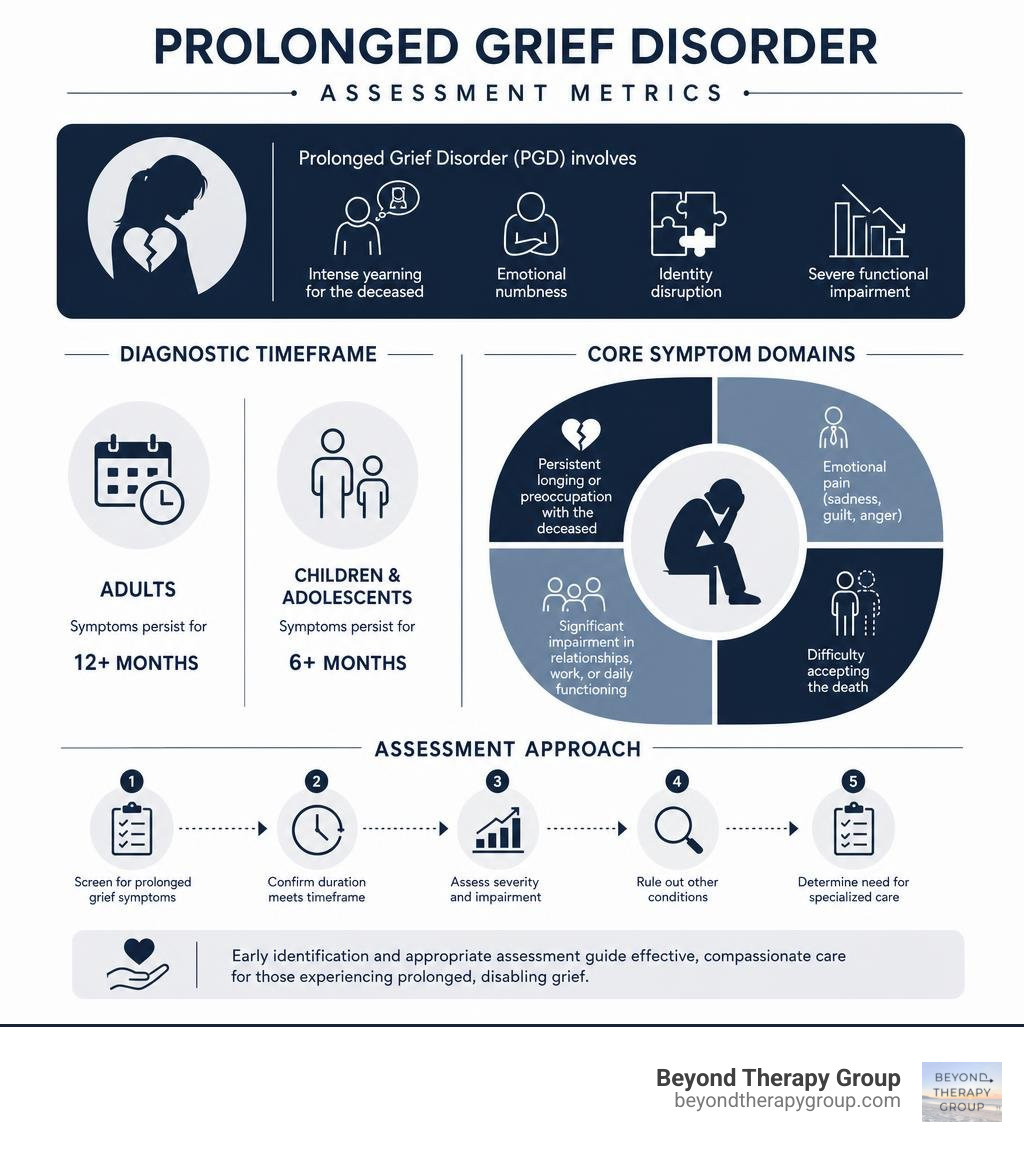
The American Psychiatric Association recognized Prolonged Grief Disorder (PGD) as an official diagnostic entity in 2021. PGD is characterized by intense yearning, longing, or preoccupation with the deceased, accompanied by emotional numbness, identity disruption, and severe functional impairment.
The diagnostic timeframe requires symptoms to persist for at least 12 months in adults and 6 months in children and adolescents.
Standardized screening tools include:
- Brief Grief Questionnaire (BGQ): A 5-item screening tool used for quick clinical evaluations.
- Inventory of Complicated Grief (ICG): A widely validated 19-item rating scale. A score of 25 or higher indicates an elevated risk that warrants formal clinical intervention.
When designing structured care plans, clinicians often consult resources like Creating a Treatment Plan for Grief and Loss | TherapyByPro.
The 16-Session Complicated Grief Treatment Protocol
Complicated Grief Treatment (CGT) is an evidence-based manualized 16-session protocol that achieves response rates near 70% in clinical trials.
As detailed in the research literature, including the Columbia University Center manual Complicated Grief and the protocols published in Complicated grief therapy for clinicians: An evidence-based protocol for mental health practice, CGT balances two key tasks:
- Loss-Focused Procedures: Includes imaginal revisiting of the death narrative and situational exposure to avoided real-world reminders.
- Restoration-Focused Procedures: Focuses on personal aspirational goals, rebuilding social connections, and restoring daily life activities.
Practical Application Across Settings, Populations, and Documentation
Applying grief counseling techniques effectively requires adapting interventions to specific populations and clinical environments.
Adapting Interventions Across Settings and Populations
Grief presents differently depending on age, environment, and therapeutic context:
- Hospice and End-of-Life Care: Focuses heavily on anticipatory grief support, legacy work, and preparing families emotionally for the physical death process.
- Children and Adolescents: Children grieve in bursts, a pattern often described as “puddle jumping.” They may cry one moment and play happily the next. Interventions must rely on age-appropriate play therapy, drawing, and clear, literal language regarding death.
- Telehealth and Online Care: Digital modalities require establishing robust safety protocols while using creative screen-sharing tools for virtual memory boxes, shared journaling, and visual timelines.
For additional clinical perspectives on supportive peer environments, consult The Best Grief Therapy Sessions for Finding Your Way Back.
Clinical Companioning, Rituals, and Defensible Documentation
Alan Wolfelt’s philosophy of companioning emphasizes walking alongside a grieving individual rather than attempting to direct or analyze their path. Clinicians support this process through meaningful symbolic practices:

- Personal Rituals: Lighting a memory candle, dedicating a specific space for reflection, or creating physical memory boxes to honor lost loved ones.
- Defensible Chart Documentation: Documenting grief sessions requires balanced clinical precision. Charts must highlight functional impairment metrics, specific screening tool scores, safety evaluations, and the exact therapeutic modalities utilized, rather than using generic notes like “discussed loss.”
Frequently Asked Questions About Grief Counseling
What is the difference between grief counseling and grief therapy?
Grief counseling provides supportive, short-term care to help individuals navigate normal, uncomplicated bereavement and adjust to life after a loss. Grief therapy involves structured, clinical protocols designed to treat Prolonged Grief Disorder, complicated grief reactions, or severe loss-related trauma.
How do clinicians screen for Prolonged Grief Disorder?
Clinicians screen for Prolonged Grief Disorder using diagnostic criteria from the DSM-5-TR alongside validated rating tools such as the Inventory of Complicated Grief (ICG) or the Brief Grief Questionnaire (BGQ). Diagnosis requires persistent, disabling grief symptoms for at least 12 months post-loss in adults (or 6 months in children) accompanied by functional impairment in daily life.
When is the appropriate time to begin formal grief interventions?
Supportive grief counseling and companioning can begin immediately following a loss to offer emotional containment and practical guidance. However, intensive exposure-based protocols like Complicated Grief Treatment (CGT) are typically initiated after at least 6 months have passed, allowing time for natural adaptation processes to unfold.
Conclusion
Mastering grief counseling techniques requires balancing structured clinical protocols with quiet, compassionate presence. When we build strong theoretical foundations, deploy targeted cognitive, narrative, and expressive tools, and accurately screen for Prolonged Grief Disorder, we offer clients a reliable path through profound emotional loss.
Our team provides compassionate therapy services across Redondo Beach and the broader South Bay area. If you want to expand your clinical toolset or are seeking personalized support for yourself or a loved one, explore our Professional Grief & Loss Therapy options.
We offer a free 15-minute consultation with our therapists to answer your questions and help you navigate the booking process. Reach out to us today to take the next step forward.
Recent Posts