July 9, 2026
Boundaries Worksheet PDF for Adults: Download Guide

Why a Boundaries Worksheet PDF for Adults Can Change Your Relationships
Key Takeaways
- A boundaries worksheet PDF for adults gives you a structured way to identify your personal limits and practice communicating them clearly.
- Over 70% of adults report difficulty setting healthy boundaries in personal or professional relationships.
- Adults who use boundary-setting worksheets regularly report up to a 40% improvement in relationship satisfaction and reduced stress.
- Boundaries are not about controlling others. They are about defining what you will and will not accept.
- You can start today with free downloadable worksheets linked throughout this guide.
Quick Answer: Free Boundaries Worksheets for Adults
Here are the most useful free resources to get started right now:
- Beyond Therapy Boundaries Worksheet PDF
- Beyond Therapy Boundaries Exploration Activity
- Beyond Therapy Guide to Setting Boundaries
A boundaries worksheet PDF for adults is one of the most practical tools you can use to reduce stress and improve your relationships fast.
Think about this: most of us were never taught how to set limits. We learn to say yes when we mean no. We feel guilty for protecting our time. We stay silent when something feels wrong.
As one mental health framework puts it, boundaries are simply the limits and rules we set for ourselves in relationships. They are not walls. They are not selfish. They are how we stay healthy while staying connected to others.
The problem is that knowing you need better limits and actually setting them are two very different things. That gap is exactly where a structured worksheet helps.
A good boundaries worksheet helps you:
- Identify where your limits are weak or missing
- Connect your limits to your personal values
- Practice clear, calm language for difficult conversations
- Build confidence to follow through
This guide walks you through the best free PDF worksheets available, explains the different types of boundaries, and gives you step-by-step instructions for using them effectively.
Whether you are dealing with a demanding job, a difficult family relationship, or just a feeling that everyone else’s needs come come before yours, this guide is for you.
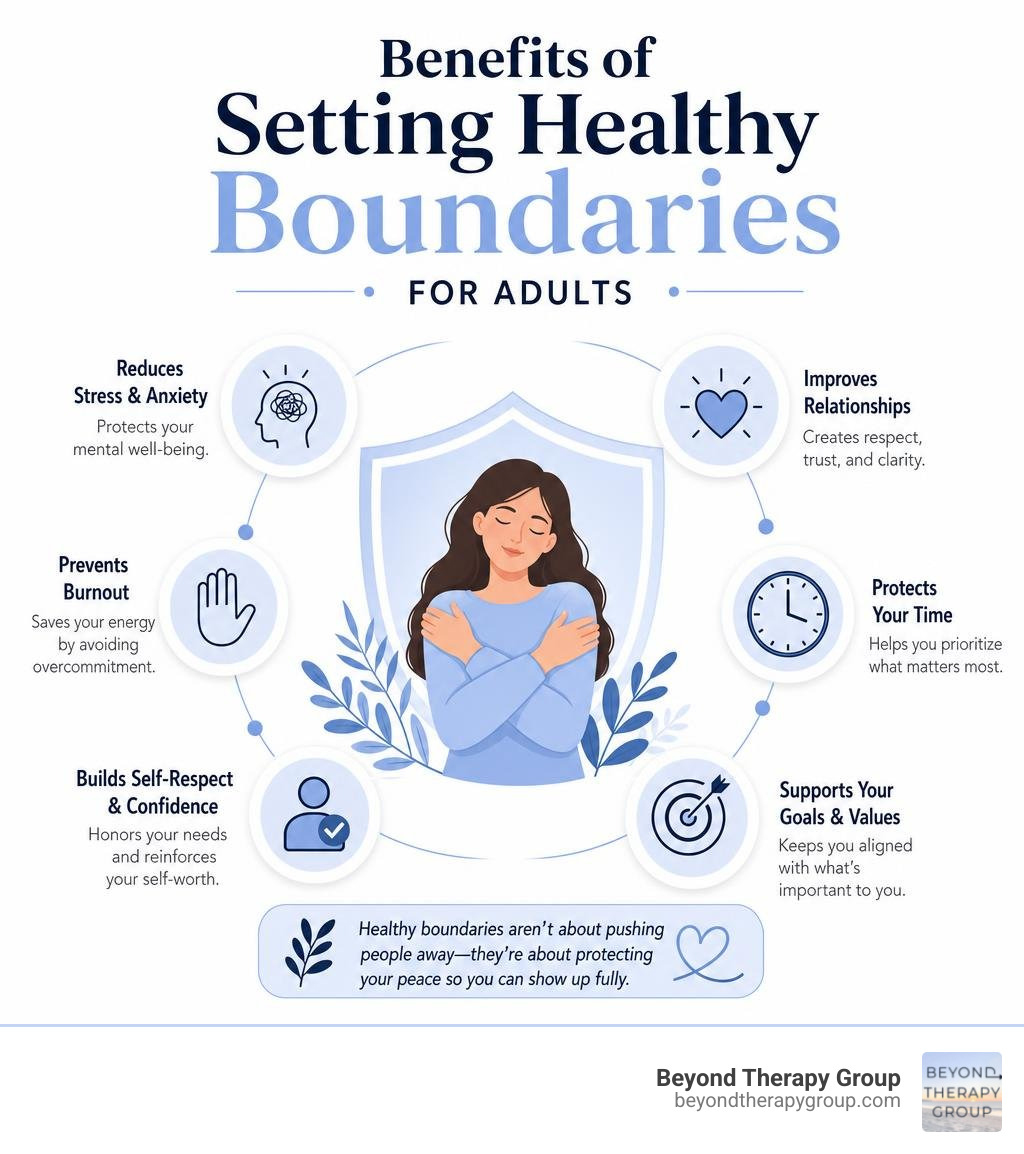
Boundaries worksheet pdf for adults terms to remember:
What Are Boundaries and Why Do Adults Need Them?
Many adults view boundaries as restrictive. In reality, they are a life-enhancing system of yeses and noes that protect your individuality while allowing for true connection. Good, generous people set boundaries so they can give what they want without depleting themselves.
Setting boundaries is a fundamental component of self-care and mental health. When you lack clear limits, you essentially leave the door to your life wide open, allowing other people’s demands, moods, and expectations to dictate your daily experience. This path leads straight to chronic stress and low self-esteem.
According to psychological research, over 70% of adults struggle with boundary-setting in their personal or professional lives. Yet, those who regularly use a boundaries worksheet pdf for adults report a 40% improvement in relationship satisfaction and a significant drop in their daily stress levels.
By defining your limits, you teach others how to treat you. You establish the emotional and physical space you need to maintain your personal identity and autonomy. To explore this concept further, you can read our Ultimate Checklist for Healthy Boundaries to assess where you currently stand.
The 7 Types of Personal Boundaries
To set effective limits, you must first understand that boundaries are not one-size-fits-all. They must be adjusted based on the person, the place, and the time. What feels perfectly fine with your partner on a weekend might feel completely inappropriate with a colleague at work.
Here are the seven main types of boundaries you can explore using a boundaries worksheet pdf for adults:
1. Physical Boundaries
These protect your personal space, physical touch, and physical needs like rest, food, and water. A physical boundary might look like telling a colleague who stands too close, “I need a little more personal space, please,” or choosing to decline a hug when you prefer a handshake.
2. Emotional Boundaries
These protect your internal emotional energy and separate your feelings from the feelings of others. They prevent “emotional dumping,” where a friend or family member unloads their stress onto you without asking if you have the capacity to listen. Setting an emotional boundary means knowing where your feelings end and someone else’s begin.
3. Digital Boundaries
In our highly connected world, digital boundaries are crucial for mental well-being. They govern your availability online, on social media, and via text. Examples include turning off work notifications after 6:00 PM, choosing not to respond to non-urgent texts instantly, or unfriending accounts that trigger anxiety.
4. Financial Boundaries
These protect your money, assets, and financial choices. A financial boundary involves saying no to lending money you cannot afford to lose, refusing to participate in expensive social outings that do not fit your budget, or expecting partners to contribute equally to shared expenses.
5. Sexual Boundaries
These protect your consent, comfort levels, desires, and sexual health. They involve clear communication about what you are and are not comfortable with in an intimate relationship. Setting healthy sexual boundaries ensures that intimacy is always based on mutual respect and safety.
6. Intellectual Boundaries
These protect your thoughts, ideas, and beliefs. Respecting intellectual boundaries means acknowledging that others have a right to their own opinions, even if you disagree. It also means choosing not to engage in highly contentious conversations with people who dismiss or belittle your beliefs.
7. Time Boundaries
These protect how you spend your hours and energy. Since time is a limited resource, setting time boundaries is essential to prevent burnout. This might involve declining an extra project at work to prioritize family time, or limiting the duration of a phone call with a demanding relative.
For a deeper dive into how these apply to your daily interactions, check out our Relationship Boundaries List: Complete Guide.
How to Use a Boundaries Worksheet PDF for Adults to Identify Weak Limits
How do you know if your boundaries are weak, rigid, or healthy? A boundaries worksheet pdf for adults helps you analyze your current relationship patterns.
Generally, boundaries fall into three categories:
- Rigid Boundaries: You keep everyone at a distance to avoid vulnerability. You rarely ask for help, and you may seem cold or detached.
- Porous (Weak) Boundaries: You get over-involved in other people’s problems. You say yes to avoid rejection, accept unwanted treatment, and constantly fear what others think of you.
- Healthy Boundaries: You value your own opinions, do not compromise your values for others, and are comfortable saying no while remaining open to close relationships.

When boundaries are continuously violated, your mind and body will send clear warning signs. These include:
- Feeling constant resentment toward friends, family, or coworkers
- Experiencing physical and emotional burnout
- Avoiding specific people or social situations out of dread
- Feeling like a victim or martyr in your relationships
- Losing your sense of self-identity
To begin identifying where your limits are weak, download the Beyond Therapy Boundaries Worksheet PDF. This tool will guide you through a series of self-reflection prompts to pinpoint exactly where you need to draw firmer lines. For more context on this process, you can read A Comprehensive Guide to Defining Personal Boundaries.
Step-by-Step Guide to Setting and Communicating Healthy Boundaries
Once you have identified where your limits are lacking, the next step is communication. Setting boundaries is not about issuing angry ultimatums; it is about clearly and calmly stating what you need.
Finding the Right Boundaries Worksheet PDF for Adults for Your Needs
A great way to start is the visual circle method. Draw a large circle on a piece of paper. Inside the circle, write down everything and everyone that makes you feel safe, relaxed, and supported. On the outside of the circle, write down the influences, behaviors, or people that leave you feeling drained, stressed, or uncomfortable.
This simple visual exercise helps you see exactly where you need to build protective walls. You can find a guided version of this exercise in the Beyond Therapy Boundaries Exploration Activity.
Practicing Assertive Scripts with a Boundaries Worksheet PDF for Adults
The hardest part of boundary work is speaking up. When you communicate a boundary, keep it simple, direct, and focused on your own needs. Do not debate, defend, or over-explain your decision.
Using “I” statements is incredibly effective because it focuses on your personal response rather than blaming the other person. Here are a few scripts you can practice:
- Workplace: “I want to do a great job on this, but my plate is currently full. I can look at this next week, or we can discuss which of my current tasks to deprioritize.”
- Family: “I love spending time with you, but I need to handle this situation on my own. I will let you know if I need advice.”
- Social: “Thank you for the invitation, but I need some quiet downtime this weekend, so I will have to pass.”
To practice these scripts and build your confidence, use the Beyond Therapy Guide to Setting Boundaries. You can also master these skills by reading our article on How to Master Assertive Boundary Setting in 5 Easy Steps.
Overcoming Challenges and Maintaining Boundaries Over Time
When you start setting boundaries, expect pushback. People who are used to you always saying yes may react with anger, guilt-tripping, or resistance. This is completely normal.
Common barriers to maintaining limits include:
- Fear of Rejection: Worrying that people will walk away if you say no.
- Guilt: Feeling like a bad friend, partner, or child for prioritizing your own well-being.
- Confrontation Anxiety: Fearing the discomfort of a difficult conversation.
To overcome these challenges, you must back up your words with action. A boundary without a consequence is just a suggestion. If someone repeatedly ignores your limits, you must enforce a pre-planned consequence.
For example, if a family member continues to bring up a toxic topic during dinner, a healthy consequence is: “If we continue to discuss this, I am going to leave the table.” If they continue, you must calmly get up and walk away. Consistency is the key to making boundaries stick.
For support in navigating highly challenging or manipulative dynamics, read our guide on Drawing the Line with Toxic and Controlling Partners.
Frequently Asked Questions about Personal Boundaries
What are the signs that my boundaries are being violated?
The most common signs are internal. If you feel a sudden wave of resentment, anger, or dread when interacting with someone, your boundaries are likely being crossed. Physical symptoms like tension headaches, fatigue, or a knot in your stomach when a certain person calls are also strong indicators.
How do I set boundaries without feeling guilty?
Boundaries are a form of self-care, not a punishment for others. Setting limits actually helps relationships grow by making your needs clear and predictable. When you say no to things that drain you, you are saying yes to your own mental health and well-being.
Where can I find additional free boundary worksheets?
In addition to our resources, you can find high-quality, evidence-based worksheets on reputable clinical resource websites. Some of the most popular external downloads include:
- Healthy Boundaries Worksheet – Free PDF Download | Pabau
- Boundaries Worksheet: For Adults & Kids | SimplePractice
- How to Set Healthy Boundaries
- Boundaries Exploration | Worksheet | Therapist Aid
- [PDF] Building Boundaries Worksheet – Mental Health America
- [PDF] Setting Healthy Personal Boundaries
- What are Boundaries? | Worksheet – Therapist Aid
- [PDF] Boundary Setting Toolkit – UC Davis CARE
Conclusion
Learning to set and maintain healthy boundaries is a journey that takes time, patience, and practice. While worksheets are an incredible starting point, deep-seated relational patterns can sometimes be difficult to untangle on your own.
At Beyond Therapy, we specialize in helping adults navigate relationship dynamics, build self-esteem, and master the art of assertive communication. If you live in Redondo Beach or the surrounding South Bay area and are ready to reclaim your time, energy, and peace of mind, we are here to support you.
We offer a free 15-minute consultation with our therapists to help guide your booking and answer any questions you may have about relational therapy.
Take the first step toward healthier, more fulfilling relationships today. Schedule a consultation with our experienced team.
Recent Posts


