April 2, 2026
Quick Therapist Matching: From Consultation to Booking

What It Means to Book Therapy After Consultation
Book therapy after consultation is the process of moving from an initial therapist meeting into a structured, ongoing plan that may include personalized book recommendations as part of your healing journey.
Here is a quick overview of what this looks like in practice:
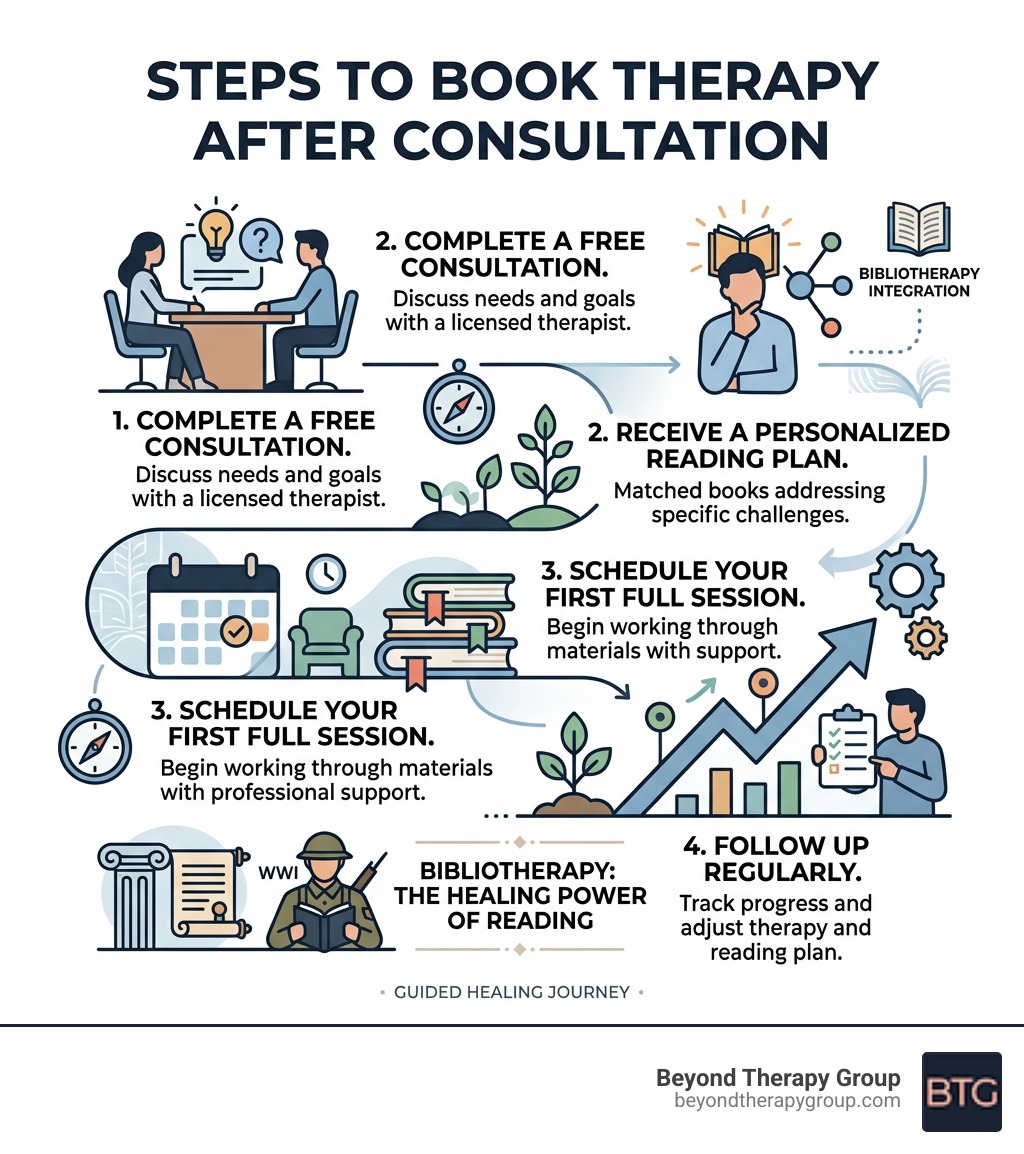
- Complete a free consultation with a licensed therapist to discuss your needs and goals
- Receive a personalized reading plan with books matched to your specific challenges
- Schedule your first full session to begin working through those materials with professional support
- Follow up regularly to track progress and adjust your reading and therapy plan
This approach combines the proven benefits of talk therapy with the healing power of reading, sometimes called bibliotherapy. It is practical, flexible, and well suited for busy people who want more than just a one-time conversation.
The idea is not new. From ancient Egypt, where Pharaoh Ramses II’s library was inscribed with the words “house of healing for the soul,” to World War I soldiers prescribed Jane Austen novels to ease trauma, prescribed reading has long been recognized as a legitimate path to mental wellness.
I’m Rodman Walsh, LMFT, a Licensed Marriage and Family Therapist based in Redondo Beach, CA, with experience across mental health, trauma recovery, and substance use treatment at multiple levels of care. My work with individuals, couples, and groups gives me a grounded perspective on how to book therapy after consultation in a way that creates real, lasting change. In the sections below, I’ll walk you through everything you need to know to take that next step with confidence.
Understanding Bibliotherapy and the Power of Prescribed Reading
Bibliotherapy is a specialized form of art therapy that uses the power of storytelling to help people heal. We often think of therapy as only talking, but the relationship between a reader and a book can be just as transformative. When we read a story that mirrors our own struggles, we start to feel less alone. This is the core of what we do when you book therapy after consultation with a focus on literary healing.
The difference between this and traditional talk therapy lies in the tools we use. In standard talk therapy, the primary tool is the conversation between you and your provider. In bibliotherapy, we use a curated book prescription to act as a catalyst for deeper reflection. This method has deep historical roots. Ancient libraries were often seen as medicinal spaces. During World War I, doctors used books to help soldiers deal with what we now call PTSD. They found that reading provided a safe way for soldiers to process horrific experiences.
When you engage in Trauma-Informed Therapy, books can help you reach a state of emotional catharsis. This is a fancy way of saying that a book helps you release built up feelings. You might cry when a character finds peace or feel a surge of hope when they overcome an obstacle. We also encourage literary journaling. This involves writing down your thoughts as you read. It helps you stay mindful and strategic about your reading choices. We believe that since most people only read about two thousand books in a lifetime, every choice should be meaningful.

How to Book Therapy After Consultation for Lasting Growth
The transition from a quick chat to a full clinical relationship is a big step. We want to make sure the matching process is as smooth as possible. When you look to book therapy after consultation, you should consider the qualifications of your therapist. In our Redondo Beach and South Bay communities, we ensure that our providers are licensed and vetted. They bring years of experience to the table to help you navigate life’s hurdles.
One of the most important factors in your success is the therapeutic alliance. This is the bond you form with your therapist. Research shows that this bond is often more important than the specific type of therapy used. You should trust your gut feeling after the initial meeting. If you felt heard and understood, that is a great sign. If you felt a lack of connection, it is okay to keep looking. We offer a free 15 minute consultation to help you avoid decision fatigue. You can ask about our Therapy Services and see if our approach matches your needs.
We also discuss logistics during this time. How often will we meet? What communication modes work best for you? Some people prefer video calls while others like in person sessions in our South Bay offices. We also look at your specific goals. If you are seeking Therapy for Anxiety and Depression, your plan will look different than someone seeking help for a career transition. The goal is to create a personalized roadmap that makes sense for your life.
The Step-by-Step Guide to Book Therapy After Consultation
The process of moving forward is very structured to ensure you get the best care. It usually starts with a questionnaire. We ask about your reading habits, your current life situation, and what you hope to achieve. This helps us understand your unique “book dilemma.”
Next, we hold a 45 minute video call or in person meeting. This is where we dive deeper into your history. We talk about the stories that have shaped you and the challenges you face today. After this meeting, we provide a personalized book prescription. This is not just a random list of titles. It is a curated selection of books with brief explanations of why each one was chosen for you.
The therapy then moves through three distinct stages:
- The Identification Stage. You connect with a character or a specific text. You see your own struggles reflected on the page.
- The Catharsis Stage. You experience an emotional release as you follow the narrative arc of the book.
- The Insight Stage. You work with us to consolidate what you have learned. You take the lessons from the book and apply them to your own life.
Finally, we schedule follow up sessions. These sessions allow us to check in on your progress and adjust the reading list as your needs change.
Why You Should Book Therapy After Consultation Without Delay
Momentum is a powerful thing in mental health. When you have already taken the first step of a consultation, your motivation is at its peak. If you wait too long to book therapy after consultation, that energy can fade. By moving forward quickly, you solidify the therapeutic alliance we have started to build.
Setting goals early helps you stay focused. When we have a plan in place, every session feels like it has a purpose. We can allocate resources effectively and provide immediate support for the things that are weighing on you. Whether you need Relationship and Relational Therapy or individual support, having a clear path forward reduces the stress of the unknown. A personalized roadmap gives you a sense of control over your healing journey.
Essential Book Recommendations for Trauma and Anxiety
Our therapists often have a “must have” shelf in their offices. These books are frequently prescribed because they offer profound wisdom and practical tools. If you are dealing with trauma, we often look to landmark texts that explain how the mind and body respond to stress.
One essential read is Trauma and Recovery by Judith Herman. This book is a staple for understanding childhood trauma and adult experiences. It is a heavy read but it is incredibly real and validating for survivors. For those searching for meaning in the face of suffering, we highly recommend Man’s Search for Meaning by Viktor Frankl. Frankl shares his experience in concentration camps and explains his theory of logotherapy. It is a powerful reminder of the human spirit’s resilience.
If you are a new therapist or someone interested in the mechanics of the process, The Gift of Therapy by Irving Yalom is a beautiful guide. It is packed with wisdom and human moments that make therapy feel less intimidating. For managing anxiety, The Happiness Trap by Russ Harris is a game changer. It uses Acceptance and Commitment Therapy (ACT) to help you stop fighting your thoughts and start living your life.
We also emphasize the importance of being kind to yourself. Self-Compassion by Kristin Neff is a wonderful resource for anyone who struggles with self judgment. It teaches you how to actively love yourself rather than just trying to stop being hard on yourself. These books are excellent adjuncts to Professional Grief Loss Therapy or any other clinical work we do together.
Ethical Considerations and Professional Boundaries
Maintaining professional boundaries is a cornerstone of safe therapy. This is especially true when we talk about the termination process. Termination is the planned end of our work together. It is a time to review your progress and ensure you have the tools to continue on your own. We follow strict ethical standards to protect our clients.
One of the most important rules involves post therapy relationships. Psychotherapy is very different from general healthcare in this regard. There are often long prohibitions on personal or sexual relationships after therapy ends. In some places, this can be as long as seven years. This is because the power differential in therapy is significant. Even after sessions stop, the influence of the therapist remains. We take these boundaries very seriously to prevent any risk of client exploitation.
Social media also presents new challenges. We generally refrain from connecting with former clients on platforms like Instagram or LinkedIn. This helps keep the professional nature of our work intact. If you are curious about how these boundaries help, you can read more about Relational Therapy: How it Helps. Proper termination also includes discussing future needs and providing referrals if necessary. We want you to feel supported even as you transition out of regular care. If you are dealing with a loss, understanding What is Grief Counseling Techniques and How it Helps can provide clarity on how we manage these sensitive transitions.
Frequently Asked Questions About Bibliotherapy
What is the difference between bibliotherapy and talk therapy?
Traditional talk therapy focuses primarily on the verbal exchange between the client and the provider. Bibliotherapy adds a third element to the room: the book. We use specific fiction or non fiction texts to help you identify with characters and gain new perspectives. It is a more structured way to engage with your emotions through the power of storytelling.
How much does a bibliotherapy consultation cost?
While we do not list specific prices here, we can tell you that bibliotherapy is often a very cost effective addition to mental health care. Many people find that having a “prescription” of books to work through on their own time makes their paid sessions more productive. During our free 15 minute consultation, we can discuss how this fits into your budget and your overall treatment plan.
Is it easy to book therapy after consultation?
Yes, we make the process as simple as possible. Once you have had your initial meeting, you can use our online scheduling tools to book therapy after consultation. We check for therapist availability in real time so you can find a slot that fits your busy life in Redondo Beach or the South Bay. Our goal is to remove the barriers that keep you from getting the help you deserve.
Conclusion
At Beyond Therapy Group, we believe that your mental health journey should be as unique as you are. Whether you are looking for traditional support or want to explore the healing power of books, we are here to guide you. Taking the step to book therapy after consultation is a brave move toward a happier and more fulfilling life.
Our team in Redondo Beach and the South Bay is committed to providing expert guidance tailored to your specific needs. We offer a free 15 minute consultation to answer your questions and help you find the right match. You do not have to navigate your challenges alone. Let us help you turn the page and start a new chapter of healing. For More info about therapy services, please reach out to us today.
Recent Posts