
March 30, 2026
Inside the Session: How Alcohol Counseling Works

What Are Alcohol Counseling Sessions and How Do They Work?
Alcohol counseling sessions are structured meetings with a trained mental health professional that help you understand your drinking patterns, identify what drives them, and build real skills to change.
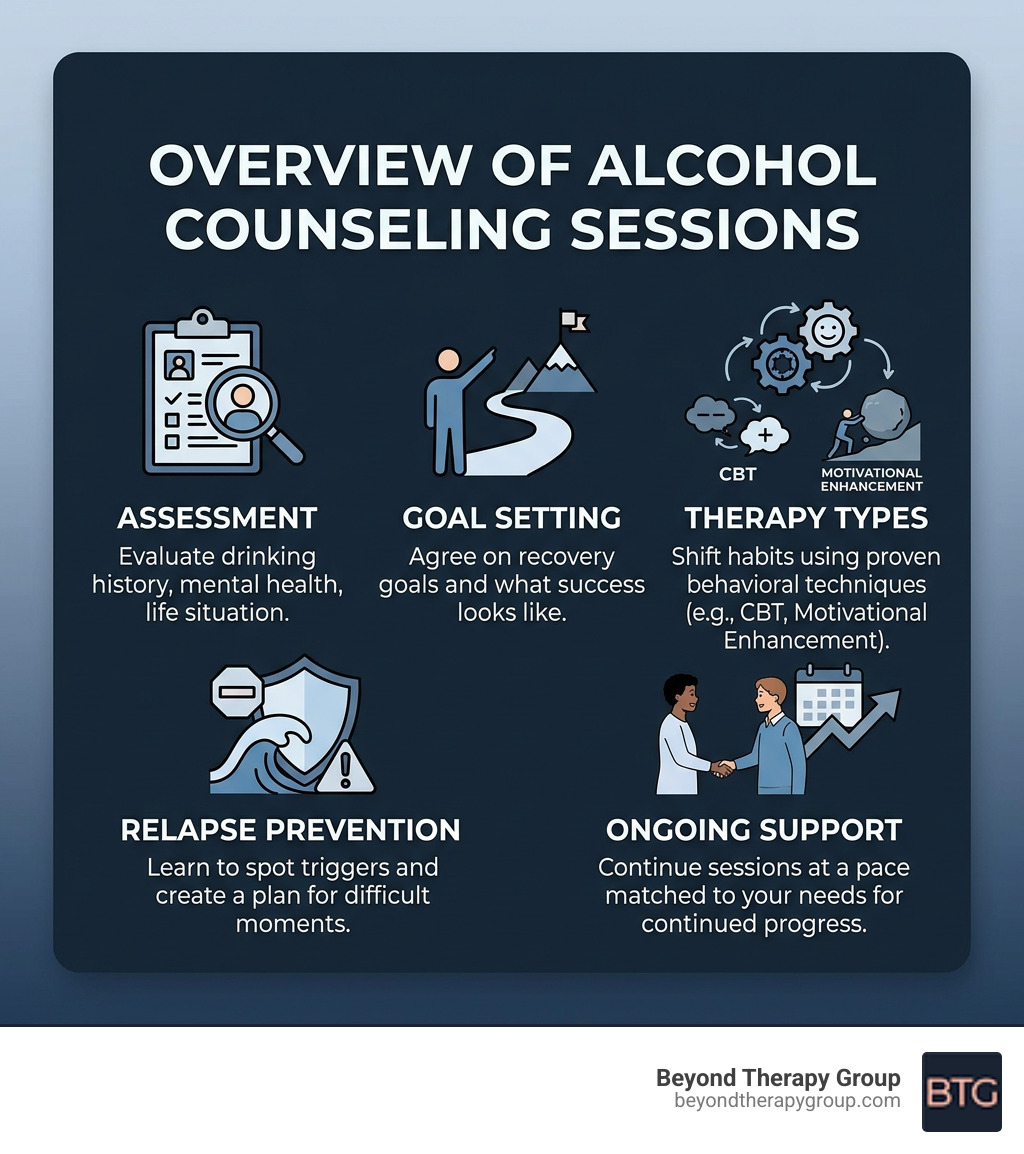
Here is a quick overview of what they typically involve:
- Assessment where a counselor evaluates your drinking history, mental health, and life situation
- Goal setting where you and your counselor agree on what recovery looks like for you
- Behavioral therapy using proven techniques like CBT or Motivational Enhancement Therapy to shift habits
- Relapse prevention where you learn to spot triggers and plan for difficult moments
- Ongoing support with sessions continuing at a pace matched to your needs, often one to two times per week
Millions of adults in the United States live with alcohol use disorder (AUD), yet most never get help. Part of the reason is not knowing what treatment actually looks like. The truth is that alcohol counseling is not about being lectured or judged. It is a collaborative process focused on your goals and your life.
Whether you are drinking more than you want to, noticing it affect your work or relationships, or simply curious about your options, counseling gives you a clear starting point.
I am Rodman Walsh, LMFT, a Licensed Marriage and Family Therapist with direct experience providing alcohol counseling sessions across multiple levels of care, from intensive outpatient programs to private individual therapy. That background shapes everything you will read in this guide.
Introduction
Alcohol Use Disorder (AUD) is a medical condition characterized by an impaired ability to stop or control alcohol use despite adverse social, occupational, or health consequences. It is a chronic relapsing brain disorder that affects millions. In fact, approximately 1 in 10 children in the United States live in a home with at least one parent who has AUD. This highlights how the impact of alcohol reaches far beyond the individual.
The core of recovery often lies in behavioral change. This is not just about stopping a habit but about rewiring how the brain responds to stress and social cues. Understanding the nuances of your relationship with substances is vital. For instance, knowing the difference between Addiction vs Dependence: Understanding the Difference and Why It Matters can help you navigate the clinical side of your treatment plan more effectively. If you want a broader public health overview, the National Institute on Alcohol Abuse and Alcoholism offers research based information on alcohol use, treatment, and recovery.
What to Expect in Your First Alcohol Counseling Sessions
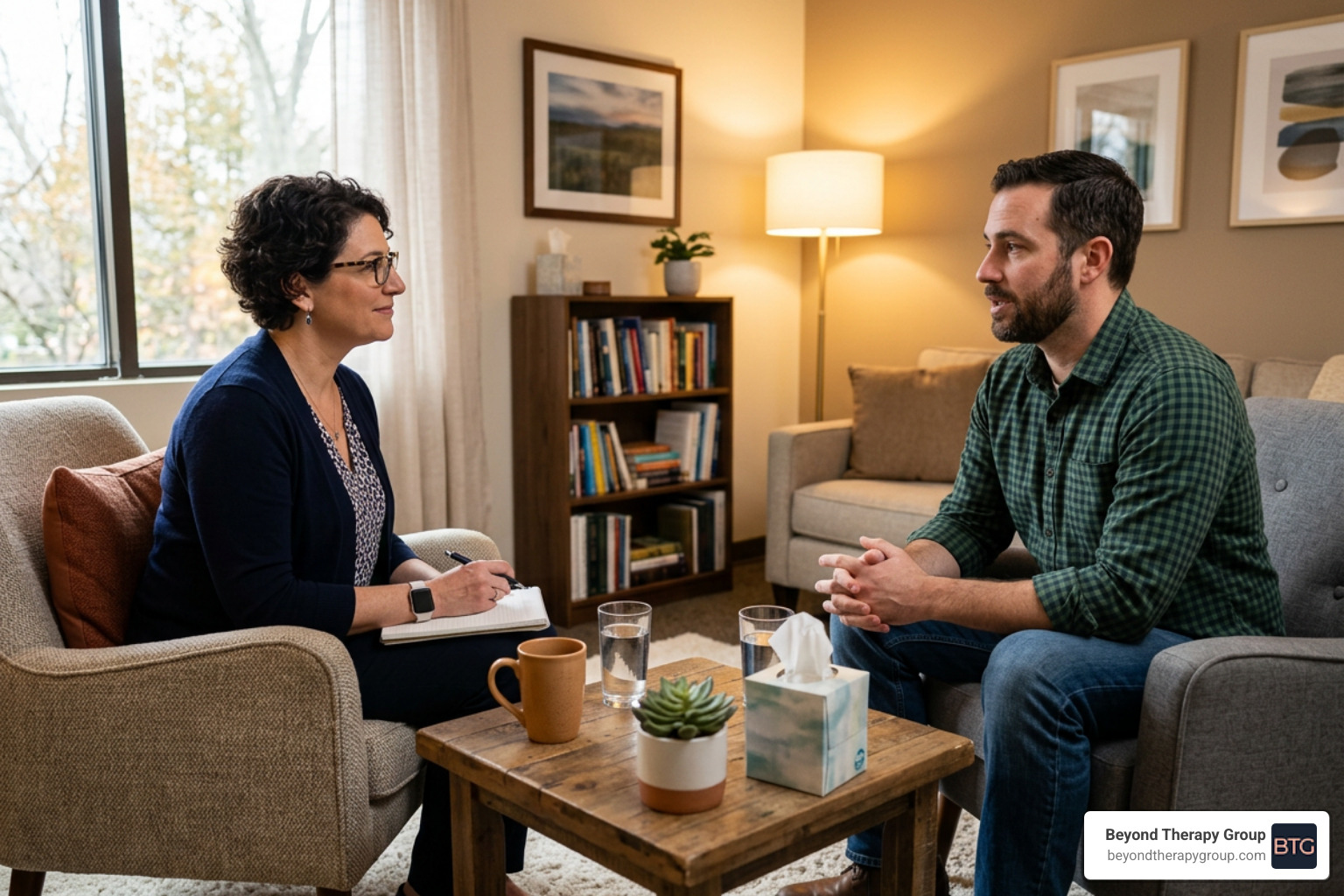
Walking into your first session can feel intimidating. You might worry about being judged or forced to admit things you are not ready to say. However, the first few alcohol counseling sessions are designed to build comfort and gather information.
Intake process
The journey begins with an intake. This is essentially a conversation where we learn about your history. We will ask about when you started drinking, how much you currently consume, and any family history of substance use. This is also where we discuss confidentiality and the “rules” of the therapeutic space.
Initial assessment
A formal assessment helps us determine the severity of the AUD. In the clinical world, AUD is often categorized as mild, moderate, or severe based on how many diagnostic criteria a person meets within a year. We also look at your physical health and any immediate risks, such as potential withdrawal symptoms. Alcohol withdrawal can be dangerous, so we ensure you are medically stable before diving deep into therapy.
Goal setting
What do you want to achieve? Some people want total abstinence, while others are looking for harm reduction or moderation. We work with you to set realistic, measurable goals. It is important to remember that Addiction: More Than Willpower is a reality. We do not expect you to “white-knuckle” your way through this. We provide the tools to supplement your resolve.
Treatment planning
Once we have the goals, we create a roadmap. This plan identifies which types of therapy we will use, how often we will meet, and whether other professionals, like psychiatrists or primary care doctors, need to be involved.
Individual Alcohol Counseling Sessions and Behavioral Change
One-on-one therapy is the “gold standard” for personalized care. These sessions usually happen once or twice per week. During this time, we focus on:
- Coping strategies that teach you how to handle a bad day at work or a fight with a spouse without reaching for a bottle.
- Motivation building that strengthens your internal desire to change, especially when the initial excitement of starting treatment wears off.
- Skill building that involves practicing social skills, such as how to turn down a drink at a business dinner in Redondo Beach or South Bay without feeling awkward.
Relapse Prevention and Managing Triggers
Relapse is often a part of the recovery process rather than a sign of failure. Our goal in alcohol counseling sessions is to minimize the risk and have a plan if it happens.
- Trigger identification helps you pinpoint the people, places, or emotions that make you want to drink. Is it a specific bar? Is it the feeling of being unappreciated?
- Relapse contingencies address what happens if you do have a drink. What is the immediate next step? We create a “safety plan” to stop a slip from becoming a full-blown relapse.
- Accountability comes from having a regular appointment that provides a sense of responsibility. You are not alone in this, and we are checking in on your progress every week.
To understand the mechanics of why these slips happen, it helps to explore What Makes Someone Relapse? so you can stay one step ahead of your triggers.
Evidence-Based Behavioral Therapies and Treatment Settings
Not all counseling is the same. We use methods backed by scientific research to ensure you are getting care that actually works.
| Therapy Type | Focus | Key Benefit |
|---|---|---|
| CBT | Changing thought patterns | Practical skills for trigger management |
| MET | Building motivation | Quick engagement for those unsure about change |
| Family Therapy | Relationship dynamics | Repairs trust and improves home support |
| IOP | Intensive structure | Multiple sessions per week while living at home |
Types of Behavioral Therapies Available
Cognitive Behavioral Therapy (CBT) is perhaps the most well-known. It focuses on the link between thoughts, feelings, and actions. If you think “I need a drink to relax,” CBT helps you challenge that thought and replace it with a healthier behavior.
Motivational Enhancement Therapy (MET) is often used early on. It is a short-term approach designed to evoke rapid, internally motivated change. Instead of telling you why you should quit, we help you discover your own reasons.
Dialectical Behavioral Therapy (DBT) is excellent for those who struggle with intense emotions. It teaches mindfulness and distress tolerance. This is particularly helpful when addressing How Trauma and Unresolved Emotional Pain Contribute to Addiction, as many people use alcohol to numb old wounds.
Contingency Management uses a system of tangible rewards to reinforce positive behaviors, like attending sessions or providing clean drug screens. It is based on the simple principle that rewarded behavior is more likely to be repeated.
Common Treatment Settings and Formats
Treatment can happen in various environments depending on your needs and your schedule.
- Outpatient Services allow you to visit a clinic or office for your sessions and go home afterward. This lets you maintain your job and family life in the South Bay area.
- Intensive Outpatient Programs (IOP) require a larger time commitment, often nine or more hours of therapy per week. They usually involve a mix of individual and group sessions.
- Online Teletherapy offers flexibility for busy professionals or those with privacy concerns through secure video sessions. This has become a vital tool for maintaining consistency in treatment.
Medications Used Alongside Behavioral Therapy
Medication-assisted treatment (MAT) is often the most effective way to treat AUD when combined with counseling. These are FDA-approved and non-addictive. They do not “trade one addiction for another” but rather manage a chronic health condition.
- Naltrexone blocks the “high” or pleasurable feelings associated with alcohol and can reduce cravings.
- Acamprosate helps the brain function normally again after you quit drinking, easing the long-term discomfort that often leads to relapse.
- Disulfiram causes an unpleasant physical reaction (like nausea and flushing) if you drink alcohol, acting as a powerful deterrent.
You can learn more about these tools by reading about Innovations in Treatment for Alcohol Use Disorder: From Medications to Digital Therapies.
Addressing Co-occurring Mental Health Issues
Many people struggling with alcohol also deal with depression, anxiety, or PTSD. This is known as a dual diagnosis. It is impossible to treat the addiction effectively without also treating the underlying mental health condition. Alcohol counseling sessions are designed to address both simultaneously, ensuring that as you get sober, your mental health also improves. For a deeper look at this connection, see Dual Diagnosis: Substance & Mental Health.
The Role of the Counselor and Comprehensive Support
A counselor is more than just a listener. They are a trained guide with a specific set of tools to help you navigate the complexities of recovery.
What Does an Alcohol Counselor Do?
An alcohol counselor performs several vital roles:
- Assessment involves continuously monitoring your progress and adjusting the treatment plan.
- Support systems means helping you build a network of sober friends, family, or support groups like SMART Recovery or AA.
- Psychoeducation involves teaching you how alcohol affects the brain and body so you understand the “why” behind your cravings.
- Therapeutic alliance is about building a relationship based on trust and honesty. This alliance is often the strongest predictor of success in therapy.
If you are looking for a specialist, you might work with a Substance and Alcohol Therapist who understands the specific hurdles of addiction.
How to Choose the Right Counselor or Program
Choosing a counselor is a personal decision. You should look for:
- Credentials to ensure they are licensed (such as an LMFT, LCSW, or LCADC).
- Experience by asking specifically about their work with AUD and co-occurring disorders.
- Insurance coverage to confirm they take your insurance or offer a payment structure that works for you.
- Personal fit by asking yourself whether you feel heard and whether you feel like you can be honest with them. Trust your gut.
The Impact of Group and Family Alcohol Counseling Sessions
Addiction is often called a “family disease” because it affects everyone in the household.
- Group Counseling brings you together with others who share your struggles, reducing isolation. It provides a space for peer support and shared wisdom.
- Family Counseling helps repair the damage done to relationships. It teaches family members about boundaries and how to support your recovery without enabling the addiction.
- Relationship Repair addresses the breakdown in communication that alcohol often causes. Therapy provides a safe space to rebuild that trust.
Untreated addiction has a high price. You can read more about The Emotional and Relational Cost of Untreated Addiction to see why involving loved ones is so important.
Success Rates and Treatment Effectiveness
Success in recovery is measured in many ways. It is not just about “days sober” but about the quality of your life.
- Success metrics include improvements in your health, your performance at work, and the stability of your relationships.
- Long-term recovery is supported by research showing that the longer someone stays engaged in treatment, the better their outcomes. Persistence is key.
- Persistence matters because setbacks are part of the process. Most people who achieve long-term sobriety have had moments where they struggled or returned to drinking before finding a path that worked.
Aftercare is just as important as the initial treatment. Ongoing support, such as Post-Treatment and Aftercare Support for Addicts, ensures that the progress you make in your sessions lasts for a lifetime.
Frequently Asked Questions about Alcohol Counseling
Is alcohol counseling effective for long-term sobriety?
Yes. Studies consistently show that behavioral therapies, especially when combined with medication and support groups, significantly increase the chances of long-term recovery compared to trying to quit alone.
What happens if I return to drinking during treatment?
We do not kick you out of the program. Instead, we use it as a learning opportunity. We analyze what led to the drink, what the triggers were, and how we can adjust your treatment plan to prevent it from happening again.
Will my employer know if I seek counseling?
Confidentiality is protected by law (HIPAA). Unless you choose to disclose it or there is an immediate safety risk, your employer will not know you are attending alcohol counseling sessions. Many professionals find that seeking help actually saves their careers by improving their focus and productivity.
Conclusion
Recovery is a journey that requires the right support and a tailored approach. At Beyond Therapy Group, we understand that every person’s path is unique. Whether you are in Redondo Beach or the wider South Bay area, we are here to help you navigate the challenges of Alcohol Use Disorder with compassion and expertise.
We offer tailored consultations to ensure you are matched with the right therapist for your specific needs. If you are ready to take the first step, we invite you to reach out for a free 15-minute consultation. This is a no-pressure way to get your questions answered and see how our services can fit into your life.
For more information and to start your journey, visit our page on substance and alcohol therapy services. You do not have to do this alone. We are here to help you build a healthier, more fulfilling life.
Recent Posts