
April 27, 2026
The Principal’s Playbook: Building Trust and Transparency

- Effective communication in schools is the foundation of student achievement and teacher retention.
- Trust and transparency are essential for building a high-performing school culture.
- Strong teacher-family partnerships lead to higher homework completion and better grades.
- Digital tools and social media are most effective when used with consistency and clear protocols.
- Two-way dialogue and active listening transform messaging into connecting.
- School leaders should regularly audit their own communication skills to establish a baseline for improvement.
Why Effective Communication in Schools Shapes Every Outcome That Matters
Key Takeaways:
- Effective communication in schools directly impacts student achievement, teacher performance, and school culture
- Trust, transparency, and active listening are the three core building blocks of strong school communication
- Strong teacher-family relationships lead to higher homework completion, better participation, and improved grades
- School leaders who communicate well retain more teachers and build more engaged communities
- A clear, consistent communication plan is more powerful than any single policy or program
Effective communication in schools is one of the most reliable predictors of whether a school thrives or struggles. It shapes how students learn, how teachers perform, and how families engage with the school community.
Here is what strong school communication looks like in practice:
| Area | What Good Communication Achieves |
|---|---|
| Student outcomes | Higher grades, better engagement, stronger homework completion |
| Teacher performance | More confidence, clearer expectations, reduced burnout |
| Parent involvement | Deeper trust, active partnership, consistent support at home |
| School culture | Shared purpose, higher morale, openness to change |
| Leadership | Credibility, reduced rumors, stronger staff retention |
Research consistently shows that when teachers and families communicate frequently, students show up more prepared, participate more actively, and complete more of their work. And when school leaders communicate with clarity and transparency, teachers stay longer and trust runs deeper.
But most schools are still leaving this on the table.
Many rely on one-way announcements, infrequent newsletters, or reactive outreach that only happens when something goes wrong. The result is a community that feels informed on paper but not genuinely connected.
This guide is designed to change that. Whether you are a principal, a teacher, or a district leader, you will find practical frameworks and strategies here to build the kind of communication culture that moves your school forward.
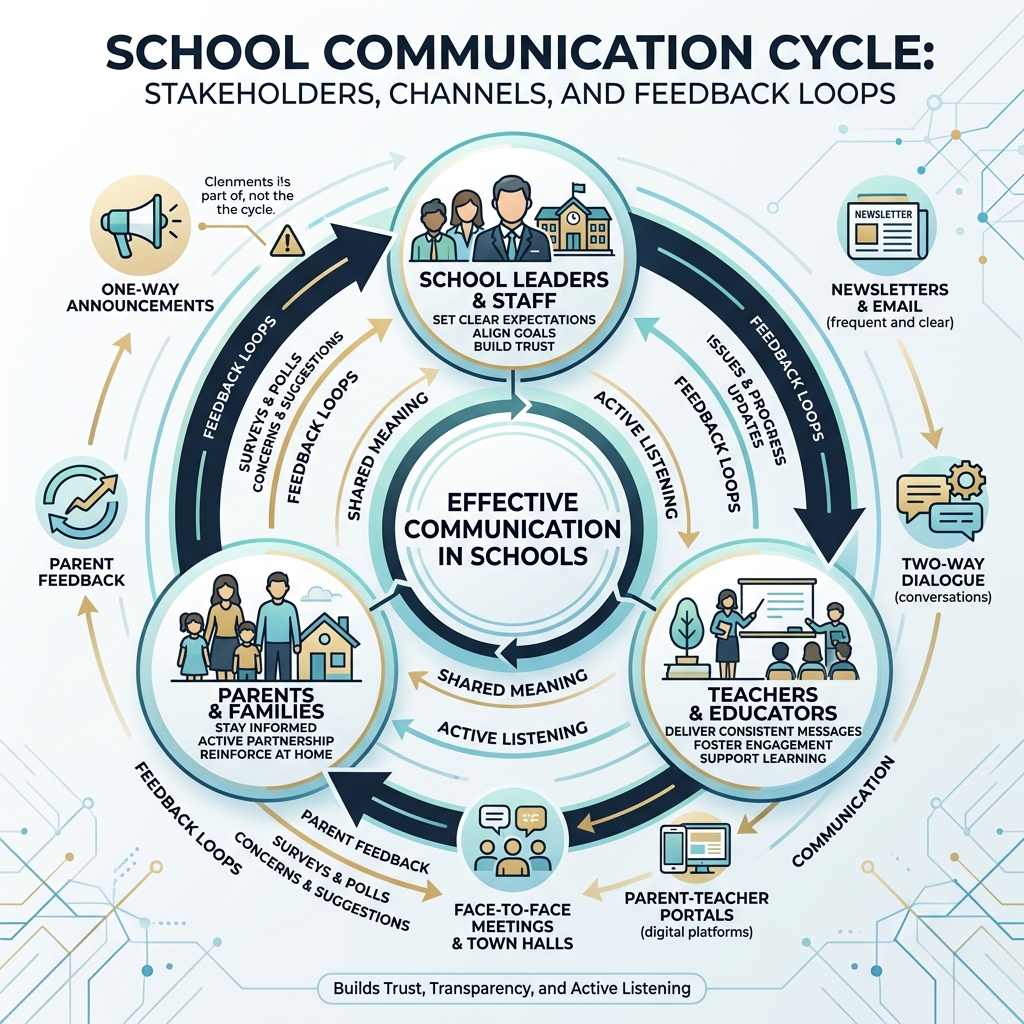
The Foundation of Effective Communication in Schools
At its heart, effective communication in schools is about more than sending information from one person to another. It is about creating shared understanding. When a school community understands the purpose behind decisions, everyone from the principal to the newest student feels informed, included, and respected.
The three pillars of this foundation are trust, transparency, and active listening. Trust is not built overnight; it is like a bank account that grows through small, positive daily interactions. Transparency means being open about goals, values, and even struggles. When leaders are transparent, they align everyone’s focus and make themselves relatable. Finally, active listening involves more than just waiting for your turn to speak. It requires asking clarifying questions and avoiding judgment to ensure the other person feels truly heard.
Evidence shows that strong parental involvement can significantly boost students’ grades and performance scores. This isn’t just a happy accident; it’s the result of intentional relationship building. When schools prioritize inclusivity, they ensure that every stakeholder, regardless of background, has a seat at the table.
Why Effective Communication in Schools Drives Student Success
We often think of academic success as a matter of curriculum and study habits. However, the data tells a different story. One study found that frequent teacher-family communication positively impacts student engagement. This engagement manifests as higher homework completion rates, improved time on task during class, and increased participation in lessons.
When communication is effective, students receive clear instructions and emotional support. They feel validated, which boosts their motivation. For teachers, strong communication with families provides a support network that makes classroom management easier. When a teacher and a parent are on the same page, the student receives a consistent message about expectations both at home and at school.
Core Components of a Positive School Culture
A school’s culture is the “vibe” that hits you the moment you walk through the doors. Is it a place of stress and secrets, or a place of motivation and integrity? Effective communication in schools is the primary tool for building the latter.
To foster a positive staff culture, leaders must:
- Build Trust through Consistency: Match your words to your actions. Integrity is the currency of leadership.
- Practice Strategic Listening: Use guiding questions to help staff solve their own problems rather than just handing out answers.
- Model Cultural Competency: Respect the diverse backgrounds of your community by listening more than you speak.
- Praise in Public, Correct in Private: This simple rule prevents resentment and builds a culture of psychological safety.
Strategic Channels and Tools for Modern Educators
In the 21st century, the traditional school newsletter is no longer enough. Families are busier than ever, and information can easily get buried under a mountain of daily responsibilities. To cut through the noise, schools must be strategic about the channels they use.
| Channel Type | Best Use Case | Frequency |
|---|---|---|
| Formal updates, newsletters, detailed reports | Weekly or as needed | |
| Approved Apps | Quick inquiries, reminders, urgent announcements | Daily/Real-time |
| Social Media | Celebrating wins, community building, broad outreach | 3-5 times per week |
| Face-to-Face | Complex issues, relationship building, conferences | Quarterly or as needed |
One of the most important rules is to only use approved messaging apps that the school or district has vetted. This protects privacy and ensures professional boundaries are maintained.
Establishing Frequency and Consistency in Effective Communication in Schools
Consistency is the antidote to anxiety. When parents know exactly when to expect an update, they are less likely to flood the front office with “just checking in” calls. We recommend setting clear expectations for communication frequency at the very start of the school year.
Using newsletters is a practical way to share regular updates. Keep them easy to scan instead of packed with text. Add photos of student work, short videos, and bulleted lists so families can quickly understand the key points. A consistent schedule, like a Friday Folder or a Monday morning email, helps families know when to expect school news.
Leveraging Digital Platforms for Community Engagement
Digital transformation is about more than just having a website; it’s about proactive engagement. Platforms like Facebook and Twitter (X) have often surpassed traditional methods for parent preference because they allow for real-time connection.
Tools like Remind are invaluable for urgent news, such as weather closures or bus delays. By embracing these digital platforms, schools can foster a sense of community support and transparency. However, it is vital to model good digital citizenship. School leaders should have clear protocols for how the school’s internet presence is managed to ensure all content remains professional and inclusive.
Leadership Best Practices: From Messaging to Connecting
Great leaders don’t just “message” their staff; they connect with them. This shift requires moving away from simply announcing decisions to explaining the “why” behind them. When people understand the rationale, they are much more likely to buy into the vision.
Think of two-way communication like a tennis match. A game only happens when the ball is volleyed back and forth. If you are only hitting the ball one way (announcements), you aren’t playing the game. Reciprocity is key to building a culture where everyone feels seen and heard.
Auditing Your Interpersonal Communication Skills
It is difficult to improve what you haven’t measured. Auditing your own communication skills is a great way to establish a baseline. Ask yourself a few honest questions:
- Do people often misunderstand my emails?
- How good am I at reading body language during meetings?
- Am I providing enough detail, or am I overwhelming people with too much?
By tracking your interactions and even surveying stakeholders anonymously, you can identify blind spots in your style and adjust accordingly.
Fostering Inclusivity Through Storytelling
Humans love stories. A well-told story creates an emotional connection that data alone cannot reach. Educational leaders can use leadership through stories to build credibility and inspire their teams.
For example, instead of just reporting that a field trip was successful, tell the story of a student who discovered a new passion for science during that trip. Intentionally weaving positive stories about your school into your communications helps humanize your leadership and makes your vision feel attainable. Whether it’s a “Three-Minute Thursday” video or a highlight in the newsletter, stories are what people remember long after the statistics are forgotten.
Navigating Challenging Conversations and Feedback
No school is immune to conflict. Whether it’s a disagreement over a grade or a difficult conversation about staff performance, how you handle these moments defines your leadership. Crucial accountability involves resolving violated expectations while maintaining the relationship.
The goal is to move from “being nice” to “being clear.” Clear communication is actually kinder than ambiguous messages that leave people guessing.
Strategies for Impactful Student Feedback
Effective feedback is one of the top influences on boosting student achievement. It should be consistent, predictable, and timely. We recommend a mix of formal and informal feedback.
- Formal Feedback: Graded rubrics, written comments, and progress reports.
- Informal Feedback: Verbal affirmations, “high-fives,” and quick suggestions for improvement during a task.
Single-point rubrics are particularly effective because they focus on the specific goals of a lesson without overwhelming the student with too many criteria at once.
Handling Difficult Stakeholder Interactions
When dealing with a frustrated parent or a dominant colleague, composure is your best friend. Start by practicing active listening: paraphrase their concerns back to them to ensure they feel understood. This often de-escalates the tension immediately.
Always document important conversations in writing afterward. This ensures there is a record of what was agreed upon and prevents future misunderstandings. If a conversation becomes unproductive, it is okay to set professional boundaries and suggest a follow-up meeting once emotions have cooled. Your goal is a fact-based dialogue that finds common ground.
Conclusion
Building a culture of effective communication in schools is a journey, not a destination. It requires a commitment to transparency, a willingness to listen, and the courage to have difficult conversations when they matter most. By moving from messaging to connecting, you can create a school environment where students, teachers, and families all feel like partners in the learning process.
At Beyond Therapy, we understand that the foundation of any healthy environment, whether it is a school or a home, is strong, empathetic communication. We provide therapy services and tailored consultations to help individuals navigate the complexities of their professional and personal relationships.
If you are looking for support in improving your communication or managing the stress that often comes with leadership, we are here to help. We offer a free 15-minute consultation with our therapists to help guide your booking and answer any questions you may have. Our team in Redondo Beach and the South Bay is dedicated to helping you build the skills you need to thrive.
How can schools audit their current communication strategies?
Schools can audit their strategies by tracking all outgoing messages for one week and self-assessing for clarity and tone. Additionally, surveying stakeholders, parents, students, and staff, provides an honest baseline. Reflection questions, such as “Do people often misunderstand my messages?”, help leaders identify personal areas for growth.
What are the best ways to handle parent-teacher conferences?
Preparation is key. Provide parents with advance notification and multiple contact options, including makeup dates. Start every conference with positive feedback about the student to build rapport. Have all necessary documents ready and maintain a professional, considerate tone throughout the meeting.
How do digital tools improve community engagement?
Digital tools allow for real-time, proactive information sharing. Social media connects the community by celebrating student wins, while text alert systems ensure urgent news reaches families instantly. This accessibility boosts parent satisfaction and ensures that the school remains a transparent and engaged part of the community.
Recent Posts