July 24, 2026
How to Weed Out Your Addiction for Good

The Reality of Marijuana Dependence (And How to Finally Break Free)
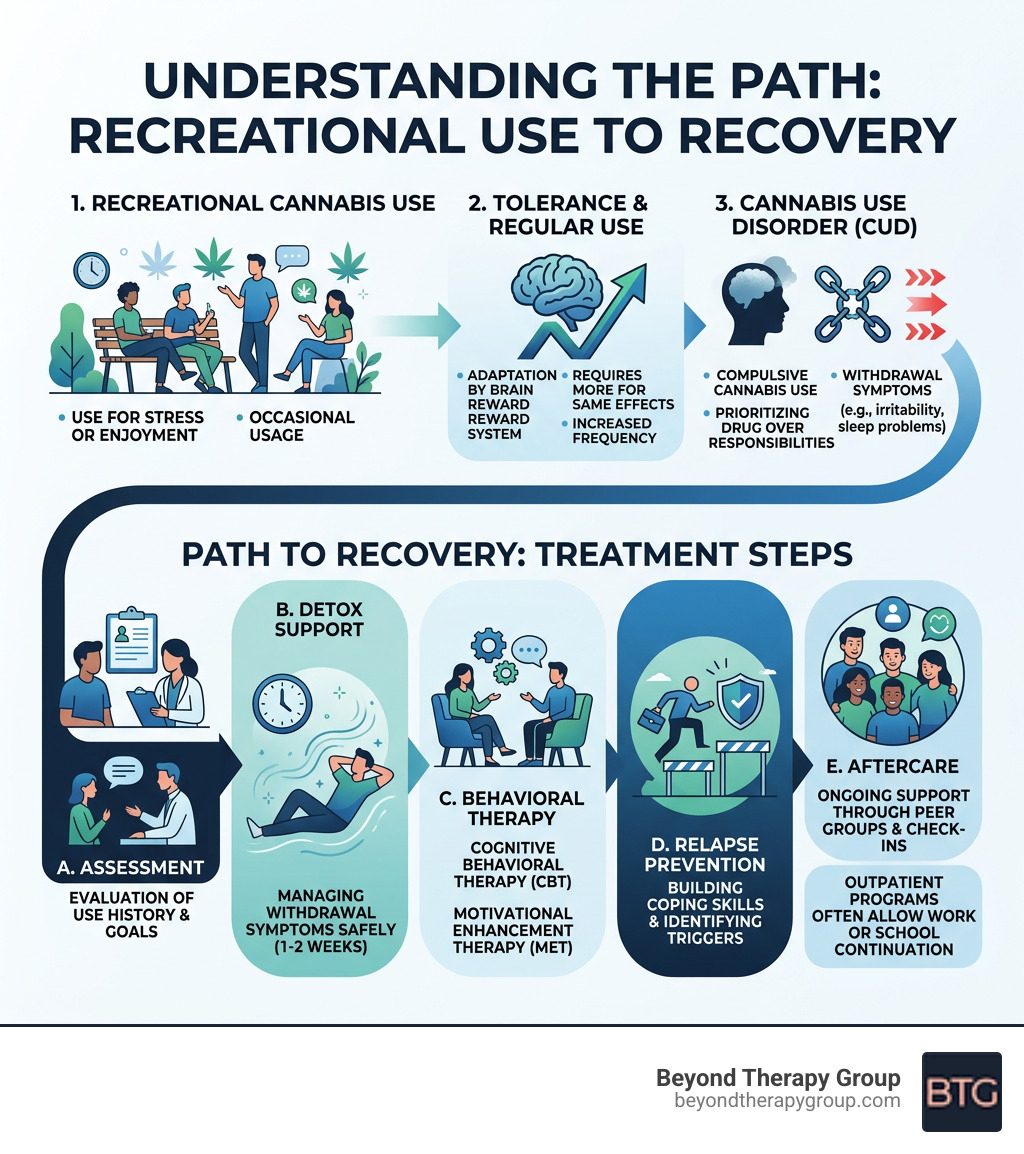
A marijuana dependence treatment program is a structured set of therapies and support services designed to help people stop using cannabis and stay sober long term. Here is a quick overview of what effective treatment looks like:
- Assessment — A clinician evaluates your use history, mental health, and goals
- Detox support — Managing withdrawal symptoms safely, usually over 1 to 2 weeks
- Behavioral therapy — Approaches like Cognitive Behavioral Therapy (CBT) and Motivational Enhancement Therapy (MET) are the most evidence-backed options
- Relapse prevention — Building coping skills and identifying triggers before they lead to a setback
- Aftercare — Ongoing support through peer groups, therapy, or check-in sessions
Most programs are outpatient, meaning you can keep working or going to school while getting help.
Marijuana is widely seen as harmless. It is legal in many states. People use it to unwind, sleep, or cope with stress. But that reputation hides a real problem.
About 1 in 10 marijuana users will develop a dependence, and that number jumps to 1 in 4 for daily users. In 2020, an estimated 14.2 million Americans met the criteria for marijuana use disorder. Yet only a small fraction ever seek help.
If you have tried to cut back and struggled, you are not alone and you are not weak. Cannabis use disorder is a recognized clinical condition with proven treatments. The brain changes that drive dependence are real, and so is the path out.
Understanding the Roots of Cannabis Use Disorder
To effectively “weed out” an addiction, we first need to understand how it takes root in the brain. Cannabis use disorder (CUD) is not simply a lack of willpower. It is a complex condition driven by changes in brain chemistry and biology. When someone consumes marijuana, the primary psychoactive compound, THC, floods the brain’s reward system. This causes a massive surge of dopamine, the “feel-good” chemical.
Over time, the brain tries to find a balance by becoming less sensitive to dopamine. This process is called desensitization. As the brain adapts, a person needs higher doses of THC to feel the same effects. This is known as tolerance. Eventually, the brain relies on the drug to feel normal at all. If the person stops using, they experience withdrawal because the brain’s natural reward system is temporarily “offline.”
Research shows that marijuana use disorder prevalence has increased significantly over the last two decades. Genetics also play a major role, accounting for roughly 40% to 60% of a person’s vulnerability to addiction. For example, variations in the CHRNA2 gene on chromosome 8 have been linked to a higher risk of developing CUD.
Environmental factors are equally important. Many people turn to marijuana as a way to cope with early life stress and substance use disorders. When a young person experiences trauma or high levels of stress, their developing brain may be more susceptible to the numbing effects of cannabis, creating a cycle of self-medication that is hard to break without a professional marijuana dependence treatment program.
Identifying High Risk Factors
Not everyone who tries marijuana will become addicted, but certain factors significantly increase the odds. One of the biggest risks is the age of first use. People who start using cannabis before age 18 are 4 to 7 times more likely to develop a disorder compared to those who start as adults. This is because the adolescent brain is still building its “wiring” for decision-making and impulse control.
Other high risk factors include:
- Frequency of use — Daily or near-daily use rapidly builds tolerance.
- Mental health co-morbidity — About half of the people with mental health conditions also experience a substance use disorder.
- High-potency THC — Modern cannabis products are much stronger than those available decades ago.
- Social environment — Having friends or family members who use heavily can normalize problematic behavior.
Understanding these risks is part of a dual diagnosis approach where we treat both the addiction and any underlying mental health issues like depression or anxiety.
The Impact of Modern Marijuana Potency
The marijuana of today is not what it used to be. In the 1990s, the average THC content was often less than 4%. Today, many flower strains exceed 20%, and concentrated products like wax, shatter, or oils used for dabbing can reach 80% or 90% THC.
This extreme potency changes the game for addiction risk. High doses of THC can lead to acute psychological distress, including panic attacks and temporary psychosis. Vaping and dabbing allow users to consume massive amounts of THC in a very short time, which can overwhelm the brain and lead to faster dependence. Edibles also present a risk because the effects take longer to kick in, often leading people to eat too much and experience toxic reactions.
The clinical community has worked hard to establish the validity of cannabis withdrawal as a real syndrome. It is not “all in your head.” The physical and psychological symptoms that occur when stopping high-potency use are a direct result of the brain trying to recalibrate after being flooded with THC.
Recognizing the Signs of Marijuana Dependence
How do you know when recreational use has crossed the line into a problem? We look to the DSM-5 criteria, which is the “gold standard” for diagnosis. A person might have cannabis use disorder if they meet at least two of the following criteria within a 12-month period:
- Using more marijuana than intended.
- Unsuccessful attempts to cut down or quit.
- Spending a lot of time getting, using, or recovering from use.
- Strong cravings or urges to use.
- Use resulting in a failure to fulfill major obligations at work, school, or home.
- Continued use despite social or relationship problems.
- Giving up important social, occupational, or recreational activities.
- Use in physically hazardous situations (like driving).
- Continued use despite knowing it is causing a physical or psychological problem.
- Developing a tolerance (needing more for the same effect).
- Experiencing withdrawal symptoms when stopping.
If you are worried about a friend or family member, it helps to learn how to recognize early warning signs. You might notice they are more irritable, have “brain fog,” or have lost interest in hobbies they used to love. The emotional and relational cost of waiting too long can be high, leading to isolation and broken trust.
Physical and Mental Complications
Untreated marijuana dependence can lead to several complications that affect your quality of life. Mentally, chronic use is linked to cognitive impairment, especially in areas like memory, attention, and learning. For some, it can trigger or worsen underlying anxiety and depression.
Physically, heavy users may develop:
- Cannabinoid Hyperemesis Syndrome (CHS) — A condition involving cycles of severe nausea, vomiting, and abdominal pain.
- Chronic Bronchitis — From regular smoke inhalation.
- Sleep Disorders — While many use weed to sleep, long term use actually disrupts deep sleep cycles.
It is also vital to understand the difference between addiction and dependence. While dependence refers to the physical adaptation of the brain, addiction involves the compulsive behavior and inability to stop despite negative consequences.
Navigating the Marijuana Dependence Treatment Program Process
Making the decision to enter a marijuana dependence treatment program is a brave first step. The process is designed to meet you where you are and provide the level of support you need.

There are several levels of care available:
- Medical Detox — While rarely life-threatening for marijuana alone, supervised detox is helpful for those with very heavy use or co-occurring mental health conditions. It provides a safe environment to manage the first week of withdrawal.
- Inpatient Rehab — This involves staying at a facility for 30 to 90 days. It is best for those who need a complete break from their environment to focus on recovery.
- Outpatient Programs — These allow you to live at home and continue working while attending therapy sessions several times a week. This is the most common choice for marijuana treatment.
- Individual Therapy — Working one-on-one with a substance and alcohol therapist can help you get to the root of why you use.
Components of an Effective Marijuana Dependence Treatment Program
A quality program does more than just tell you to “just say no.” It provides a toolkit for a new way of living. Effective programs usually include:
- Individual Counseling — To address personal triggers and mental health.
- Group Therapy — To build community and realize you are not alone.
- Family Involvement — Addiction affects the whole family, and healing together improves long-term success.
- Holistic Wellness — Focusing on nutrition, exercise, and sleep to help the body recover.
Many people use substances to numb old wounds. A good program will explore how trauma and unresolved emotional pain contribute to the cycle of use.
Choosing the Right Marijuana Dependence Treatment Program for You
If you are looking for help in the South Bay or Redondo Beach area, you want a program that feels like a good fit for your life. When choosing, consider these factors:
- Accreditation — Ensure the facility and staff are licensed and follow clinical standards.
- Personalized Care — Avoid “cookie-cutter” programs. Your treatment plan should be unique to your history.
- Co-occurring Support — If you have anxiety or depression, the program must treat both at the same time.
- Duration — Research suggests that longer treatment (up to 90 days) often leads to better outcomes because the brain needs time to heal.
Recovery is more than just willpower. It is about having the right support system in place.
Evidence-Based Therapies for Lasting Recovery
The most effective treatments for marijuana dependence are behavioral therapies. These have been tested in clinical trials and shown to produce the best results.
- Cognitive Behavioral Therapy (CBT) — This helps you identify and change the thought patterns that lead to use. You learn “refusal skills” and how to handle high-risk situations.
- Motivational Enhancement Therapy (MET) — This is often used at the start of treatment. It helps people who are on the fence about quitting find their own internal motivation to change.
- Contingency Management (CM) — This uses tangible rewards to reinforce positive behavior, like staying sober.
A clinical trial of behavioral therapy showed that combining these approaches is much more effective than using just one.
| Therapy Type | Focus | Typical Duration |
|---|---|---|
| CBT | Coping skills and trigger management | 6-14 sessions |
| MET | Building motivation to change | 1-4 sessions |
| CM | Incentives for clean drug tests | Ongoing during treatment |
The Role of Contingency Management
Contingency Management is a powerful tool in a marijuana dependence treatment program. It is based on the simple idea of positive reinforcement. In these programs, patients might earn vouchers or small prizes for every negative drug test they provide.
Research on voucher-based incentives has found that this approach significantly improves the chances of achieving initial abstinence. For many, having a small, immediate reward helps bridge the gap while the brain’s natural reward system is still recovering. It makes the hard work of early sobriety feel a little more rewarding.
Pharmacotherapy and Emerging Treatments
Currently, there are no FDA-approved medications specifically for treating cannabis use disorder. However, doctors sometimes use “off-label” medications to help manage specific symptoms. For example, sleep aids may be used to help with insomnia during the first week of quitting, or non-addictive anti-anxiety medications might be used if the person is struggling with intense irritability.
We are always looking at innovations in treatment, and while many of these are currently focused on alcohol, the same digital therapies and monitoring tools are being adapted for marijuana recovery.
Managing Withdrawal and Preventing Relapse
Withdrawal is the body’s way of saying it is adjusting to life without THC. It usually starts within 24 to 48 hours of the last use.
The Withdrawal Timeline:
- Days 1-2 — Irritability, anxiety, and trouble sleeping begin.
- Days 3-6 — Symptoms typically peak. You might feel very angry, lose your appetite, or have vivid dreams.
- Week 2 — Physical symptoms begin to fade, but cravings and mood swings may persist.
- Month 1+ — Most physical symptoms are gone, but you must stay vigilant against triggers.
Understanding what makes someone relapse is key to preventing it. Triggers can be people, places, or even certain emotions like boredom or stress.
Strategies for Long-Term Sobriety
Staying sober for the long haul requires more than just stopping use. It requires building a life where you don’t feel the need to escape.
- Lifestyle Changes — Find new hobbies that don’t involve use.
- Support Networks — Join a peer support group or stay in touch with your therapist.
- Stress Reduction — Practice mindfulness, meditation, or yoga to handle life’s ups and downs.
- Aftercare Planning — Set up a plan for post-treatment support before you finish your initial program.
Frequently Asked Questions about Marijuana Addiction
Is marijuana truly addictive?
Yes. While it may be less physically “hooking” than opioids or nicotine, it absolutely causes addiction. About 9% of people who use marijuana will become addicted. This rate increases to 17% for those who start in their teens and up to 25% to 50% for daily users. The brain undergoes real structural changes that make it very difficult to stop without help.
What does marijuana withdrawal feel like?
Most people describe it as being incredibly “on edge.” Common symptoms include irritability, anger, aggression, nervousness, sleep difficulty, decreased appetite, and weight loss. Some people also experience physical symptoms like stomach pain, shakiness, sweating, fever, chills, or headache. While not life-threatening, it is uncomfortable enough that many people go back to using just to make the feeling go away.
How long does a typical treatment program last?
There is no one-size-fits-all answer, but most structured outpatient programs last between 4 and 12 weeks. However, many people benefit from continuing some form of therapy or support for several months. Research shows that staying engaged in treatment for at least 90 days significantly improves the chances of long-term sobriety.
Conclusion
Breaking free from marijuana dependence is a journey that requires patience, support, and the right tools. Whether you are in Redondo Beach or anywhere in the South Bay, help is closer than you think. You don’t have to wait until things fall apart to reach out.
At Beyond Therapy Group, we understand that every story is different. We offer a personalized consultation to help you understand your options and find the right path forward. Our goal is to provide a safe, stigma-free space where you can work through the challenges of addiction and build a healthier, more fulfilling life.
If you are ready to take that first step, we offer a free 15-minute consultation with our therapists. This is a great way to ask questions, get a feel for our approach, and see how a marijuana dependence treatment program can work for you. Your recovery journey is yours to lead, but you don’t have to walk it alone. Reach out today and let’s start weeding out the addiction for good.
Recent Posts


