October 7, 2026
A Practical Guide to Finding the Best Therapy for Burnout

Finding the Best Therapy for Burnout Starts With the Cause
- There is no single best therapy for burnout. The right fit depends on whether exhaustion is driven mainly by workload, perfectionism, anxiety, trauma, loss of meaning, or an unsafe work environment.
- CBT and ACT can help change unhelpful work patterns and build healthier boundaries.
- Mindfulness, compassion-based therapy, and coaching can reduce emotional exhaustion and restore a sense of control.
- Therapy works best alongside workplace changes, such as manageable workloads, clearer roles, and real support from leadership.
For most people asking what is the best therapy for burnout, the practical answer is: start with a licensed therapist who can assess both your symptoms and your work situation. Cognitive Behavioral Therapy (CBT) is often useful for perfectionism, people-pleasing, and harsh self-talk. Acceptance and Commitment Therapy (ACT) can be especially helpful when you feel stuck, cynical, or disconnected from your values. If burnout includes severe anxiety, panic, depression symptoms, or trauma reactions, treatment may need a more focused clinical plan.
Burnout is more than being tired after a demanding week. It can show up as deep exhaustion, detachment from work, and the feeling that nothing you do makes a difference. It is also not always a problem you can solve with better self-care. Research suggests that organizational programs often create larger and longer-lasting burnout improvements than individual strategies alone.
This guide explains how to tell burnout apart from depression and related conditions, compare proven therapy options, and choose support that addresses the real source of the problem.
Understanding Burnout: Differential Diagnosis and Clinical Subtypes
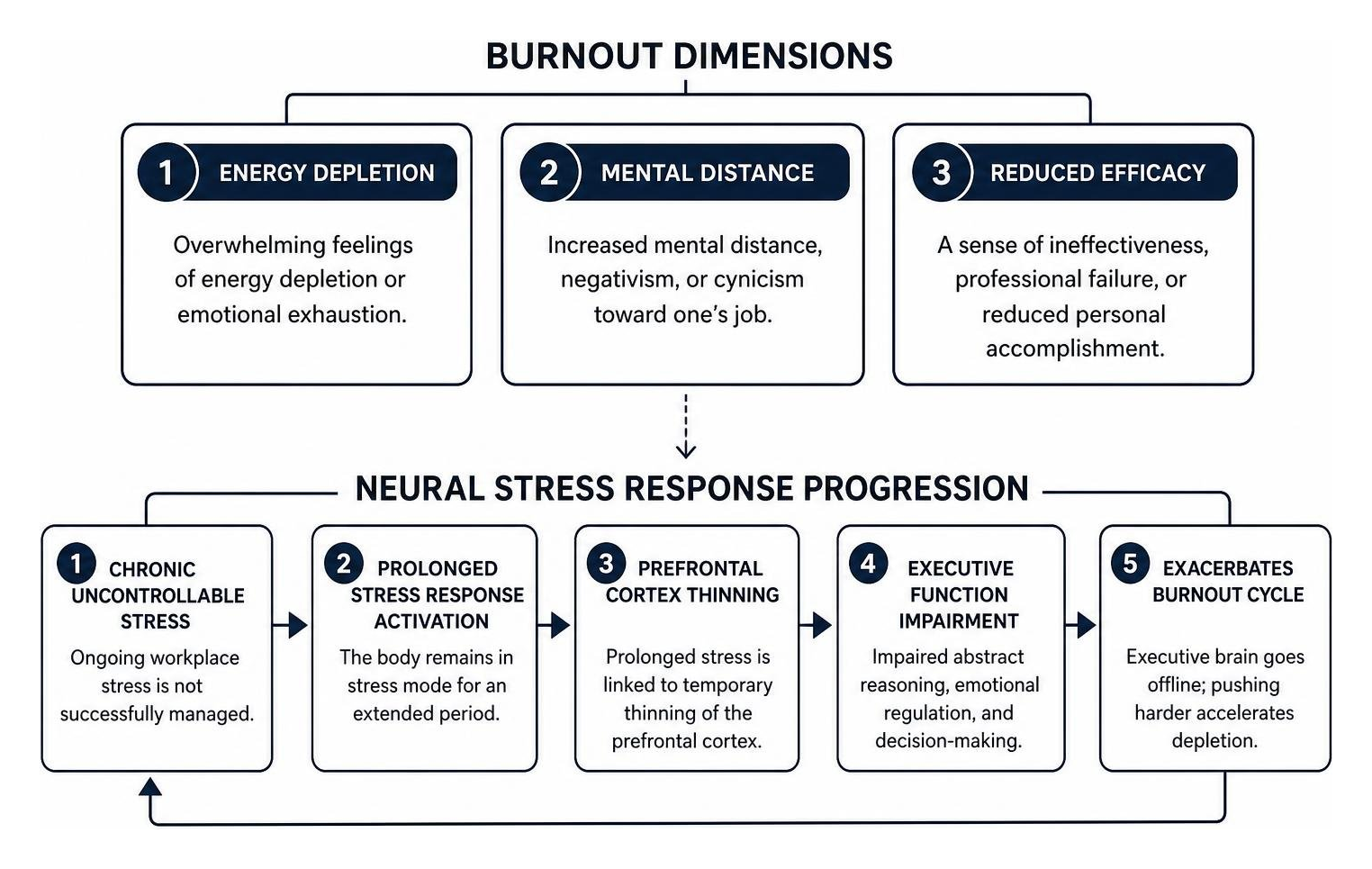
Burnout is officially classified in the International Classification of Diseases 11th Revision (ICD-11) as an occupational phenomenon. It stems from chronic workplace stress that has not been successfully managed. The condition is defined by three distinct dimensions:
- Overwhelming feelings of energy depletion or emotional exhaustion
- Increased mental distance, negativism, or cynicism toward one’s job (often termed depersonalization)
- A sense of ineffectiveness, professional failure, or reduced personal accomplishment
Recognizing these dimensions is essential because each represents a different biological and psychological struggle. Under chronic uncontrollable stress, neurobiological research indicates that prolonged activation of the stress response can lead to physical thinning of the prefrontal cortex. This temporary structural shift impairs executive functions such as abstract reasoning, emotional regulation, and decision-making.
When your executive brain goes offline, simply willing yourself to work harder only accelerates the cycle of depletion. Clinical assessment allows us to pinpoint the specific mechanisms at play so we can design a targeted roadmap out of exhaustion.
Differentiating Burnout from Depression, Compassion Fatigue, and Moral Distress
Before selecting a treatment modality, clinicians must carefully distinguish occupational burnout from related mental health conditions. While their symptoms may overlap, their root causes and required interventions differ significantly.
The most critical distinction is between burnout and major depressive disorder. Burnout is context-specific. It is tethered directly to the workplace environment. In its early stages, individuals often experience symptom relief during extended vacations or when toxic workplace conditions improve.
Major depressive disorder is pervasive. It persists regardless of occupational changes and frequently involves generalized anhedonia, inappropriate guilt, and suicidal ideation. A person with clinical depression cannot resolve their symptoms solely through a job change or extended time off.
Compassion fatigue differs by having a rapid onset tied directly to vicarious trauma from caring for suffering individuals. Moral distress arises when professionals know the ethically correct action to take but are blocked from doing so by institutional policies, leading to profound moral injury. Meta-analytic reviews such as the Efficacy of Individual-Level Interventions to Mitigate Burnout demonstrate that tailoring interventions to these exact profiles is necessary for lasting recovery. Learning how to set healthy emotional boundaries at work and thrive serves as a foundational step when reclaiming autonomy in high-pressure environments.
Assessing Severity: What Is the Best Therapy for Burnout in Functional vs. Clinical Stages?
Burnout develops along a continuum that ranges from functional exhaustion to full clinical collapse. Understanding where you sit on this continuum informs the starting phase of therapeutic care.
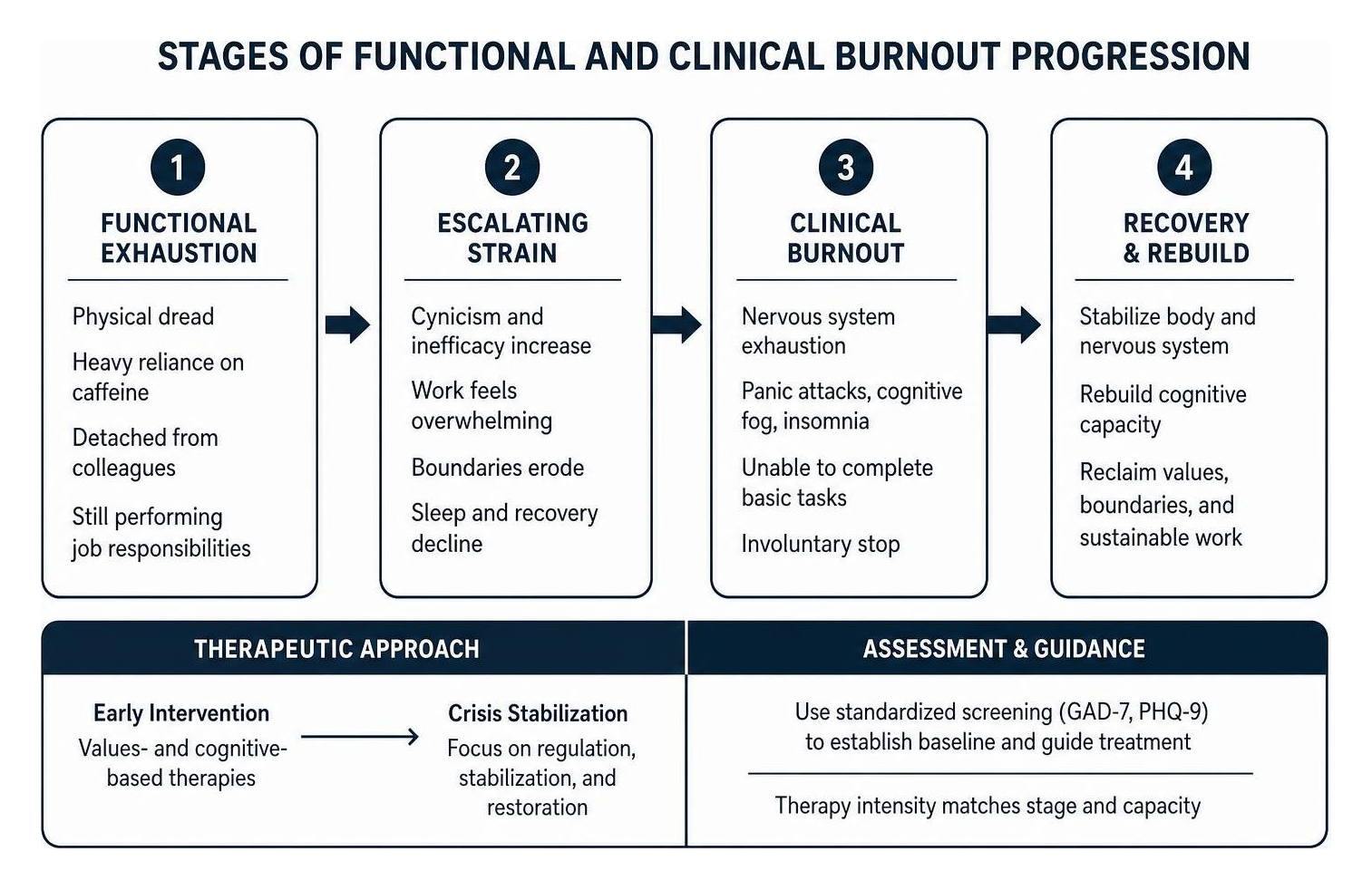
In functional burnout, you might wake up with physical dread, rely heavily on caffeine, and feel detached from colleagues, yet you continue to perform your job responsibilities. In this stage, cognitive and values-based therapies can be applied immediately to restructure workload habits and establish boundaries.
In clinical burnout, the nervous system reaches complete exhaustion. The body forces an involuntary stop, manifesting as panic attacks, cognitive fog, insomnia, or an inability to complete basic tasks.
Applying intensive analytical therapies during clinical collapse can backfire because the prefrontal cortex lacks the energy reserves for complex cognitive reframing. Instead, clinicians utilize standardized screening tools like the GAD-7 for anxiety and the PHQ-9 for depressive symptoms to establish a baseline.
The initial phase must prioritize nervous system stabilization, behavioral pacing, and physical restoration before diving into deep psychological processing. Implementing the ultimate guide to setting boundaries for emotional health provides a practical structure for protecting energy during this delicate stabilization period.
Evidence-Based Approaches: What Is the Best Therapy for Burnout?

Effective burnout therapy is never a one-size-fits-all solution. Different therapeutic modalities target specific dimensions of emotional depletion, cognitive weariness, and behavioral burnout loops.
Cognitive Behavioral Therapy (CBT) and Acceptance and Commitment Therapy (ACT)
Cognitive Behavioral Therapy (CBT) focuses on the connection between thoughts, feelings, and behaviors. When applied to burnout, specialized CBT protocols identify maladaptive cognitive patterns such as:
- “If I say no to this project, my career will be over.”
- “I have to handle everything myself or standards will slip.”
- “Taking time off means I am failing my team.”
Through cognitive restructuring, CBT helps clients evaluate these beliefs objectively and replace them with balanced perspectives. It also incorporates behavioral activation to reintroduce restorative activities into overloaded schedules.
Acceptance and Commitment Therapy (ACT), a third-generation behavioral therapy, takes a complementary approach. Rather than trying to change or debate every stressful thought, ACT teaches psychological flexibility and cognitive defusion. Clients learn to step back from unhelpful thoughts without letting those thoughts dictate their actions.
ACT is exceptionally effective for persistent cynicism and rumination. A workplace trial published in public health literature found that ACT interventions produced significant, sustained reductions in cognitive weariness from baseline through follow-up periods.
Furthermore, clinical findings highlighted in the Prevention of burnout syndrome in physicians: a systematic review and meta-analysis reveal that structured multi-week psychological interventions generate large, durable reductions in occupational distress (SMD -1.42) compared to brief single-session workshops.
Mindfulness-Based Stress Reduction (MBSR) and Compassion-Focused Therapy (CFT)
Mindfulness-Based Stress Reduction (MBSR) is a structured protocol that utilizes meditation, breathwork, and body awareness to calm an overstimulated sympathetic nervous system. In clinical trials evaluating healthcare workers, MBSR participants showed statistically significant improvements across all three core burnout dimensions:
- Emotional exhaustion (p < 0.001)
- Depersonalization (p < 0.001)
- Personal accomplishment (p < 0.001)
Compassion-Focused Therapy (CFT) is uniquely suited for individuals whose burnout is maintained by intense internal pressure, self-criticism, or shame. Developed by Paul Gilbert, CFT works by stimulating the brain’s soothing-affiliative system, downregulating the threat system that fuels workaholism.
Clinicians often integrate contemplative models such as Joan Halifax’s G.R.A.C.E. framework:
- Gathering attention
- Recalling intention
- Attunement to self and others
- Considering what will truly serve
- Engaging ethically and ending the interaction
This approach allows high-stress professionals to cultivate genuine self-compassion, preventing the emotional detachment and cynicism that characterize advanced burnout.
Meaning-Centered Psychotherapy and Somatic Approaches
When burnout manifests as an existential crisis or a complete loss of professional identity, Meaning-Centered Psychotherapy provides an effective framework. Originally adapted from Viktor Frankl’s logotherapy, this approach helps individuals rediscover purpose and align their professional output with their deepest personal values. It addresses the emotional friction that occurs when daily duties feel disconnected from meaningful outcomes.
For clients experiencing profound physical symptoms like chronic muscle tension, gastrointestinal distress, or nervous system dysregulation, somatic approaches provide direct relief. Somatic therapies use breath regulation, progressive physical relaxation, and body tracking to discharge stored survival stress. These body-based methods help restore baseline autonomic balance, making cognitive therapy far more accessible. Utilizing a comprehensive guide to defining personal boundaries assists in translating this newly found somatic stability into practical daily protection.
Targeting the Root Cause: Modality Selection for Deep Psychological Drivers

Burnout is rarely just about working long hours. It is frequently fueled by internal drives that make rest feel unsafe or irresponsible. Choosing the best therapy requires identifying the psychological patterns maintaining the cycle of overwork.
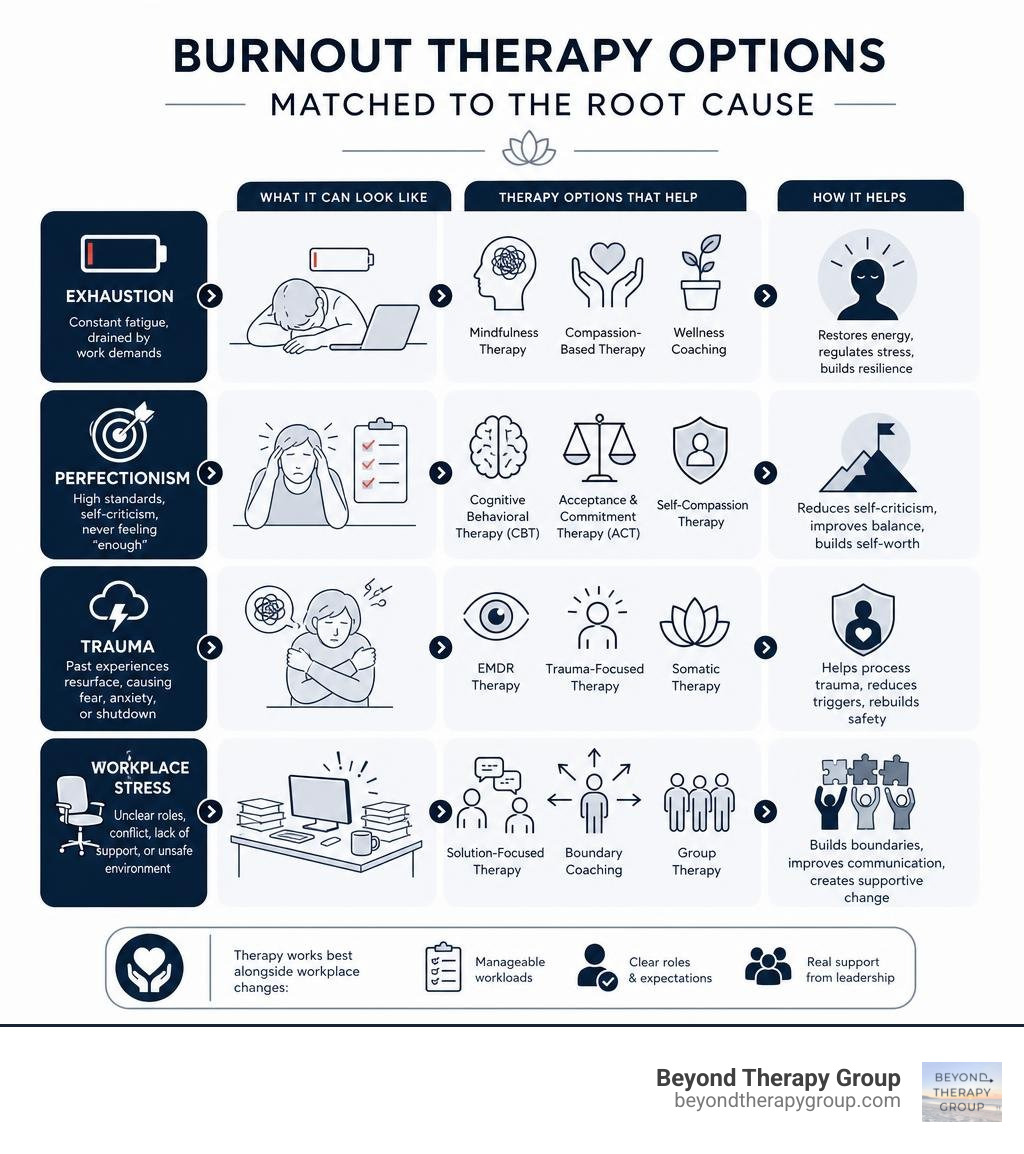
What Is the Best Therapy for Burnout When Rooted in Trauma or Perfectionism?
For many chronic overachievers, the urge to overwork is an unconscious coping strategy rooted in past experiences. When a person grows up with hypercritical caregivers or endures past workplace humiliation, overworking can become a survival mechanism to ensure safety, validation, and control.
When chronic burnout is sustained by unresolved trauma or deep-seated fears of inadequacy, Eye Movement Desensitization and Reprocessing (EMDR) is highly effective. EMDR utilizes bilateral stimulation, such as side-to-side eye movements or alternating tactile taps, to help the brain reprocess stuck emotional memories.
By updating the neural networks that equate rest with danger or failure, EMDR allows clients to disconnect their fundamental self-worth from their professional productivity. Working with a clinician through the ultimate guide to EMDR therapy in Redondo Beach can help resolve these past drivers. Gaining insights on understanding the benefits of a trauma informed therapist in Redondo Beach further ensures that care is delivered safely without overwhelming your nervous system.
Resolving Relational Stress and Workplace Communication Barriers
A major contributor to occupational exhaustion is interpersonal conflict, including difficult dynamics with supervisors, colleagues, or clients. When professionals lack the tools to communicate boundaries clearly, they absorb undue stress and internalize resentment.
Therapy focused on assertive communication teaches practical skills for negotiating workloads, declining unreasonable requests, and managing conflict constructively. Learning how to master assertive communication skills in 5 easy changes helps professionals express their needs without hostility or passive submission.
Additionally, exploring models outlined in understanding relational life therapy: a guide for couples and individuals assists in untangling relational patterns that spill over from personal life into the professional sphere, preventing interpersonal friction from draining your emotional reserves.
Combining Individual Therapy with Systemic and Organizational Changes
While individual psychotherapy provides invaluable tools for nervous system regulation and boundary setting, burnout is not solely an individual failing. It is fundamentally a systemic issue created by workplace conditions.
Research published in the Effectiveness of Organizational Interventions to Reduce Burnout in the Workplace emphasizes that organization-level changes generate larger and more durable reductions in burnout scores than individual coping strategies alone. In clinical trials, structured peer coaching led by professionally trained peers decreased overall burnout by 21.6%, while burnout increased by 2.5% in control conditions.
Sustainable burnout recovery requires integrating personal therapeutic gains with organizational adjustments:
- Workload and Schedule Adjustments: Implementing reasonable duty hour limits, coverage protocols, and protected recovery periods.
- Administrative Streamlining: Reducing redundant documentation and bureaucratic friction that pull professionals away from their core duties.
- Institutional Support Programs: Establishing crisis response protocols like Code Lavender to provide immediate psychological debriefing and support following high-stress events.
- Leadership Development: Training supervisors to foster psychological safety, recognize early signs of depletion, and support healthy work boundaries.
Combining clinical therapy with workplace adjustments creates a sustainable environment where recovery can truly take hold.
Frequently Asked Questions About Burnout Therapy
How long does therapy for burnout typically take to show results?
Most clients experience initial relief within 4 to 8 weeks of consistent therapy. This phase focuses on nervous system stabilization, sleep restoration, and basic boundary adjustments.
Comprehensive recovery, which involves dismantling perfectionism, processing underlying trauma, and establishing long-term professional boundaries, typically takes 3 to 6 months of active treatment. Research confirms that sustained, multi-week programs produce far greater clinical improvements than brief workshops.
Can therapy cure burnout if workplace conditions do not change?
Therapy can significantly reduce emotional distress, teach emotional regulation, and help you establish boundaries. However, if external job demands remain unmanageable, toxic, or unsafe, individual coping mechanisms have natural limits.
In these situations, therapy helps you clarify your options, preserve your mental health, and determine whether you need to negotiate structural changes or transition to a healthier work environment.
When should someone choose EMDR over CBT for burnout?
CBT is ideal if your burnout is primarily driven by current unhelpful thought habits, perfectionistic standards, or difficulty prioritizing daily tasks.
EMDR is the preferred choice when overworking is a trauma response driven by hypervigilance, past workplace abuse, or childhood experiences where your safety and worth were tied entirely to achievement.
Conclusion: Navigating Your Path to Sustainable Recovery
Overcoming chronic burnout is not about working harder on your self-care routine. It requires an accurate understanding of your symptoms, a clear assessment of your workplace environment, and an evidence-based therapeutic approach tailored to your specific needs.
Whether your recovery involves cognitive restructuring with CBT, psychological flexibility with ACT, trauma resolution through EMDR, or somatic stabilization, support is available. At Beyond Therapy, we provide personalized care to help you step off the path of chronic exhaustion and build lasting resilience.
Explore our specialized therapy for anxiety and depression to learn how our clinicians can assist you. We invite you to schedule a free 15-minute consultation with our therapists in Redondo Beach and the South Bay to answer your questions, discuss your goals, and begin your journey toward sustainable recovery.
Recent Posts


