
April 3, 2026
Meeting the Mandate: How to Navigate Probation Substance Abuse Therapy

What Is Probation Substance Abuse Therapy and What Does It Require?
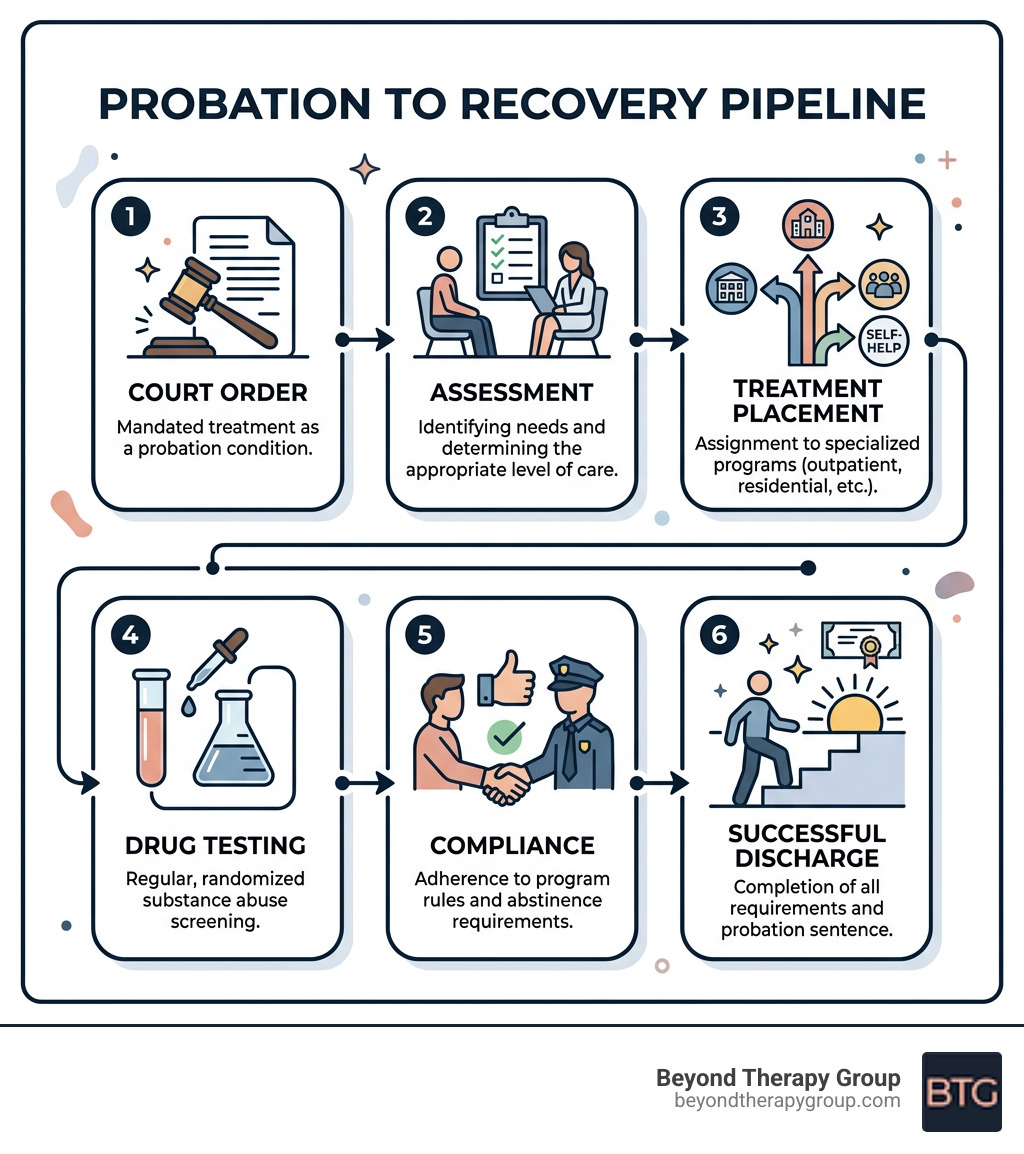
Probation substance abuse therapy is court-mandated treatment for people on probation who have a history of drug or alcohol use. It is a structured part of your probation sentence, not optional.
Here is a quick overview of what it typically involves:
- Court-ordered treatment as a condition of your probation sentence
- Regular drug testing through urinalysis, breathalyzers, or sweat patches
- Participation in a treatment program such as outpatient counseling, residential treatment, or self-help groups
- Compliance reporting to your probation officer
- Abstinence requirements from alcohol and controlled substances
The stakes are real. Nearly two thirds of all probationers are considered alcohol or drug involved, according to Bureau of Justice Statistics data. Yet only about 17% of all probationers reported participating in a drug treatment program during their sentence. If you have been ordered into treatment, understanding exactly what is required of you is the first step toward completing probation successfully and rebuilding your life.
I’m Rodman Walsh, LMFT, a licensed therapist with hands-on experience working across multiple levels of care in probation substance abuse therapy and addiction recovery. I’ll walk you through everything you need to know to meet your mandate and move forward.
Understanding Probation Substance Abuse Therapy Requirements
When a judge hands down a sentence that includes probation, they often attach specific conditions. These conditions are designed to protect the public and help you get back on your feet. For many, this includes a mandate for probation substance abuse therapy. We see this most often when the underlying offense was related to drugs or alcohol, or when a history of use is identified during the presentence investigation.
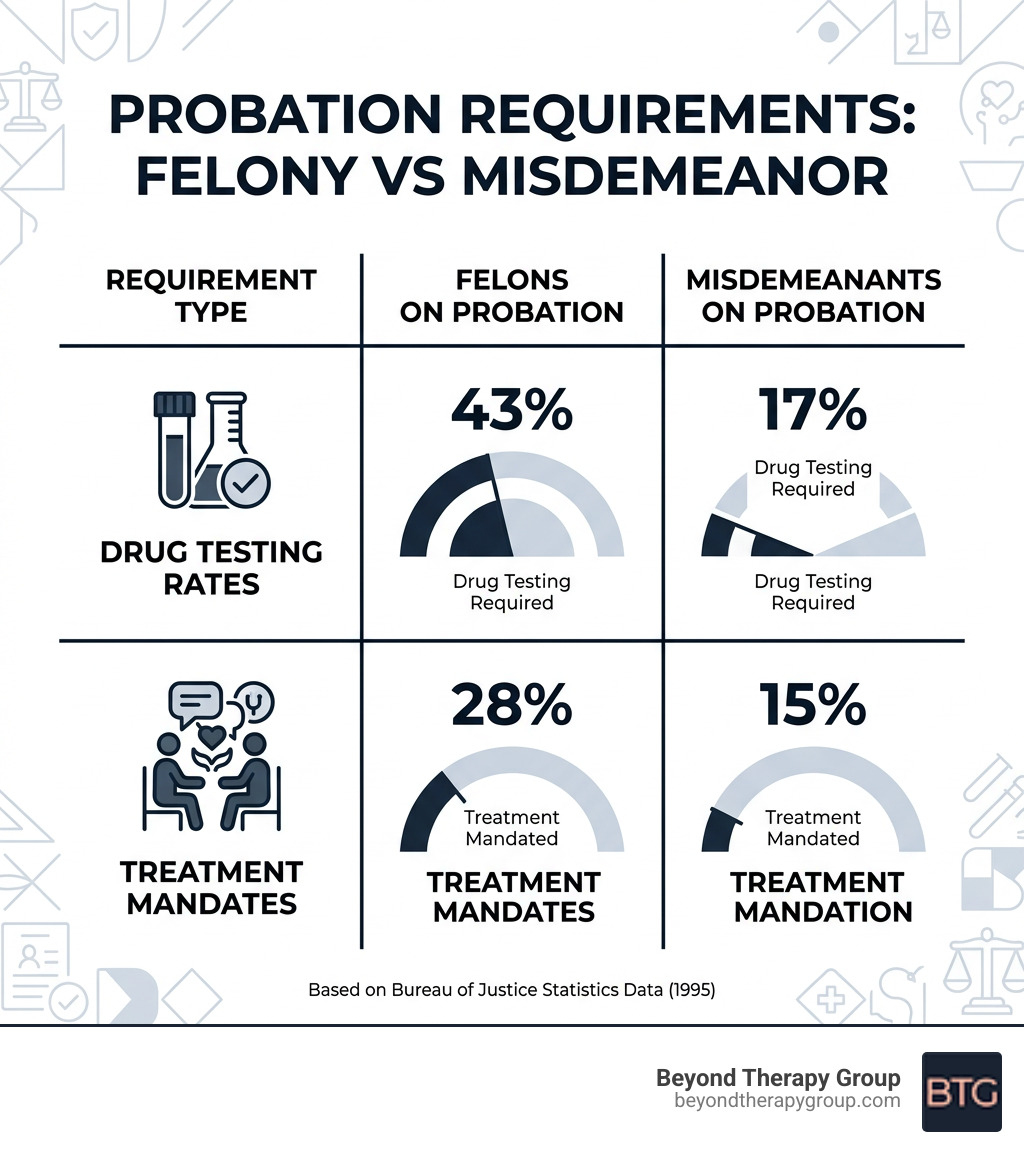
The requirements for therapy vary significantly based on the severity of the offense. According to government data from 1995, drug testing was required for 43% of felons on probation compared to only 17% of misdemeanants. This shows that the legal system views higher risk cases as needing more intensive monitoring. Whether you are facing a felony or a misdemeanor, the goal remains the same. The court wants to see that you are taking active steps toward a sober lifestyle.
One of the first things you will likely encounter is a clinical assessment. This is not just a formality. It is a tool used to determine if you meet the criteria for a substance use disorder. Understanding the difference between addiction and dependence is vital here. You can learn more about this in our guide on Addiction vs Dependence: Understanding the Difference and Why It Matters.
Common Conditions of Probation Substance Abuse Therapy
The conditions of your probation are the rules of the game. If you follow them, you stay out of jail. If you break them, you face sanctions. In our experience working with clients in Redondo Beach and the South Bay, the most common conditions include:
- Mandatory Drug Testing: This is the most frequent requirement. You might be asked to provide a urine sample, wear a sweat patch that detects drug use over several days, or use a breathalyzer for alcohol.
- Abstinence from All Substances: This often includes alcohol, even if your original offense was not alcohol-related. Alcohol is frequently viewed as a “trigger” substance that can lead to drug relapse.
- Regular Reporting: You must check in with your probation officer to prove you are attending your sessions.
- Participation in Self-Help Groups: Many judges require attendance at meetings like Alcoholics Anonymous (AA) or Narcotics Anonymous. These groups provide a community of support that supplements your professional therapy.
The Substance Abuse and Mental Health Services Administration (US) Treatment Improvement Protocol notes that these conditions work best when they are flexible. We believe that therapy should be tailored to your specific needs rather than being a one-size-fits-all punishment.
Prevalence and Participation Rates
It is important to know that you are not alone in this process. Millions of people are under community supervision in the United States. In fact, by 2003, more than 4.8 million individuals were on probation or parole. A large portion of this group struggles with substance use. Research shows that about 64.2% of alcohol or drug involved probationers have participated in a treatment program at some point in their lives.
However, there is a gap between who needs treatment and who receives it. While about half of male probationers may need substance treatment, only about 25% actually receive it during their sentence. This is why we focus on making probation substance abuse therapy accessible and supportive. If you have a mental health concern alongside your substance use, you are part of the 11.4% of probationers with a Dual Diagnosis: Substance & Mental Health. Addressing both issues at once is the most effective way to ensure long-term success.
Evidence-Based Models for Mandated Recovery
We don’t just use any therapy. We use models that have been proven to work for people in the legal system. When you are mandated to attend probation substance abuse therapy, you might feel defensive or frustrated. That is completely normal. Our job as your Substance and Alcohol Therapist is to help you find your own motivation for change.
One of the most effective tools we use is Motivational Interviewing. Instead of telling you what to do, we ask questions that help you realize how substance use is getting in the way of your goals, like keeping your job or being there for your family. We also rely heavily on Cognitive Behavioral Therapy. This helps you identify the “high-risk” situations that lead to use. For example, if you always want to drink after a long shift in the South Bay, we work on finding new ways to decompress.
We also keep an eye on Innovations in Treatment for Alcohol Use Disorder, such as medication-assisted treatment (MAT). For some, medications like naltrexone or buprenorphine are life-saving tools that reduce cravings and help them stay compliant with their probation terms.
Outpatient and Community-Based Probation Substance Abuse Therapy
Most probationers do not need to go to a locked residential facility. Instead, they participate in outpatient programs. This allows you to keep working and living in your community while getting help.
One example of a structured federal program is the Chemical Abuse Recovery Environment (CARE). This is a six-month intensive outpatient program that combines therapy with career development and social support. It is designed to help you separate from the “drug subculture” and build a pro-social life. In our local area, we offer similar intensive outpatient services that meet court requirements while fitting into your daily schedule.
We also encourage participation in community groups like Narcotics Anonymous (NA). These groups offer a 24/7 support network that a therapist simply cannot provide. Having a sponsor you can call when you feel a craving at 2:00 AM is a vital part of staying sober.
The Role of Case Management
You might feel like you are being pulled in a dozen different directions. You have your probation officer, your therapist, your boss, and your family all asking for your time. This is where case management comes in.
A good case manager helps coordinate all these moving parts. They ensure that your probation officer knows you are attending therapy, which prevents unnecessary violations. They also help you find Post-Treatment and Aftercare Support for Addicts so that when your probation ends, your recovery does not. Case management is about building a bridge between the court system and your real life.
Overcoming Barriers to Successful Completion
Completing probation substance abuse therapy is not just about stopping drug use. It is about fixing the things in your life that made you want to use in the first place. Many of our clients face massive hurdles like finding stable housing or a job that pays a living wage.
We often find that unresolved pain is at the root of the problem. We encourage you to look at How Trauma and Unresolved Emotional Pain Contribute to Addiction. If you have experienced early life stress, you might be using substances to numb that pain. By treating the trauma, we make it much easier to stay sober and meet your probation mandates.
Other common barriers include:
- Lack of Transportation: Getting to sessions can be hard if you lost your license.
- Financial Stress: Therapy and drug testing fees can add up.
- Family Conflict: Reintegrating with family members who might still be using can be a major trigger.
We work with you to find practical solutions to these problems. Whether it is connecting you with vocational training or helping you find sober housing in the South Bay, we are on your team.
Addressing Co-Occurring Disorders
It is very common for people on probation to struggle with both addiction and mental health issues like depression or anxiety. If we only treat the addiction, the depression will eventually lead to a relapse. This is why integrated treatment is so important.
While some state agencies, such as the South Carolina Department of Mental Health (SCDMH), provide extensive resources for agent education, we focus on providing direct therapeutic support to you. We believe that every person on probation deserves a therapist who understands both the legal requirements and the psychological needs of someone living with a mental illness.
Relapse Prevention and Graduated Sanctions
One of the biggest fears people have is what happens if they slip up. In the past, a single “dirty UA” might have sent you straight to jail.
Graduated sanctions mean that the response to a violation matches the severity of the behavior. If you miss a meeting, your sanction might be more frequent check-ins or extra community service. If you relapse, the response might be an increase in the intensity of your probation substance abuse therapy. The court wants to see you succeed, and they know that recovery is often a process of trial and error.
To prevent these slips, we focus on identifying your specific triggers. You can read more about What Makes Someone Relapse? to start identifying your own warning signs. If you ever feel like you are in a crisis, you can also reach out to the National Helpline for Mental Health, Drug, and Alcohol Issues from SAMHSA for immediate support.
Drug Courts and Pretrial Diversion
If you are eligible, drug courts and pretrial diversion programs are excellent alternatives to standard probation. These programs focus entirely on rehabilitation. In a drug court, you meet with a judge regularly to discuss your progress. If you complete the program, your charges might even be dismissed or your sentence significantly reduced.
These programs take a holistic approach. They don’t just look at your drug tests. They look at your housing, your employment, and your overall well-being. They recognize that Addiction: More Than Willpower and that you need a team of professionals to help you navigate the road to recovery.
Frequently Asked Questions about Probation Substance Abuse Therapy
What happens if a probationer fails a drug test?
Failing a drug test is a violation of probation, but it does not always lead to immediate incarceration. Many probation officers use graduated sanctions. This could mean you have to attend more therapy sessions, wear a SCRAM ankle bracelet for alcohol monitoring, or perform extra community service. The most important thing is to be honest with your officer and your therapist. Trying to hide a relapse usually makes the legal consequences much worse.
How long does court-mandated substance abuse treatment typically last?
The duration depends on your specific court order and your progress. Standard outpatient programs often last between 3 and 6 months. However, intensive programs like drug courts can last 20 months or longer, including an aftercare phase. Your therapist and probation officer will work together to decide when you have met your goals and are ready for discharge.
Can probationers choose their own treatment provider?
In many cases, yes. While the court or probation department might have a list of approved providers, you can often request to see a specific licensed therapist as long as they meet the court’s reporting requirements. We recommend checking with your probation officer before starting sessions to ensure the provider is accepted by the court.
Conclusion
Navigating probation substance abuse therapy can feel like walking through a minefield. There are so many rules to follow and so much at stake. But it is also an opportunity to make a real change. This mandate can be the catalyst that helps you break the cycle of addiction and build a life you are proud of.
At Beyond Therapy Group, we understand the unique pressures of court-mandated treatment. We provide tailored consultations and therapy services right here in Redondo Beach and the South Bay. We offer a free 15-minute consultation with our therapists to help guide your booking and answer any questions you have about meeting your probation requirements.
You don’t have to do this alone. We are here to support your recovery journey and help you reduce the risk of returning to the legal system. If you are ready to take the next step, you can find more info about substance and alcohol therapy services on our website. Let’s work together to meet your mandate and move toward a brighter, sober future.
Recent Posts
- « Previous
- 1
- 2
- 3
- 4