May 19, 2026
Why Your Recovery Needs More Than Just a 12-Step Program

Why So Many People Are Looking for a Better Alcohol Addiction Recovery Program
An alcohol addiction recovery program is a structured treatment plan that helps people stop drinking safely and build a lasting, sober life. Here is a quick look at the main types available:
| Program Type | Best For | Setting |
|---|---|---|
| Inpatient Rehab | Severe addiction, medical needs | Residential facility |
| Partial Hospitalization (PHP) | High support, some flexibility | Daytime clinic |
| Intensive Outpatient (IOP) | Moderate needs, work or family obligations | Outpatient clinic |
| Outpatient | Mild to moderate, strong support system | Outpatient clinic |
| Specialized Programs | Veterans, professionals, young adults | Varies |
Alcohol is one of the most widely used substances in the United States. More than 85% of adults report drinking at some point in their lives. Yet only about 7.2% of the roughly 16 million people with Alcohol Use Disorder (AUD) actually receive treatment in any given year. That gap is staggering, and it has real consequences. Approximately 95,000 people in the U.S. die from alcohol-related causes every year.
The hard truth is that wanting to stop is not always enough. Many people try to quit on their own or rely solely on a 12-step group, only to find themselves stuck. Recovery often requires more, including clinical support, evidence-based therapy, and sometimes medical care during detox.
That is exactly what this guide is here to help with.
Defining the Modern Alcohol Addiction Recovery Program
To understand how to get better, we first have to understand what we are up against. Alcohol addiction is a chronic disease of the brain. It is not a lack of willpower or a moral failing. When someone has an alcohol use disorder, their brain chemistry actually changes. This makes it incredibly hard to stop drinking even when they see their health or relationships falling apart.
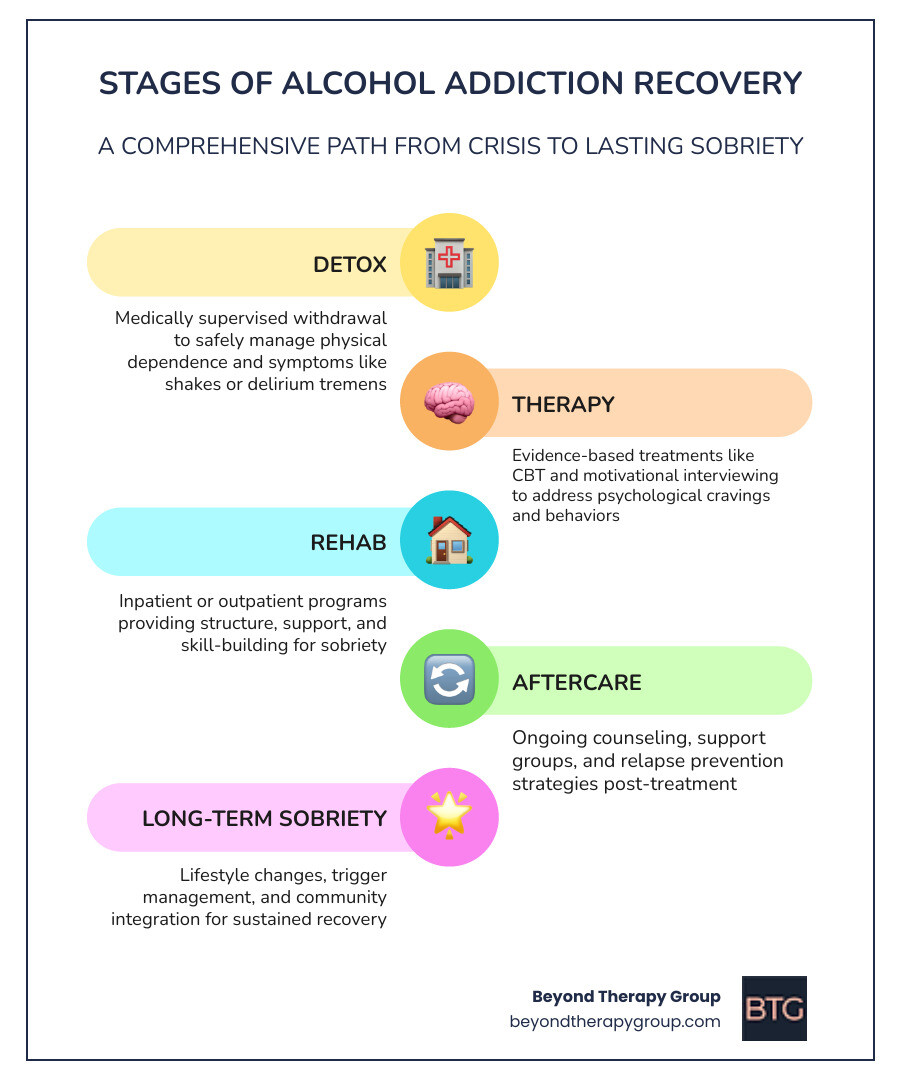
There is a big difference between liking a drink and having a physical dependence. You can learn more about this in our guide on Addiction vs. Dependence: Understanding the Difference and Why It Matters. Physical dependence means your body needs alcohol just to function normally. If you stop suddenly, you might get the shakes or feel sick. Psychological cravings are different. They are the mental “need” for a drink to handle stress or feel happy.
A modern alcohol addiction recovery program addresses both of these issues. It does not just tell you to stop drinking. It helps you understand why you drink in the first place. For many people in the South Bay and Redondo Beach areas, finding the right fit is the first step toward safety. You can find more details on how to start this journey through the Treatment for Alcohol Problems: Finding and Getting Help resource.
The Role of Evidence-Based Therapy in an Alcohol Addiction Recovery Program
In the past, many programs relied only on talk therapy. Today, we use evidence-based therapies that are proven by science to work. These are the “tools” you put in your recovery toolbox.
One of the most common is Cognitive Behavioral Therapy (CBT). This helps you identify the thoughts that lead to drinking. If you think “I had a bad day at work, so I need a beer,” CBT helps you challenge that thought. Dialectical Behavior Therapy (DBT) is another great tool. It focuses on managing big emotions so you do not have to turn to a bottle to numb them.
We also look at the “why” behind the addiction. Often, people use alcohol to cope with things they haven’t talked about. You can read about How Trauma and Unresolved Emotional Pain Contribute to Addiction to see how past experiences play a role. Another helpful approach is Motivational Interviewing. This is a way for therapists to help you find your own reasons for wanting to change. It reminds us that Addiction: More Than Willpower is a complex issue that needs a professional touch.
Medication-Assisted Treatment and Medical Detox
For some, the first step in an alcohol addiction recovery program is medical detox. Quitting “cold turkey” can be dangerous. In some cases, it can even be fatal. Serious withdrawal can lead to something called Delirium Tremens or DTs. This involves confusion, high blood pressure, and even seizures.
This is why supervised medical care is so important. Doctors can use medications to keep you safe and comfortable. Some common medications used during and after detox include:
- Naltrexone: This helps reduce the “reward” you feel from drinking.
- Acamprosate: This helps the brain function normally again after long term drinking.
Safety protocols in a professional facility ensure that your vitals are monitored 24/7. This takes the fear out of the first few days of sobriety.
Specialized Alternatives to Traditional Support Groups
While 12-step programs like Alcoholics Anonymous have helped millions, they are not the only way to stay sober. Some people find the spiritual aspect or the idea of “powerlessness” does not sit well with them. That is where specialized alternatives come in.
One of the most popular is SMART Recovery. This program is based on self-empowerment and scientific principles. It uses a 4-point program to help people build a balanced life. Instead of focusing on the past, it focuses on the present and the future.
The SMART Recovery approach is very different from traditional models. Here is a quick comparison:
| Feature | 12-Step Programs (like AA) | SMART Recovery |
|---|---|---|
| Main Philosophy | Surrender to a higher power | Self-empowerment and choice |
| View of Addiction | A lifelong disease | A maladaptive behavior that can be changed |
| Meeting Style | Sharing stories and experiences | Learning and practicing tools |
| Focus | Working the 12 steps | The 4-Point Program |
Choosing a Specialized Alcohol Addiction Recovery Program for Veterans
Veterans often face unique challenges. Military life involves high levels of stress and sometimes trauma. When a veteran struggles with drinking, it is often tied to these experiences. A specialized alcohol addiction recovery program for veterans focuses on these specific needs.
The VA offers many resources, including evidence-based treatments like Contingency Management, which uses incentives to reward sobriety. If you or a veteran you know is in trouble, the Veterans Crisis Line is available 24/7. It is also common for veterans to have a “dual diagnosis.” This means they are dealing with both addiction and a mental health issue like PTSD. You can learn more about this at Dual Diagnosis: Substance & Mental Health.
Programs for Professionals and Young Adults
Recovery is not one-size-fits-all. A CEO in Redondo Beach has different needs than a college student in the South Bay.
Professional programs often focus on workplace wellness and return-to-work planning. They help you stay sober while managing the high pressure of a career. They might offer flexible hours so you do not have to leave your job.
Young adult programs focus on things like peer support and academic integration. They help students navigate social lives where drinking is often the “norm.” These programs teach you how to have fun and succeed in school without relying on alcohol.
Levels of Care and What to Expect
When you enter an alcohol addiction recovery program, your daily life will change. The level of care depends on how much support you need.
Inpatient rehab is the most intensive. You live at the facility for 30 to 90 days. Your day is fully structured. You might wake up for meditation, have breakfast, attend group therapy, and then have an individual session with a therapist. Afternoons might include educational classes or holistic activities like yoga and art therapy.
Intensive Outpatient Programs (IOP) offer more flexibility. You might go to a clinic for three hours a day, three days a week. This allows you to live at home and keep up with your family or work. It is a great “step down” after finishing inpatient treatment.
Aftercare and Long-Term Sobriety Strategies
Finishing a program is a huge win, but it is just the beginning. The real work happens when you go back to your normal life. This is why aftercare is vital. Statistics show that as many as 90% of people may relapse at some point. Having a plan makes all the difference.
Effective aftercare includes:
- Ongoing therapy: Continuing to work with a Substance and Alcohol Therapist can keep you on track.
- Trigger identification: Learning what makes you want to drink so you can avoid those situations.
- Family therapy: Healing the relationships that were hurt by drinking.
- Support groups: Whether it is SMART Recovery or a local South Bay group, staying connected is key.
You can find more tips on staying sober in our article on Post-Treatment and Aftercare Support for Addicts. If you are worried about slipping up, understanding What Makes Someone Relapse? can help you spot the warning signs early.
Frequently Asked Questions about Alcohol Recovery
How do I know if I need professional rehab?
If you have tried to stop drinking and couldn’t, or if drinking is causing problems in your work, health, or relationships, it is time for professional help. If you feel sick when you don’t drink, that is a clear sign of physical dependence.
What are the most common symptoms of alcohol withdrawal?
Common symptoms include anxiety, tremors (the shakes), nausea, and sweating. In severe cases, people may experience hallucinations or seizures. Because withdrawal can be dangerous, it should always be managed by medical professionals.
How long does a typical recovery program take?
Detox usually takes about a week. Residential programs often last 30 to 90 days. However, recovery is a lifelong process. Most people benefit from at least a year of ongoing support and aftercare to ensure they stay sober.
Conclusion
Finding the right alcohol addiction recovery program is a personal journey. Whether you need the 24/7 support of an inpatient facility or the flexibility of an outpatient therapist, the most important thing is to start. At Beyond Therapy Group, we believe in a tailored approach to mental health and addiction. We know that every person in our Redondo Beach and South Bay community has a different story.
We provide expert therapy services and offer a free 15-minute consultation with our therapists. This chat helps guide your booking and ensures all your questions are answered before you commit. You do not have to do this alone. If you are ready to take the next step, reach out to a Substance and Alcohol Therapist today and begin building the life you deserve.
Recent Posts