
March 12, 2026
Counseling for Alcoholism and How It Changes Lives

How Alcohol Addiction Counseling Can Change Your Life
Alcohol addiction counseling is a specialized form of therapy that helps people overcome dependence on alcohol by addressing its root causes, not just its symptoms.
If you are trying to compare your options, here is a quick overview:
| Type of Support | Best For | Format |
|---|---|---|
| Individual counseling | Personalized coping strategies | 1-on-1, 1-2x per week |
| Group therapy | Peer support and accountability | Group sessions |
| Family counseling | Repairing relationships | Couples or family |
| Medication-assisted treatment | Managing cravings and withdrawal | With a prescriber |
| Support groups (AA, SMART Recovery) | Long-term community support | Free, ongoing |
Millions of adults in the United States live with Alcohol Use Disorder (AUD). Roughly 1 in 10 children grow up in a home where a parent struggles with it. These numbers are not just statistics. They represent real people dealing with real pain, often without knowing where to turn.
The good news is that treatment works. And counseling is one of the most effective tools available.
Recovery is not a straight line. But with the right support, lasting change is possible.
I’m Rodman Walsh, a Licensed Marriage and Family Therapist with hands-on experience providing alcohol addiction counseling across multiple levels of care, from outpatient therapy to intensive treatment programs for substance use and trauma recovery. In the sections below, I will walk you through everything you need to know to find the right path forward.
The Science and Methods of Alcohol Addiction Counseling
When we talk about alcohol addiction counseling, we are referring to a variety of evidence-based methods designed to change behavior. These methods are not just about willpower. They are about retraining the brain and learning new ways to handle life’s challenges without turning to a bottle.
The most common types of therapy used in this field include several specialized approaches. Each one serves a unique purpose in the recovery process.
- Cognitive Behavioral Therapy (CBT): This is one of the most widely used methods. It focuses on identifying the negative thought patterns that lead to drinking. By changing these thoughts, you can change your actions. You can learn more about this approach through the American Psychological Association.
- Dialectical Behavior Therapy (DBT): Originally designed for emotional regulation, DBT is very helpful for those who drink to cope with intense feelings. it uses mindfulness and distress tolerance to help you stay in the present moment.
- Motivational Interviewing (MI): This method is all about helping you find your own internal motivation to change. It is a collaborative style that helps resolve the mixed feelings many people have about quitting alcohol.
- Twelve-Step Facilitation (TSF): This is a structured approach that prepares you to engage with mutual support groups like Alcoholics Anonymous. It helps bridge the gap between professional therapy and community-based support.
We often combine these methods to create a plan that fits your specific needs. You can find more info about substance and alcohol therapy on our service page to see how these methods are applied in a clinical setting.
Benefits of Individual Alcohol Addiction Counseling
Individual sessions are the cornerstone of many recovery plans. In these one-on-one meetings, you have the undivided attention of a qualified therapist. This setting allows for a deep dive into your personal history and the specific triggers that lead to your alcohol use.
Most people attend individual therapy sessions one or two times per week. This consistency helps build a strong therapeutic alliance. A therapeutic alliance is the trust and bond between you and your counselor. Research shows that this bond is one of the biggest predictors of success in therapy.
According to Alcohol.org, individual counseling helps address life impairments beyond just drinking. This includes issues with your job, legal problems, or health concerns. We work with you to develop personalized coping strategies that you can use the moment you leave our office.
Group Dynamics in Alcohol Addiction Counseling
While individual therapy is vital, group therapy offers something unique. It provides peer support and a sense of community. When you are in a group, you realize that you are not alone. Other people are facing the same cravings and the same fears.
Group sessions offer accountability. Knowing that others are rooting for you can be a powerful motivator. Studies have shown that a combined approach of individual and group therapy often leads to better results. People who participate in both tend to have higher levels of peer support and an increased likelihood of staying abstinent. Group work also helps you build social skills that may have been damaged during active addiction.
Integrating Medication with Behavioral Therapy
Many people wonder if they should use medication or counseling. The truth is that for many individuals, the best results come from using both. There are several FDA-approved medications that can support your recovery journey. These are not a “magic pill” but they can make the hard work of counseling much easier to manage.
- Naltrexone: This medication blocks the “high” or pleasure you get from drinking. It also helps reduce cravings.
- Acamprosate: This is often used after someone has already stopped drinking. It helps the brain function normally again and reduces the physical distress that can lead to a relapse.
- Disulfiram: This medication creates an unpleasant physical reaction if you consume alcohol. It acts as a strong deterrent for those who need an extra layer of protection.
You can find more details on these options through MedlinePlus. It is important to remember that these medications are non-addictive. They are tools to help manage a chronic condition, much like someone would use medicine for diabetes or high blood pressure.
We stay up to date on innovations in AUD treatment to ensure our clients have access to the most effective combinations of medical and behavioral support.
Recognizing the Need for Professional Intervention
How do you know if it is time for alcohol addiction counseling? Alcohol Use Disorder (AUD) can range from mild to severe. It is often a progressive condition, meaning it gets worse over time if it is not addressed.
There are several diagnostic symptoms that professionals look for. If you have experienced at least two of these in the past year, it may be time to seek help:
- Drinking more or for longer than you intended.
- Wanting to cut down or stop but being unable to do so.
- Spending a lot of time drinking or recovering from the effects of alcohol.
- Experiencing blackouts where you cannot remember what happened while drinking.
- Continuing to drink even though it is causing trouble with your family or friends.
- Finding that your usual number of drinks has much less effect than before.
- Experiencing withdrawal symptoms like shakiness, trouble sleeping, or nausea when the effects of alcohol wear off.
Recognizing early warning signs is crucial for getting help before the situation becomes a crisis. A family history of alcoholism is also a strong indicator that you should be mindful of your own drinking habits.
Starting the Treatment Process
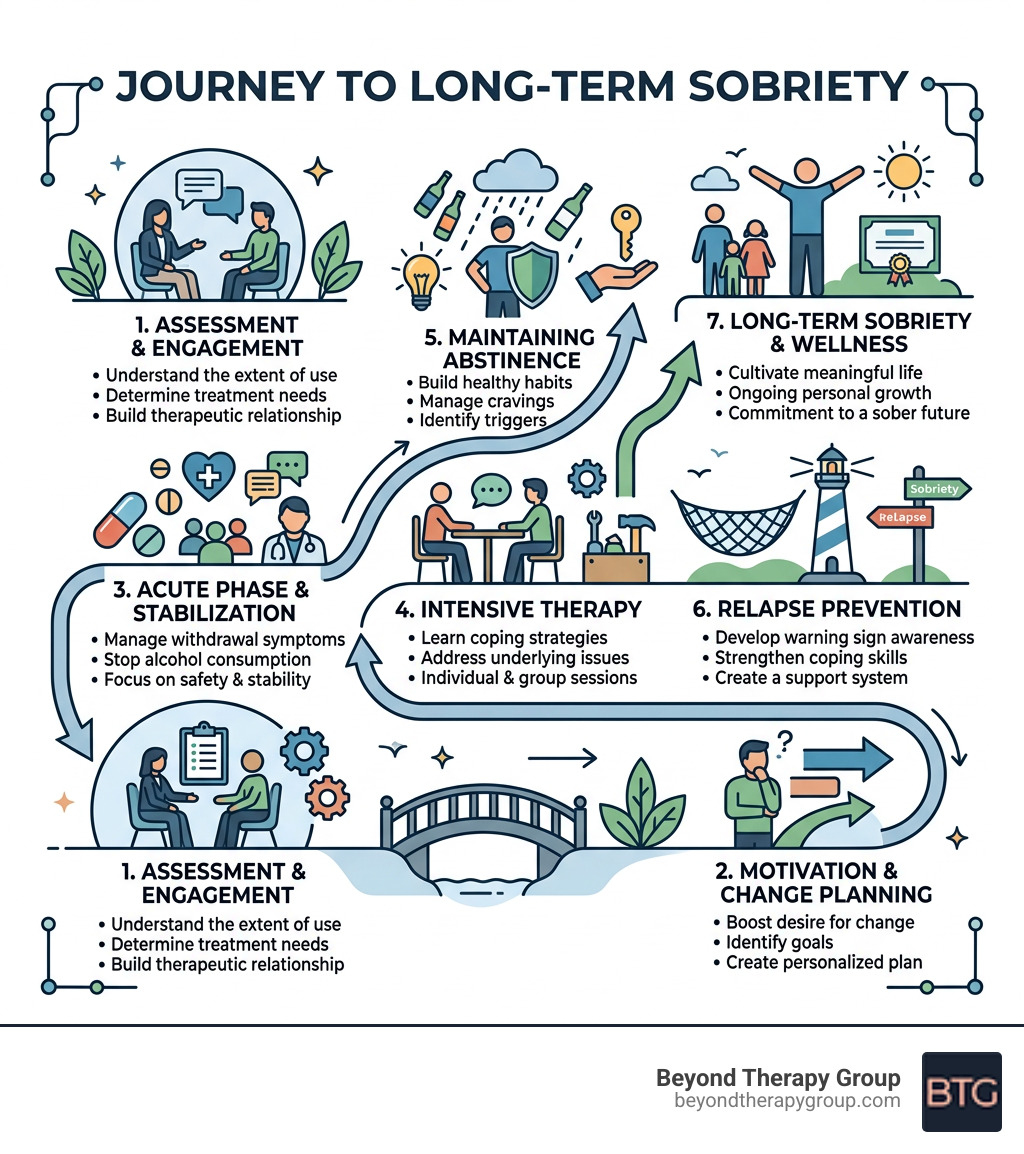
The first step in starting counseling is a comprehensive evaluation. This assessment helps us understand your physical health, your mental health, and the severity of your addiction. We look at your history and your current living situation to create a plan that is realistic for you.
For some people, the journey begins with a medical detox. Withdrawal from alcohol can be dangerous and even life-threatening in severe cases. A detox program usually lasts between two and seven days. It ensures that you are safe and comfortable while the alcohol leaves your system.
Once you are stable, we work together to set goals. These goals might be about total abstinence or reducing harm. We help you choose a qualified counselor who has experience with your specific needs. Look for credentials like Licensed Clinical Social Worker (LCSW) or Licensed Marriage and Family Therapist (LMFT) when choosing a professional.
Addressing Co-occurring Disorders and Relapse Prevention
It is very common for alcohol addiction to exist alongside other mental health issues. This is known as a dual diagnosis. Many people use alcohol to self-medicate for depression, anxiety, or trauma. If we only treat the drinking and ignore the underlying mental health issue, the risk of returning to alcohol is much higher.
We believe in treating the whole person. This means addressing the dual diagnosis and mental health concerns simultaneously.
Relapse is a reality for many people in recovery. Statistics show that substance abuse relapse rates hover around fifty percent. However, a relapse does not mean that treatment failed. It is often a sign that the treatment plan needs to be adjusted. We help our clients understand what makes someone relapse so they can build better defenses for the future.
Long-term sobriety strategies include:
- Identifying and avoiding high-risk situations.
- Building a sober support network.
- Learning how to manage stress without substances.
- Developing new hobbies and interests.
What should I expect during my first session?
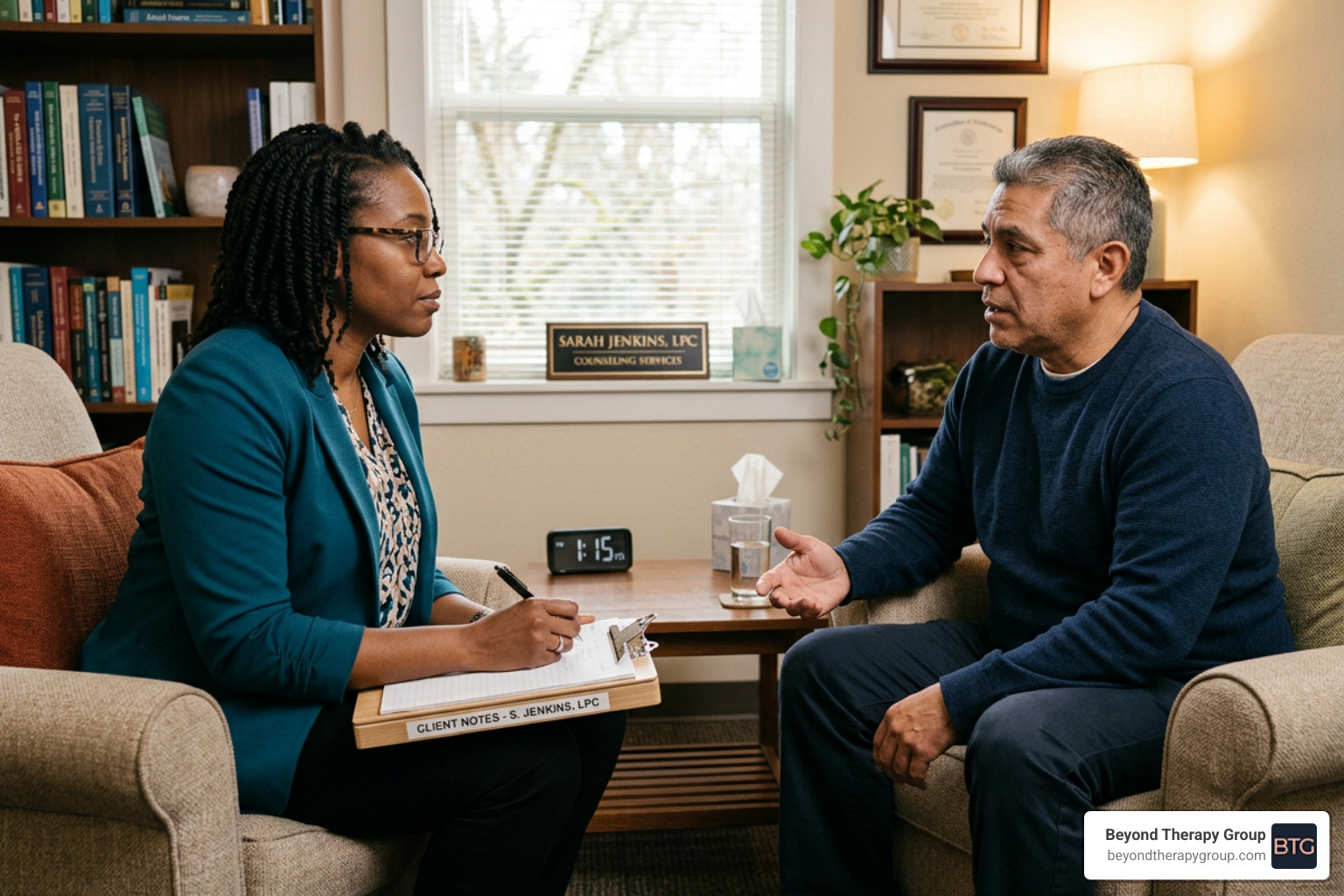
The first session of alcohol addiction counseling can feel intimidating, but it is actually a very supportive process. During this initial meeting, your therapist will focus on getting to know you. They will ask about your history with alcohol, your family life, and any previous attempts to quit.
This is also a time for you to ask questions. You can discuss confidentiality and how your information will be protected. You will work together to set initial goals and determine how often you should meet. The main goal of the first session is to start building that essential bond of trust. You should leave the session feeling heard and understood.
How does family counseling support recovery?
Alcohol addiction does not just affect the person drinking. It affects everyone who loves them. Relationships often become strained or broken. There may be issues with trust, communication, and codependency.
Family or couples counseling is a powerful tool for healing these wounds. It provides a safe space to talk about the pain caused by addiction. We work on building healthy communication skills and setting boundaries. Family members also learn about the science of addiction, which can help reduce feelings of guilt or anger. When the whole family heals together, the person in recovery has a much stronger support system to lean on.
Are there alternative therapies for alcoholism?
Traditional talk therapy is excellent, but some people find that adding alternative therapies helps them connect with themselves in new ways. These holistic approaches can reduce stress and provide an outlet for emotions that are hard to put into words.
- Yoga and Meditation: These practices help calm the nervous system and manage cravings.
- Art and Music Therapy: Creative expression can help you process trauma and find joy in sobriety. You can read about the healing qualities of music therapy to see how it works in treatment.
- Online Counseling: For those with busy schedules or transportation issues, online sessions provide a convenient way to stay connected to support.
These therapies work best when they are used alongside professional counseling. They help fill the emotional void that often remains when alcohol is removed from your life.
Conclusion
At Beyond Therapy Group, we understand that reaching out for help is a massive step. We are here to make that step as easy as possible for you. Our team of licensed professionals is dedicated to providing warm and judgment-free support to the communities of Redondo Beach and the South Bay.
We offer a free fifteen-minute consultation with our therapists. This allows you to ask questions and see if we are a good fit for your needs before you commit to a full session. We believe in tailored therapist matching because your recovery journey is unique to you.
Whether you are looking for individual work, family support, or help with a dual diagnosis, we have the resources to guide you. You do not have to do this alone. Schedule a consultation with an alcohol therapist today and take the first step toward a life that is no longer defined by alcohol. Your future self will thank you for the hard work you start today.
Recent Posts


- « Previous
- 1
- 2
- 3
- 4
- Next »