
April 20, 2026
Finding the Best Alcohol Therapy Without the Hangover

The Best Therapy for Alcohol Use Disorder: A Clear Starting Point
The best therapy for alcohol use disorder depends on your drinking patterns, personal goals, and whether any other conditions like anxiety or depression are involved. That said, research consistently points to a few core approaches that work well for most people.
Most effective evidence-based therapies for alcohol use disorder:
| Therapy | What It Does | Best For |
|---|---|---|
| Cognitive Behavioral Therapy (CBT) | Identifies triggers and builds coping skills | Most AUD severity levels |
| Motivational Interviewing (MI) | Resolves ambivalence and builds readiness to change | Early stage or reluctant clients |
| 12-Step Facilitation | Peer support and accountability | Long-term abstinence |
| Medication-Assisted Treatment | Reduces cravings and blocks alcohol’s effects | Moderate to severe AUD |
| Integrated Therapy | Treats AUD alongside PTSD or depression | Comorbid conditions |
Combining behavioral therapy with medication typically produces the best outcomes.
Alcohol use disorder (AUD) affects over 100 million people worldwide each year. It causes nearly 3 million deaths annually. Yet fewer than 1% of people with AUD receive proper medical treatment. That gap between need and care is exactly what this guide is here to close.
Whether you are trying to cut back, stop drinking completely, or simply understand your options, this guide walks you through every major treatment approach in plain language.
Understanding Alcohol Use Disorder and Diagnosis
We often hear the word alcoholism used to describe any kind of problem drinking. However, the medical community uses the term Alcohol Use Disorder (AUD). This is a chronic and relapsing brain disorder characterized by an impaired ability to stop or control alcohol use despite adverse social, occupational, or health consequences. It ranges from mild to severe based on the symptoms you experience.
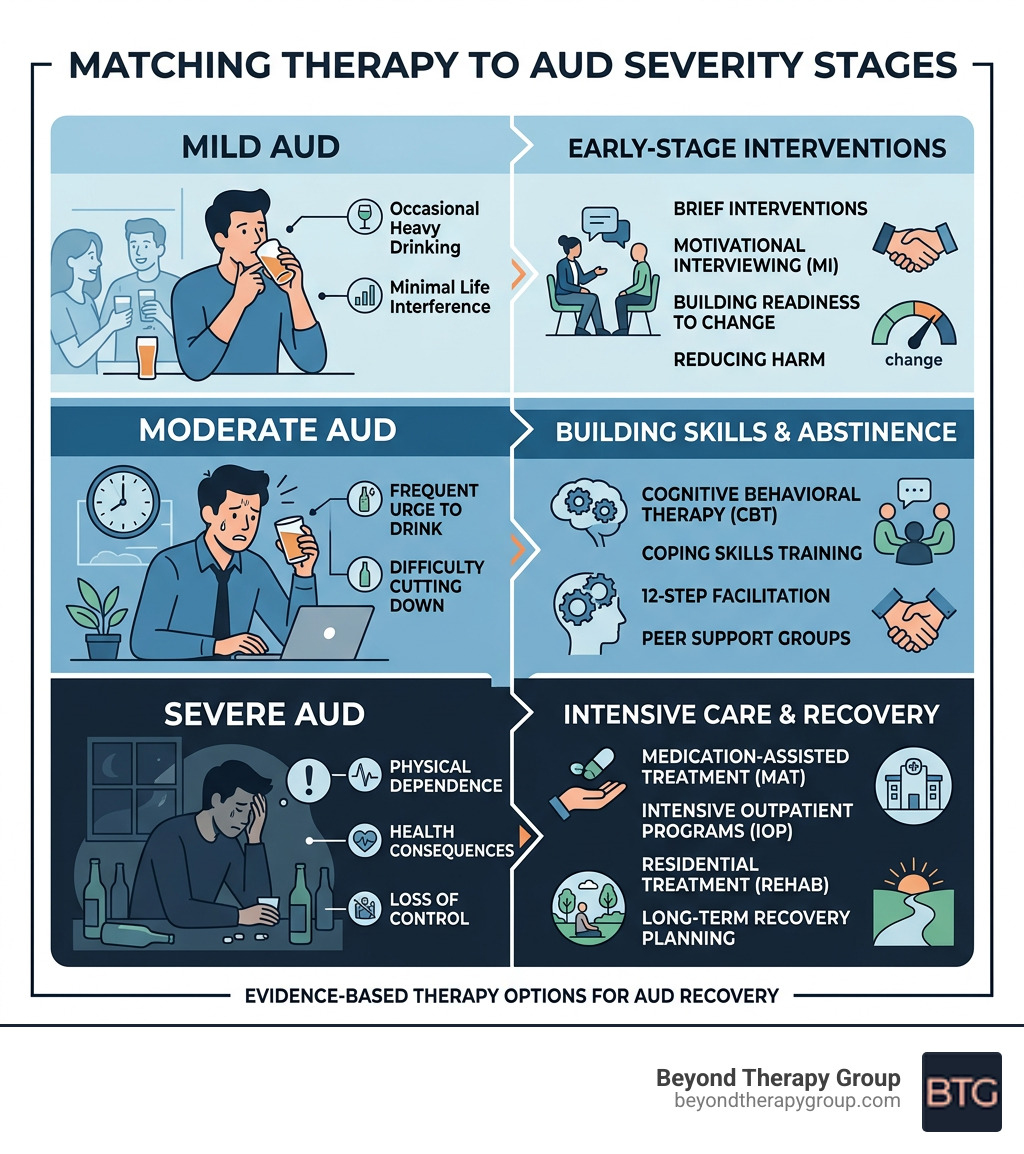
To reach a diagnosis, a healthcare provider will typically look at your patterns over the last year. They use the DSM-5 criteria which include eleven specific signs. These signs include things like having a strong urge to drink, being unable to cut down even when you want to, or finding that drinking interferes with your work or family life. If you meet two or three of these criteria, the disorder is considered mild. Meeting four or five suggests a moderate disorder, while six or more indicate a severe case.
One of the first things we discuss with our clients in the South Bay is their ultimate goal. For some, the goal is moderation. This means staying within low risk limits, which is usually no more than 14 units of alcohol per week spread over three or more days. For others, especially those with severe dependency or liver damage, abstinence is the only safe path. Abstinence offers the greatest health benefits and prevents the progressive nature of the illness from worsening.
If you are unsure where you stand, a visit to a primary care provider is a great first step. They can perform physical exams and lab tests to check your liver health and general physical state. You can also explore Mayo Clinic studies on diagnosis to see how the latest clinical trials are refining the way we identify and treat this condition.
Evidence-Based Behavioral Approaches and the Best Therapy for Alcohol Use Disorder
When we look for the best therapy for alcohol use disorder, we want treatments that are backed by rigorous science. Behavioral therapies, often called alcohol counseling, focus on changing the thoughts and behaviors that lead to heavy drinking. These sessions help you develop the skills needed to stop or reduce drinking and build a supportive recovery environment.
Research shows that Cognitive Behavioral Therapy (CBT) is one of the most effective tools we have. Meta-analyses of dozens of randomized controlled trials demonstrate that CBT leads to a significant reduction in relapse severity. It is especially powerful because its effects are durable, meaning the skills you learn stay with you long after the sessions end.
Another key approach is relapse prevention. This is a specific type of CBT that helps you identify high risk situations. If you know that Friday nights after work are a major trigger, we work on a plan to handle that specific window of time without reaching for a bottle. This method is highly effective for people who struggle with negative emotions or have gaps in their coping skills. To understand the foundations of these methods, you can read more scientific research on CBT and its role in treating various mental health challenges.
Cognitive Behavioral Therapy as the Best Therapy for Alcohol Use Disorder
CBT works on the idea that our thoughts, feelings, and actions are all connected. In the context of alcohol, it helps us spot the unhelpful thought patterns that lead to that first drink. For example, you might think you cannot relax without a glass of wine. In therapy, we challenge that belief and replace it with a more balanced thought, like knowing that deep breathing or a walk can also help you unwind.
A major part of CBT is trigger identification. Triggers can be internal, like feeling lonely or stressed, or external, like passing a certain bar in Redondo Beach. Once we know your triggers, we practice role playing. We might act out how to say no to a drink at a social event or how to handle a difficult conversation with a partner without using alcohol as a crutch. This active practice builds the muscle memory you need for real life situations.
Motivational Interviewing and the Best Therapy for Alcohol Use Disorder
Not everyone enters therapy feeling 100 percent ready to quit. Many people feel ambivalent. They know drinking is causing problems, but they also enjoy the social aspect or the temporary relief it provides. This is where Motivational Interviewing (MI) shines. It is a collaborative style of conversation that helps you find your own internal motivation for change.
Instead of a therapist telling you what to do, MI involves “change talk.” We listen for the reasons you want to change and help you expand on them. This approach is often used in brief interventions, which are short sessions that last only 5 to 10 minutes. These brief check-ins are incredibly effective for people who are just starting to realize their drinking might be a problem. You can find more details on this approach through Psychology Today on Motivational Interviewing.
Medical Support and Safe Detoxification
For many people, the path to the best therapy for alcohol use disorder must start with a safe detox. If you have been drinking heavily for a long time, your brain has adjusted to the constant presence of alcohol. When you stop suddenly, your central nervous system goes into overdrive. This can lead to withdrawal symptoms like tremors, anxiety, sweating, and in severe cases, seizures or delirium tremens.
Safe detoxification should always be managed by medical professionals. In mild cases, this might happen at home with regular check-ins. For more severe dependency, a hospital or specialized clinic is necessary. Medical supervision allows doctors to use medications like benzodiazepines to ease the transition and keep you safe.
Beyond detox, several FDA-approved medications can support long term recovery:
- Acamprosate: This helps the brain function normally again after you quit. It reduces the emotional discomfort, like anxiety and insomnia, that often leads to relapse.
- Naltrexone: This blocks the “high” that people get from drinking. If you do slip up and have a drink, it will not feel as rewarding, which makes it easier to stop.
- Disulfiram: This acts as a deterrent. If you drink alcohol while taking it, you will experience very unpleasant symptoms like nausea and flushing.
It is also important to remember that alcohol affects your ability to perform daily tasks. For instance, you must be aware of the DVLA driving regulations if you are in the UK or similar local laws in California. You must not drive if you are taking medication to ease withdrawal or if you have a significant alcohol problem.
Community Support and Lifestyle Adjustments for Recovery
Therapy is the foundation, but what you do between sessions matters just as much. Peer support groups provide a sense of community that is hard to find elsewhere. Groups like Alcoholics Anonymous (AA) use a 12-step facilitation model that has helped millions achieve long term abstinence. In fact, some studies show that 12-step programs can lead to higher abstinence rates over several years compared to talk therapy alone.
If a 12-step program does not feel right for you, SMART Recovery is a popular alternative. It focuses on self-empowerment and uses tools based on CBT to help you manage your urges. Both types of groups offer a safe space to share your struggles and successes with people who truly understand what you are going through.
Lifestyle changes also play a huge role. We often suggest keeping a drinking diary. Recording when you drink, how much you drink, and how you feel at the time can reveal surprising patterns. You can use tools like the Alcohol Change UK calculator to track your units and understand the impact on your health.
Other helpful habits include:
- Drinking at least three liters of water daily to stay hydrated during early recovery.
- Eating regular meals to keep your blood sugar stable, which reduces cravings.
- Engaging in mindfulness or yoga to manage stress.
- Finding new hobbies in the South Bay that do not involve alcohol, like beach volleyball or coastal hikes.

Specialized Care for Comorbid Conditions and Families
It is very common for alcohol problems to go hand in hand with other mental health issues. This is known as a dual diagnosis. For example, many people use alcohol to “numb” the symptoms of Post-Traumatic Stress Disorder (PTSD) or depression. If we only treat the drinking and ignore the trauma, the risk of relapse is very high.
The best therapy for alcohol use disorder in these cases is integrated treatment. This means treating both conditions at the same time with the same team of providers. Research into integrated treatment research shows that trauma-focused therapies like COPE (Concurrent Treatment of PTSD and Substance Use Disorders Using Prolonged Exposure) are safe and effective. They help you process the trauma while simultaneously learning how to stay sober.
Family and couples therapy are also vital. Alcoholism is often called a family disease because it affects everyone in the home. Family sessions can help repair broken trust and improve communication. It also teaches your loved ones how to support your recovery without enabling the drinking. Organizations like Al-Anon provide specific support for the friends and family of those struggling with AUD, helping them manage their own well-being.
Frequently Asked Questions about Alcohol Recovery
Is inpatient or outpatient treatment better for AUD?
There is no single answer because it depends on your level of dependency and your home environment. Inpatient treatment, or residential rehab, provides 24-hour care and a structured environment away from triggers. This is usually recommended for severe cases or for those who have tried outpatient care without success. Outpatient treatment allows you to live at home and continue working while attending therapy sessions several times a week. This works well for those with a strong support system and a stable living situation in places like Redondo Beach.
How long do alcohol withdrawal symptoms last?
Withdrawal symptoms usually start within hours of your last drink. They typically peak within the first 48 hours. For most people, the physical symptoms like tremors and nausea begin to improve after three to seven days. However, psychological symptoms like anxiety, depression, and sleep problems can last for several weeks or even months as your brain chemistry stabilizes. This is why ongoing therapy is so important after the initial detox phase.
What factors influence long term treatment success?
The biggest factor is your commitment to ongoing care. Detox is just the beginning. Success is much more likely if you combine medication with behavioral therapy and a support group. Developing strong coping skills to handle stress and having a supportive social circle are also key. Relapse is common, but it should be seen as a signal to adjust your treatment plan rather than a failure. Returning to treatment quickly after a slip is a major predictor of long term success.
Conclusion
Finding the best therapy for alcohol use disorder is a personal journey, but you do not have to walk it alone. Whether you are interested in Cognitive Behavioral Therapy, need help navigating a dual diagnosis, or want to explore medication options, there is a path forward that fits your life in the South Bay.
At Beyond Therapy Group, we understand that every story is unique. We provide tailored therapy services designed to meet you exactly where you are. We offer a free 15-minute consultation with our therapists to help guide your booking and answer any questions you might have about the process. This is a low pressure way to see if our approach feels right for you.
Recovery is about more than just putting down the bottle. It is about building a life that you do not feel the need to escape from. If you are ready to take that first step toward a clearer future, we are here to support you. You can find more info about our therapy services and how we can help you or your loved one by visiting our website. Let us help you find the lasting change you deserve.
Recent Posts