
March 12, 2026
Sobriety Starts Here with Alcohol Recovery Counseling

When Alcohol Becomes a Problem, Recovery Counseling Can Help
Alcohol recovery counseling is a structured, evidence-based treatment that helps people with alcohol use disorder (AUD) understand their drinking patterns, change harmful behaviors, and build a sustainable sober life.
Here is a quick overview of what it involves:
- What it is: One-on-one or group sessions with a licensed counselor trained in addiction and AUD
- Who it helps: Anyone struggling with alcohol misuse, from mild to severe AUD
- How it works: Uses therapies like CBT and motivational interviewing to identify triggers, build coping skills, and prevent relapse
- Where it fits: Can be combined with medication, detox, support groups, and family therapy
- How to start: Talk to a primary care provider or contact a licensed counselor directly
Alcohol-related problems are among the most significant public health challenges in the United States. Yet many people wait years before seeking help, often because they are unsure where to start or feel uncertain about what treatment actually looks like.
The good news is that most people with AUD can benefit from some form of treatment. Research consistently shows that people who engage in counseling reduce their drinking, experience fewer alcohol-related problems, and report improved mental health.
Recovery is rarely a straight line. But with the right support, it is absolutely possible.
I’m Rodman Walsh, a Licensed Marriage and Family Therapist (LMFT) with experience providing alcohol recovery counseling across multiple levels of care, from intensive treatment programs to private practice. In this guide, I’ll walk you through everything you need to know to understand your options and take a confident first step.
What is Alcohol Recovery Counseling?
At its heart, alcohol recovery counseling is built on a therapeutic alliance. This is a collaborative relationship between you and a trained professional where you feel safe, respected, and heard. Unlike simply talking to a friend, this process uses evidence-based behavioral treatments to address the root causes of why you drink.
One of the first things we explore is the difference between addiction and dependence. While they often go hand in hand, they are not the same thing. Physical dependence involves your body needing alcohol to function and experiencing withdrawal without it. Addiction is a more complex brain disorder characterized by compulsive use despite negative consequences.
Counseling focuses on the “why” and the “how.” We look at psychological triggers, which are those specific people, places, or emotions that spark the urge to drink. By improving emotional regulation, we help you manage stress or sadness without reaching for a bottle. It is about retraining the brain to find healthier ways to cope with life’s ups and downs.
How Alcohol Recovery Counseling Differs from General Therapy
You might wonder if you can just see any therapist for help with drinking. While general therapy is great for personal growth, alcohol recovery counseling is a specialized field. It focuses specifically on Alcohol Use Disorder (AUD) and utilizes specific protocols for relapse prevention.
Counselors in this field often hold specialized credentials, such as being a Certified Alcohol and Drug Counselor (CADC) or a Licensed Professional Clinical Counselor (LPCC) with addiction training. The focus is much more targeted on behavioral change and long-term sobriety. We also address the role of willpower in addiction, helping you understand that recovery is about more than just “trying harder.” It is about having the right tools and support system in place.
Addressing Co-occurring Mental Health Issues
It is very common for alcohol issues to live alongside other challenges like anxiety or depression. This is known as a dual diagnosis. If you drink to “numb” your anxiety, the alcohol actually ends up making the anxiety worse over time, creating a vicious cycle.
We provide dual diagnosis support by treating both issues at the same time. If we only treat the drinking but leave the depression unaddressed, the risk of returning to alcohol remains high. Holistic care means looking at the whole person, ensuring that your mental health is stabilized as you work on your sobriety.
Core Modalities in Alcohol Recovery Counseling
We use several proven methods to help you change your relationship with alcohol. These are not just “talk therapy” sessions because they are active, skills-based approaches.
- Cognitive Behavioral Therapy (CBT): This helps you identify the unhelpful thought patterns that lead to drinking. If you think, “I had a bad day, I deserve a drink,” CBT helps you challenge that thought and replace it with a healthier one.
- Motivational Interviewing (MI): This is a non-judgmental way to help you find your own internal motivation to change. We work with you to resolve any ambivalence you might have about quitting.
- Dialectical Behavior Therapy (DBT): This focuses on mindfulness and distress tolerance. It is incredibly helpful for people who feel overwhelmed by their emotions.
| Feature | Cognitive Behavioral Therapy (CBT) | Dialectical Behavior Therapy (DBT) |
|---|---|---|
| Primary Goal | Change negative thought patterns | Manage intense emotions and relationships |
| Focus Area | Logic and behavior | Mindfulness and distress tolerance |
| Common Use | Identifying triggers and cravings | High-stress situations and emotional pain |
A major part of our work involves addressing trauma and emotional pain. Many people use alcohol to mask past wounds. By processing these experiences in a safe environment, the “need” for alcohol often begins to diminish.
The Role of Family Involvement in Alcohol Recovery Counseling
Addiction is often called a “family disease” because it affects everyone in the household. Over 1 in 10 children in the US live in a home where at least one parent has a substance use disorder. This is why systemic healing is so important.
Family therapy helps improve communication skills and repairs the trust that may have been broken. We teach family members about recognizing early warning signs of a potential relapse so they can be supportive rather than accusatory. We also encourage families to find their own support for family and friends through groups like Al-Anon. Research shows that people with strong family support are significantly more likely to stay sober long-term.
Relapse Prevention and Coping Strategies
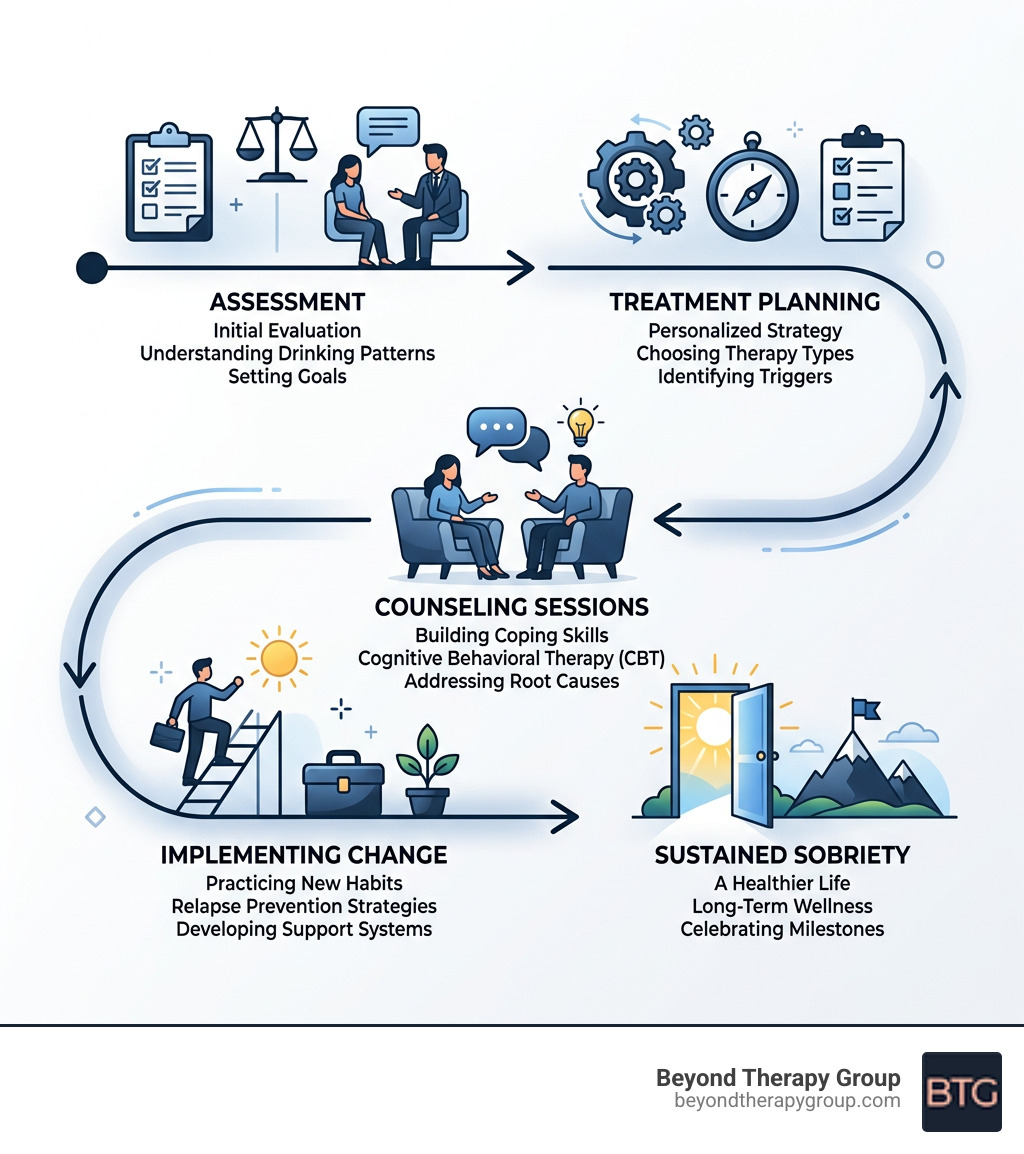
Relapse is a common part of the journey, but it is not inevitable. A huge portion of alcohol recovery counseling is dedicated to trigger identification. We help you map out the “danger zones” in your life.
Once we know the triggers, we create an emergency plan. What do you do when a craving hits at 9:00 PM on a Tuesday? We practice assertive refusal skills, helping you learn how to say “no” in social situations without feeling awkward or ashamed. By understanding relapse triggers, you can stay one step ahead of the addiction.
Integrating Counseling with Medical and Peer Support
Counseling works best when it is part of a comprehensive plan. In our Redondo Beach and South Bay locations, we often see clients who benefit from combining therapy with other medical supports.
Medication-Assisted Treatment (MAT) can be a literal lifesaver. Medications like Naltrexone can reduce cravings, while Acamprosate helps the brain return to normal functioning after long-term drinking. These medications are non-addictive and help level the playing field so that counseling can be more effective. We stay up to date on innovations in AUD treatment to ensure you have every advantage.
The Process and Duration of Treatment
Your journey starts with an initial evaluation. This is where we talk about your history, your goals, and any co-occurring issues. We then determine the right session frequency for you. Some people start with sessions twice a week, while others might only need once a week.
As you progress, we focus on post-treatment aftercare. Sobriety is a long-term maintenance project. Even after you stop drinking, staying connected to a counselor or a support group can help you navigate new life challenges without turning back to old habits.
Finding and Choosing the Right Counselor
Choosing a counselor is a big decision. You should always look for someone who meets state licensing requirements and has a specialty in AUD. In California, you can check a provider’s license through the state’s accreditation websites to ensure it is current.
Beyond the paperwork, therapeutic fit is the most important factor. You need to feel like you can be honest with your counselor. Many organizations also utilize professional volunteers or peer support specialists who have lived experience with addiction. These individuals can offer a unique level of empathy and understanding.
Frequently Asked Questions about Alcohol Recovery
How long does alcohol recovery counseling typically last?
The duration is completely individualized. Some people see significant progress in a few months, while others choose to stay in counseling for a year or more to manage long-term maintenance. It is a progress-based journey, not a race.
Is alcohol counseling covered by insurance?
Most major insurance plans do cover substance use treatment as part of mental health benefits. Many employers also offer Employee Assistance Programs (EAPs) that provide a set number of free sessions. If you are concerned about costs, ask about sliding scale fees which adjust the price based on your income.
Can counseling help if I have relapsed before?
Absolutely. In fact, many people who find long-term success have relapsed in the past. We view setbacks as learning opportunities, not failures. If you relapse, we simply adjust the treatment plan and look at what new triggers or stressors need to be addressed. Persistence is the most important ingredient in recovery.
Conclusion
At Beyond Therapy Group, we believe that every person deserves a chance to live a life free from the weight of alcohol. Whether you are in Redondo Beach or the wider South Bay area, our team is here to provide the tailored, compassionate care you need.
We know that taking the first step is the hardest part. That is why we offer a free 15-minute consultation with our therapists. This is a no-pressure way for you to ask questions, see if we are a good fit, and learn how to book your first full session.
Your path to healing is unique, and your treatment should be too. If you are ready to reclaim your life, you can start your journey with a substance and alcohol therapist today. Sobriety starts with a single conversation. We are ready to listen when you are ready to talk.
Recent Posts