
May 16, 2026
Finding Your Way Through the Fog of Ambiguous Loss

- Ambiguous loss is a unique form of grief that lacks clear resolution or closure.
- Dr. Pauline Boss developed this theory to explain the “frozen” state of mourning.
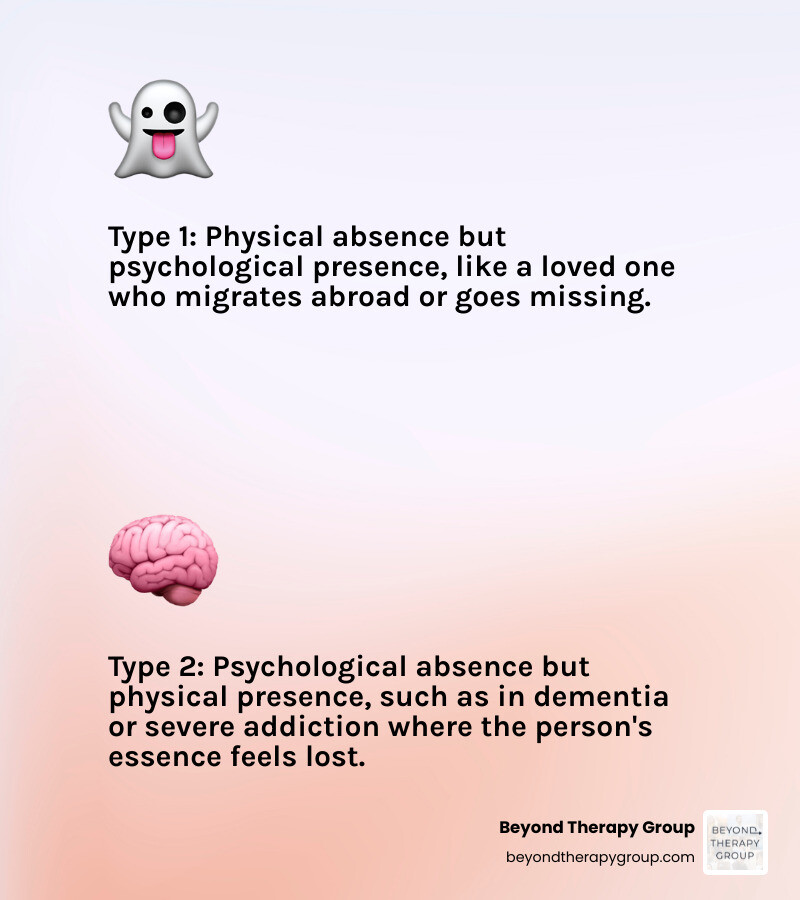
- The two main types involve physical absence with psychological presence or vice versa.
- South African families face specific stressors like migration, addiction, and dementia.
- Therapy focuses on “both/and” thinking to build resilience and find meaning.
- Healing involves creating new rituals rather than waiting for traditional closure.
Understanding Ambiguous Loss and Its South African Context
When we think about loss, we often picture something clear. A death, a funeral, a time of mourning, and then some sense of moving forward. But for many South Africans, grief is not that straightforward. It can feel like living in a fog where someone you love is both present and absent. Dr. Pauline Boss introduced the term ambiguous loss in the 1970s to describe this kind of grief.
In our current landscape of April 2026, we see this phenomenon manifesting in very specific ways across South African society. Ambiguous loss is essentially a relational loss that lacks a clear boundary or “ending.” It is a chronic stressor that freezes the grieving process because the status of the loved one remains uncertain.

The Two Faces of Ambiguous Loss
To understand how to heal, we first have to name the type of loss we are experiencing. Dr. Boss identified two distinct categories:
- Type One: Physical Absence with Psychological Presence. This occurs when a loved one is physically gone but remains very much alive in the minds and hearts of those left behind. In South Africa, this is frequently seen in cases of migration, where family members move abroad for work, leaving a void in the daily household. It also applies to estrangement, where a relative is alive but unreachable, or missing persons cases.
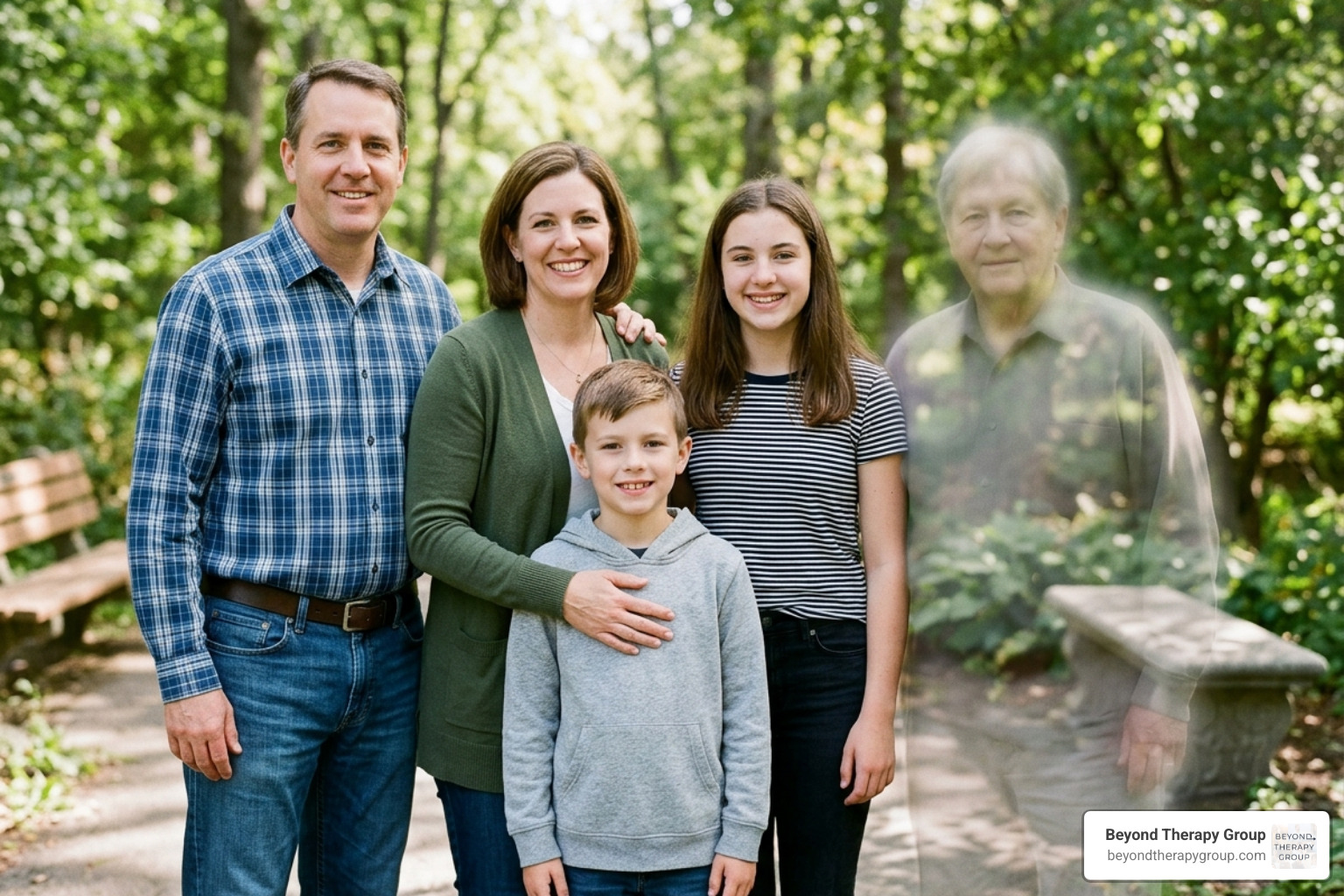
- Type Two: Psychological Absence with Physical Presence. This is often described as “the long goodbye.” The person is right in front of you, but their mind or personality has changed. Common examples include dementia and Alzheimer’s, traumatic brain injuries, or severe addiction. The body is there, but the “soul” of the relationship feels lost.
According to research on Ambiguous loss: when closure doesn’t exist | Connect Magazine, this type of loss is particularly damaging because it defies our human need for “closure”—a concept Dr. Boss often argues is a myth in these circumstances. In the South African context, factors like the HIV/AIDS pandemic have historically created layers of ambiguous loss, where children may be raised by relatives while their parents are physically present but unable to provide care due to illness or systemic barriers.
The Psychological Toll of Frozen Grief and Uncertainty
Why does this feel so much harder than traditional bereavement? The answer lies in the “frozen” nature of the grief. When a death occurs, society offers us rituals—funerals, wakes, and sympathy cards. But when a loved one is “missing” while still alive, there are no cards for that. This is what we call disenfranchised grief—a loss that isn’t socially recognized or validated.
Symptoms of the Fog
We often see clients in Redondo Beach and the South Bay struggling with a specific cluster of symptoms related to this uncertainty:
- Boundary Ambiguity: You aren’t sure who is “in” or “out” of the family. Should you still set a place at the table? Do you refer to yourself as a “wife” if your husband no longer remembers your name?
- Identity Confusion: When a caregiver spends years looking after a spouse with dementia, they often lose their sense of self. They are no longer a partner; they are a 24/7 nurse.
- Anxiety and Hyper-vigilance: Especially in cases of addiction or estrangement, families live in a state of “waiting for the other shoe to drop.”
- Isolation: Because others don’t understand why you are still grieving “someone who is still here,” you may stop reaching out, leading to deep loneliness.
If you are feeling overwhelmed by these emotions, exploring Professional Grief & Loss Therapy can provide a space to validate that your pain is real, even if it doesn’t have a death certificate attached to it.
Navigating Ambiguous Loss Therapy South
When we seek ambiguous loss therapy south, the goal isn’t to “get over it.” Instead, the goal is to increase our tolerance for ambiguity. We work with families to move away from “either/or” thinking (e.g., “Either they are here or they are gone”) and toward “both/and” thinking.
“Both/and” thinking sounds like this: “My father is both here (physically) and gone (cognitively).” Or, “My daughter is both part of this family and absent because of her addiction.” This mental shift allows the brain to stop searching for a final resolution and start living in the reality of the present.
Resources like Ambiguous Loss: Home highlight meaning-making as one of the most helpful tools. The goal is not to find purpose in the loss itself. There is nothing meaningful about a disease like Alzheimer’s. Instead, healing often comes from how we respond, what we value, and how we carry the person’s memory forward.
Evidence-Based Approaches in Ambiguous Loss Therapy South
In our practice, we utilize several frameworks to help clients navigate this fog:
- Cognitive Behavioral Therapy (CBT): We help identify the “stuck” thought patterns that keep you in a loop of seeking closure. By reframing these thoughts, we can lower the intensity of anxiety and depression.
- Acceptance and Commitment Therapy (ACT): This is vital for ambiguous loss. It teaches us to accept the things we cannot change (the ambiguity) while committing to actions that align with our values.
- Trauma-Informed Therapy: Many ambiguous losses are rooted in traumatic events, such as a sudden disappearance or a violent change in personality. Using Trauma-Informed Therapy ensures that we address the nervous system’s response to the ongoing stress.
- Narrative Therapy: We help you rewrite the story of your relationship. Instead of a story of “abandonment,” we might look at it as a story of “surviving a complex separation.”
Understanding the nuances of Trauma-Informed Care Versus Trauma Treatment is essential when dealing with the long-term, low-grade trauma that comes with living in limbo.
Accessing Specialized Ambiguous Loss Therapy South
Finding a therapist who understands that this isn’t “standard” grief is crucial. The therapeutic alliance—the trust between you and your counselor—is the biggest predictor of success. In the South Bay area, we focus on creating a culturally sensitive environment that respects the unique family dynamics found in our local communities.
Whether you are looking for Redondo Beach Grief Therapists for Every Stage of Loss or prefer virtual sessions from elsewhere in the South, the first step is often the hardest. We offer a free 15-minute consultation to help you determine if our approach fits your specific needs. You can learn more about how we work by reading about Understanding the Benefits of a Trauma-Informed Therapist in Redondo Beach.
Building Resilience Through Meaning and Rituals
Healing from ambiguous loss requires us to build “psychological muscles” that we never asked to have. Resilience isn’t about “bouncing back” to who you were before the loss; it’s about integrating the loss into who you are becoming.
The Six Pillars of Resilience for Ambiguous Loss
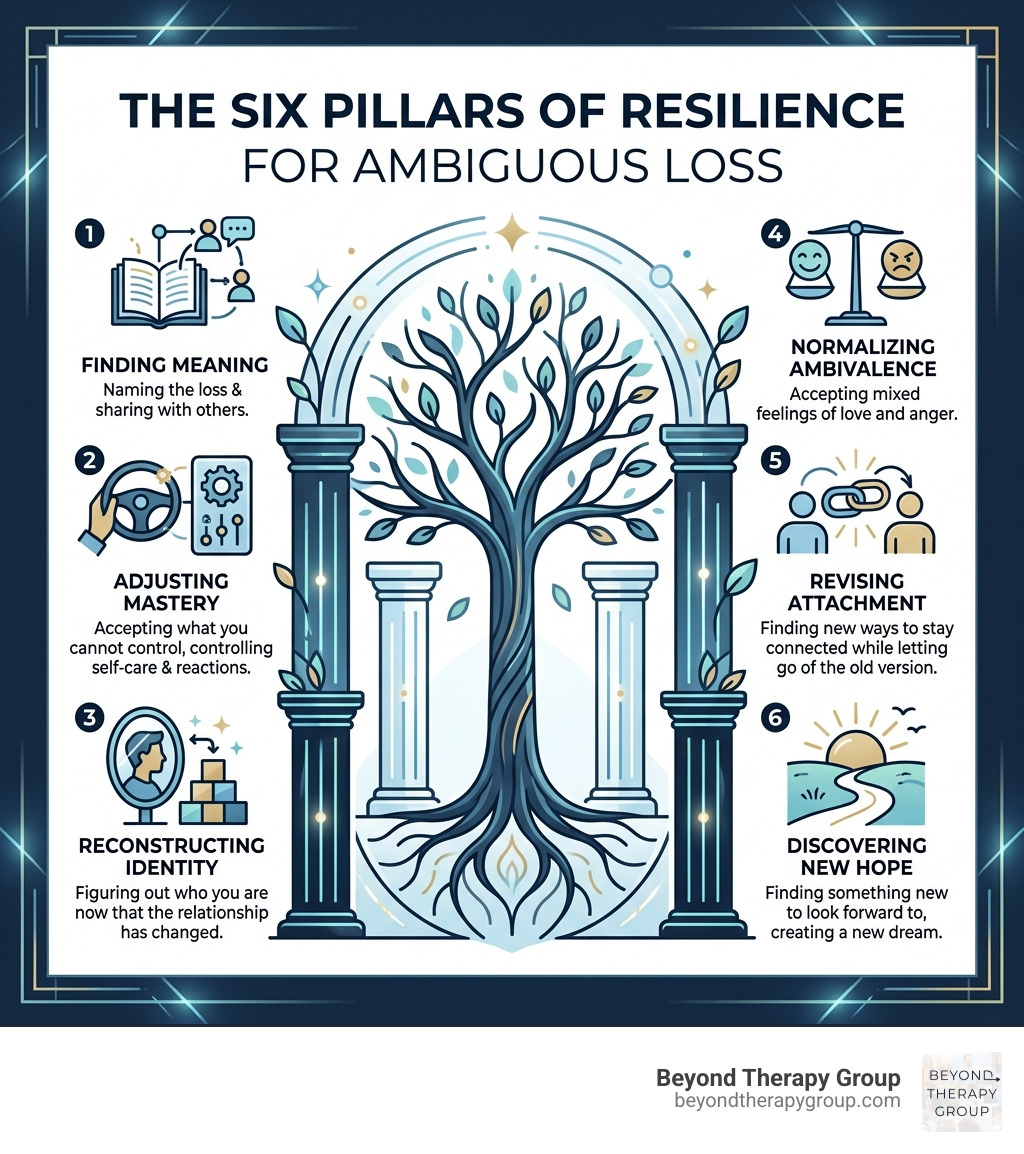
Dr. Boss outlined six guidelines for finding your way through:
- Finding Meaning: Naming the loss and talking about it with others who “get it.”
- Adjusting Mastery: Realizing you cannot control the outcome, but you can control your self-care and your reactions.
- Reconstructing Identity: Figuring out who you are now that the relationship has changed.
- Normalizing Ambivalence: Accepting that it’s okay to feel both love and anger toward the person who is “gone but here.”
- Revising Attachment: Finding new ways to stay connected to the person (e.g., through memories or sensory rituals) while also letting go of the old version of the relationship.
- Discovering New Hope: Finding something new to look forward to, even if the original “dream” for the relationship is over.
The Role of Cultural Rituals and Lament
In South African culture, community support and rituals are the backbone of healing. However, because ambiguous loss lacks a “funeral,” we often have to create our own. This might involve:
- Lament: Allowing yourself to cry out or express the unfairness of the situation without trying to “fix” it.
- New Traditions: If a parent with dementia can no longer participate in a traditional holiday meal, creating a “sensory ritual” like playing their favorite music or looking at old photos together.
- Community Support: Sharing your story with friends or a specialized therapist helps break the “disenfranchised” nature of the grief.
By learning What is Grief Counseling Techniques and How it Helps, you can discover practical ways to anchor yourself when the waves of uncertainty feel too high.

Frequently Asked Questions about Ambiguous Loss
What is the difference between traditional grief and ambiguous loss?
Traditional grief usually follows a clear event (death) and is supported by social rituals and a gradual decrease in the intensity of pain. Ambiguous loss is “frozen” because the person is still physically or psychologically present, meaning the grief can be triggered daily for years without any sense of “closure.”
| Feature | Traditional Grief | Ambiguous Loss |
|---|---|---|
| Cause | Death / Clear ending | Uncertainty / Absence in presence |
| Social Support | High (rituals, funerals) | Low (disenfranchised, misunderstood) |
| Closure | Possible over time | Often impossible; focus is on living with it |
| Timeline | Usually follows stages | Non-linear and recurring |
How do I know if I need professional help for my grief?
You should consider seeking ambiguous loss therapy south if you notice the following:
- You feel “stuck” in the same loop of thoughts for months or years.
- Your relationships with others are suffering because you are preoccupied with the loss.
- You are experiencing physical symptoms like chronic fatigue, insomnia, or unexplained aches.
- You feel a sense of guilt for “moving on” or, conversely, for feeling angry at the person who is ill or absent.
- You have thoughts of self-harm or feel that life has lost all meaning.
Can children experience ambiguous loss?
Absolutely. In fact, children are often the most affected because they lack the cognitive tools to understand why a parent is physically there but emotionally “gone” (due to depression, addiction, or work-related migration). Children may blame themselves or act out. Therapy can help them put words to the “fog” they are living in.
Conclusion
Living with a loss that has no name and no end is one of the greatest challenges a human being can face. Whether you are dealing with the slow fade of a loved one’s memory or the sharp sting of an unexplained estrangement, please know that you do not have to navigate this fog alone.
At Beyond Therapy, we specialize in helping individuals and families in Redondo Beach and across the South Bay find meaning in the midst of uncertainty. We don’t promise closure, because we know that for many, closure isn’t an option. What we do promise is a compassionate, expert partner to help you build the resilience and “both/and” thinking necessary to find your way forward.
If you are ready to start making sense of your experience, we invite you to reach out for a free 15-minute consultation. Let us help you turn the “fog” into a path you can actually walk on. Visit our Professional Grief & Loss Therapy page to take that first step today.
Recent Posts


