October 2, 2026
An Essential Guide to Finding Effective Relationship Counseling

Understanding Relationship Counseling: Evolution, Goals, and Core Principles
- Relationship counseling provides clinical support to resolve communication cycles, rebuild trust, and deepen intimacy.
- Couples therapy integrates evidence-based frameworks to address distress rather than assigning individual blame.
- Therapeutic approaches adapt to diverse partnerships, including LGBTQ+ and non-monogamous couples.
Relationship counseling is a professional therapeutic process designed to help partners resolve ongoing conflict, improve emotional communication, and rebuild trust. Whether navigating major life transitions, intimacy issues, or repetitive arguments, couples work with trained clinicians to understand interaction dynamics and develop practical tools for lasting connection.
Relationship counseling has transformed over the past century. Before the 1920s, couples facing marital turmoil relied on guidance from family elders or religious mentors. These early traditions focused heavily on preserving social structures rather than addressing emotional connection. During the 1920s and 1930s, formal marriage counseling emerged in clinical settings.
As the field developed through the mid-twentieth century, clinicians integrated family systems theory and attachment science. Therapists stopped viewing one partner as the sole problem. Instead, they began examining the dynamic between partners. Learning Relational Therapy: How It Helps can clarify how individual past experiences shape current partnerships. Modern clinicians serve as neutral guides who help partners untangle reactive cycles, foster clinical empathy, and rebuild secure attachment bonds.
Why Modern Couples Seek Relationship Counseling
Roughly 20% of married couples experience significant relational distress at any given moment. In the United States, around 40% of marriages end in divorce. In Germany, about 35.74% of marriages end in divorce, with half involving minor children. Studies of veteran couples show that most people wait several years after problems arise before reaching out for professional support.
Couples seek care for a variety of reasons, including:
- Recurring communication breakdowns that turn minor disagreements into intense fights.
- External life stressors, such as career shifts, grief, parenting friction, and financial pressure.
- Erosion of trust caused by secrecy, dishonesty, or infidelity.
- Emotional distancing that leaves partners feeling more like roommates than romantic companions.
Establishing clear personal limits is vital when resolving these challenges. Understanding how to Protect Your Relationship: 6 Boundaries Every Couple Needs can safeguard your connection while you learn to Speak Your Truth and Save Your Relationship without defensive escalations.
Adapting Care Beyond Heteronormativity
Traditional relationship counseling frameworks once assumed all clients were heterosexual and monogamous. Modern clinical work actively discards these outdated assumptions. Skilled therapists provide culturally competent, affirming support for LGBTQ+ couples, mixed-orientation relationships, and consensually non-monogamous partnerships.
Affirming therapy does not pathologize non-traditional structures. Instead, it addresses relational dynamics, shared commitments, and boundary agreements. Therapists explore systemic minority stress, diverse family formations, and unique social pressures, ensuring every partner feels valued and respected.
Leading Therapeutic Modalities in Modern Couples Therapy
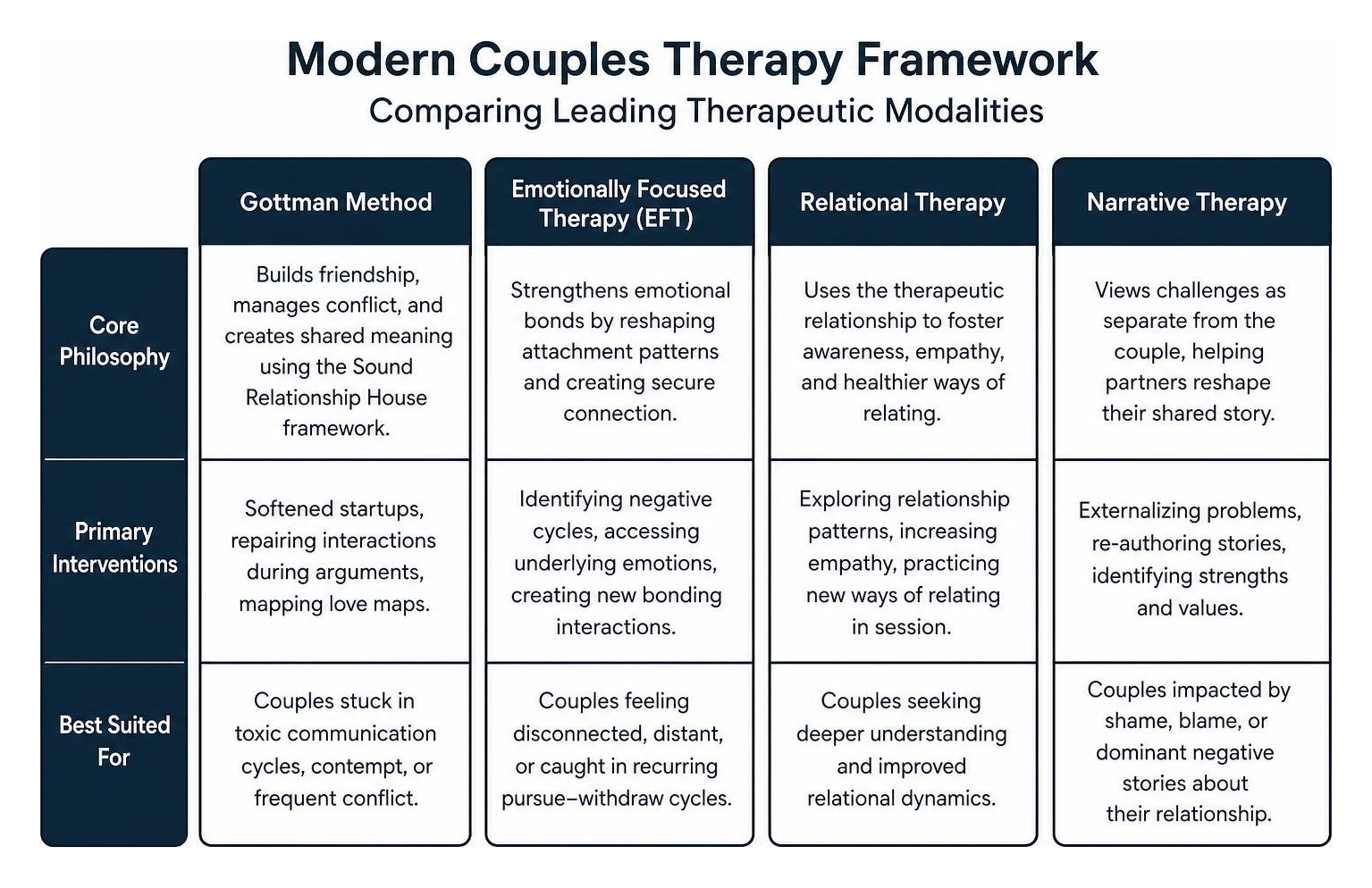
Contemporary relationship counseling uses several evidence-based modalities tailored to specific relational needs:
| Modality | Core Philosophy | Primary Interventions | Best Suited For |
|---|---|---|---|
| Gottman Method | Builds friendship, manages conflict, and creates shared meaning using the Sound Relationship House framework. | Softened startups, repairing interactions during arguments, mapping love maps. | Couples stuck in toxic communication cycles, contempt, or frequent conflict. |
| Emotionally Focused Therapy (EFT) | Views distress through attachment theory, helping partners express vulnerable emotional needs. | De-escalating negative interaction cycles, creating new emotional bonds. | Partners struggling with deep emotional disconnection, abandonment fears, or past trauma. |
| Integrative Behavioral Couples Therapy (IBCT) | Combines behavioral change techniques with emotional acceptance of unresolvable differences. | Empathic joining around problems, unified detachment, direct behavior modification. | Couples with entrenched behavioral differences or persistent lifestyle friction. |
| Imago Relationship Therapy | Connects adult romantic conflicts to unmet childhood attachment needs. | Structured Imago Dialogue consisting of mirroring, validation, and empathy. | Couples seeking deep personal insight into why they trigger each other. |
Exploring resources like Understanding Relational Life Therapy: A Guide for Couples and Individuals can also show you how full accountability transforms relational systems.
Deconstructing Communication Myths and the Limits of Active Listening
For decades, traditional counseling emphasized active listening and robotic speaker-listener formulas. Partners were taught to mirror every sentence back verbatim. However, research conducted by Dr. John Gottman alongside the Munich Marital Study demonstrated that natural reflective listening occurs in less than 5% of spontaneous interactions between happily married partners.
Furthermore, author Warren Farrell highlighted that standard active listening formats often create a platform for one partner to deliver criticism while leaving the listener overwhelmed with defensiveness. Simply repeating insults back does not resolve underlying distress. Modern therapy moves beyond rigid scripts to help couples identify emotional triggers, lower physiological arousal, and apply A Practical Guide to Family Conflict Resolution Strategies in real-time discussions.
Novel Approaches and Biochemical Research
Researchers have also examined biochemical tools in relationship repair, including intranasal oxytocin. Often called the bonding hormone, oxytocin was initially studied as a potential spray to foster closeness during conflict.
A randomized, double-blind, placebo-controlled study of couples dealing with substance misuse showed that intranasal oxytocin reduced physiological stress responses in women during arguments. However, it did not significantly improve communication outcomes or conflict resolution behaviors. Research also revealed that oxytocin can heighten social emotions like envy and gloating. As a result, clinical progress continues to rely on evidence-based behavioral and emotional interventions alongside accessible digital teletherapy platforms.
Clinical Effectiveness and Evidence-Based Outcomes
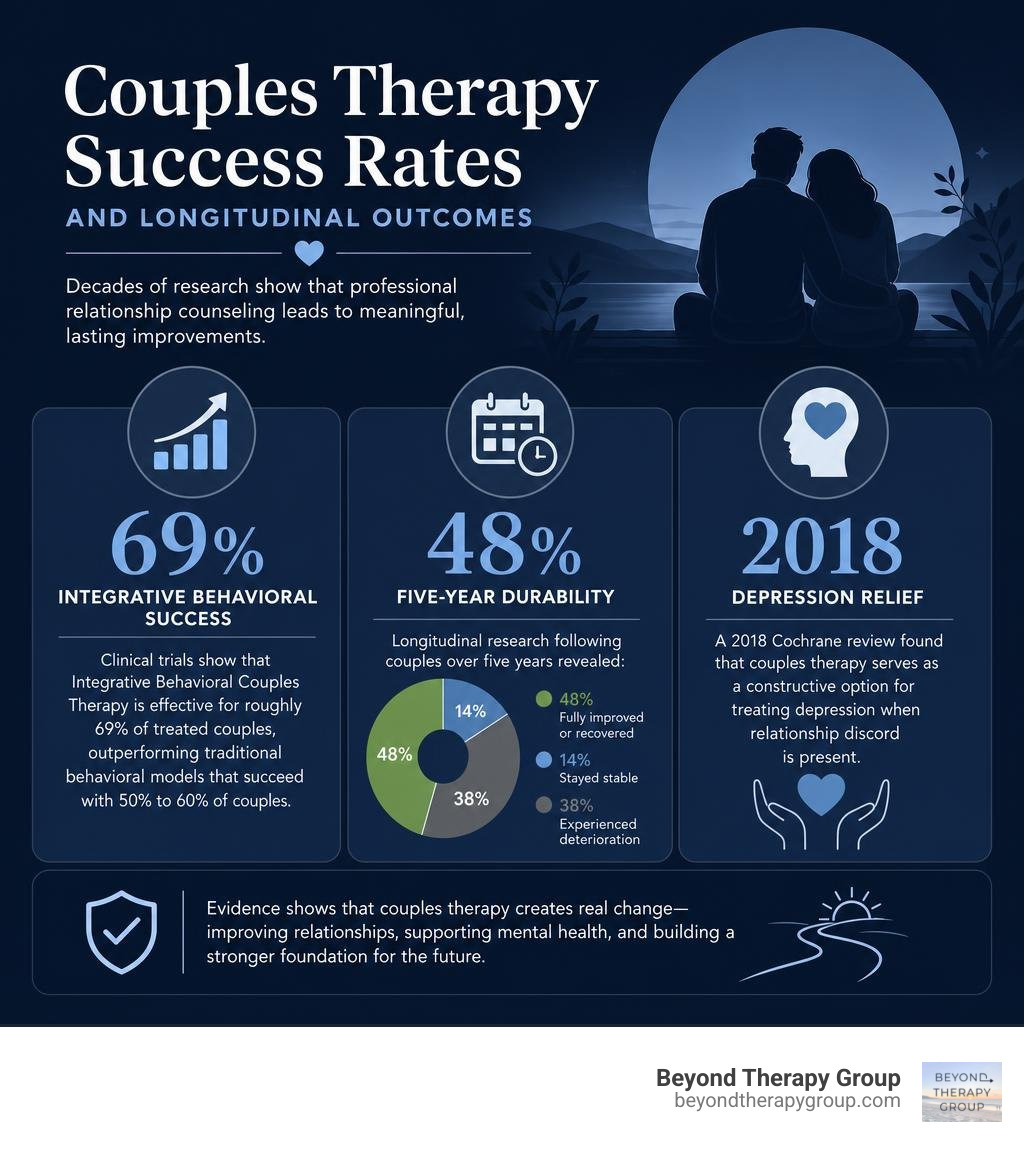
Decades of outcome studies show that professional relationship counseling yields substantial, lasting improvements:
- Integrative Behavioral Success: Clinical trials show that Integrative Behavioral Couples Therapy is effective for roughly 69% of treated couples, outperforming traditional behavioral models that succeed with 50% to 60% of couples.
- Five-Year Durability: Longitudinal research following couples over five years revealed that 48% remained fully improved or recovered, 14% stayed stable, and 38% experienced deterioration, underscoring the value of ongoing maintenance.
- Depression Relief: A 2018 Cochrane review found that couples therapy serves as a constructive option for treating depression when relationship discord is present.
- Reduction in Situational Conflict: A systematic review and meta-analysis determined that structured couples therapy significantly reduces violence among partners experiencing situational intimate partner conflict.
- Real-World Influencing Factors: A 2023 meta-analysis of 48 nonrandomized studies confirmed that partner age, relationship duration, and clinical setting influence overall therapeutic success in everyday community environments.
What to Expect: The Structure, Formats, and Timeline of Sessions

Knowing what happens inside the therapy room helps ease apprehension. Many clinicians follow a clear assessment sequence during the opening phase:
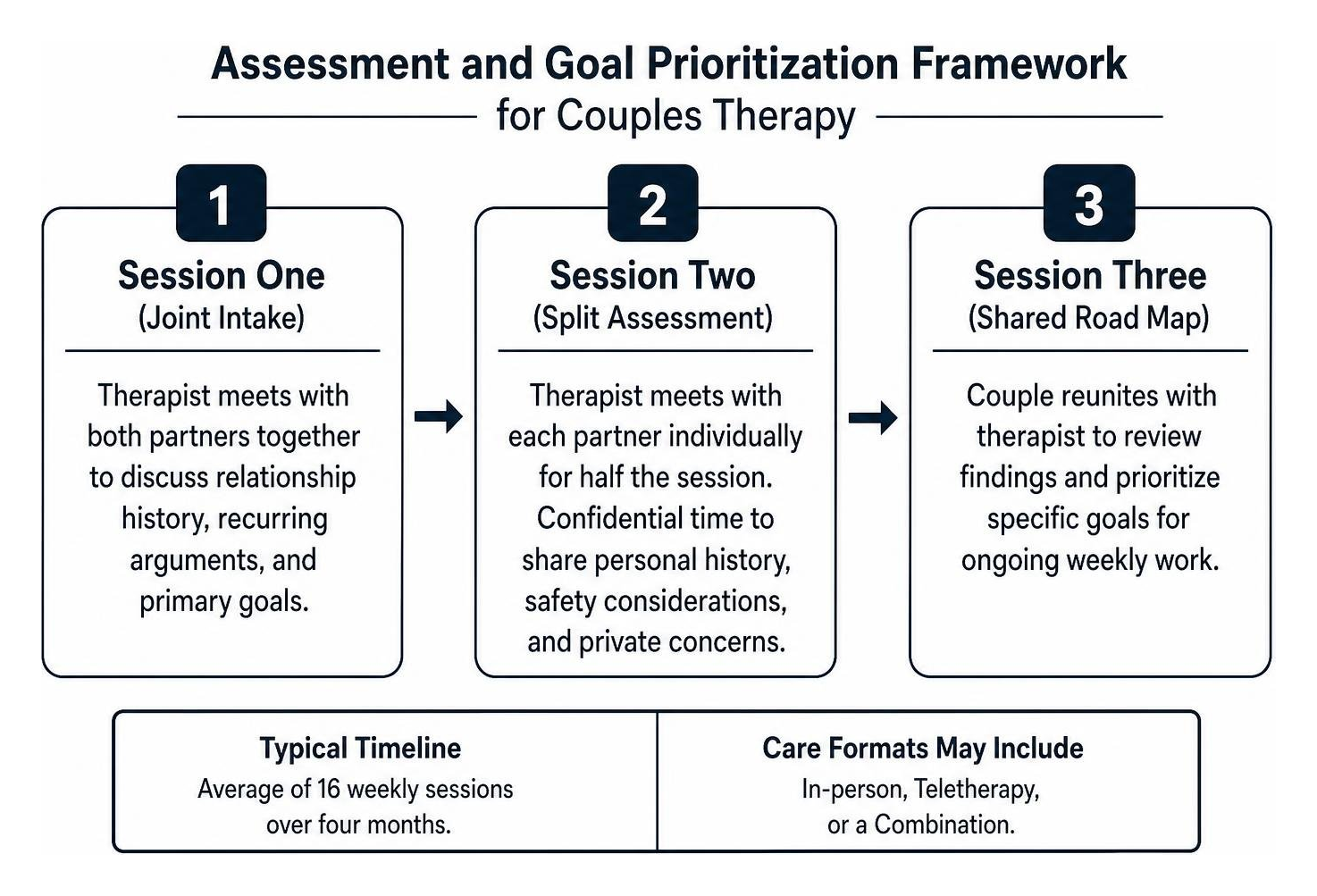
- Session One (Joint Intake): The therapist meets with both partners together to discuss relationship history, recurring arguments, and primary goals.
- Session Two (Split Assessment): The clinician meets with each partner individually for half the session. This confidential time allows each person to share personal history, safety considerations, and private concerns.
- Session Three (Shared Road Map): The couple reunites with the therapist to review findings and prioritize specific goals for ongoing weekly work.
Most couples seeking lasting changes complete an average of 16 weekly sessions over four months. Depending on individual circumstances, care formats can vary:
- Premarital Counseling: Proactive guidance to align expectations around finances, family dynamics, and communication before marriage.
- Solo Relationship Counseling: Individual sessions focused on understanding your personal contributions to relational patterns when a partner is hesitant to participate.
- Discernment Counseling: A short-term process designed for couples where one partner is leaning out of the relationship and the other wants to rebuild it.
How to Know When It Is Time for Relationship Counseling
Couples often wait until a crisis occurs before seeking support. However, reaching out early preserves goodwill and makes repair faster. Consider reaching out if:
- You find yourselves having the exact same circular argument every week without finding a resolution.
- You feel like distant roommates who manage household logistics without genuine warmth or intimacy.
- You avoid speaking honestly because you fear triggering explosive reactions or stonewalling.
- You are recovering from broken agreements, external stressors, or significant life transitions.
If you are wondering about the right timing, reading How to Know If Relational Therapy Is Right for You in Redondo Beach will help you evaluate your current relational readiness.
Frequently Asked Questions About Couples Therapy
How long does couples therapy typically take to show meaningful progress?
Some couples notice helpful shifts in communication within five sessions. However, achieving deep emotional reconnection and sustainable habit changes typically takes around 16 weekly sessions over four months. Consistency between sessions is what drives long-term success.
How effective is couples therapy if one partner is hesitant to attend?
Reluctance is very common. An experienced therapist provides a balanced environment where neither partner is blamed or ganged up on. If one person refuses to attend at first, solo relationship therapy can still help you clarify your boundaries, shift your responses, and disrupt old cycles.
What is the difference between traditional active listening and modern therapy?
Traditional active listening focuses on structured speaker-listener exercises where partners repeat each other’s words. Modern evidence-based therapy focuses on identifying underlying attachment vulnerabilities, lowering physiological fight-or-flight reactions, and restructuring everyday interaction habits.
Conclusion
Healthy partnerships are built through conscious effort, self-awareness, and emotional vulnerability. When recurring arguments leave you feeling exhausted, reaching out for clinical guidance can help you rebuild security and mutual trust. Early support prevents resentment from settling into your daily life.
At Beyond Therapy, we provide compassionate, evidence-based care tailored to your unique goals. We invite you to schedule a free 15-minute consultation with our licensed therapists to ask questions and take the next step forward. Explore our comprehensive Therapy Services: Relationship and Relational Therapy to begin strengthening your connection today.
Recent Posts