June 6, 2026
Grief Treatment Survival Guide

Key Takeaways
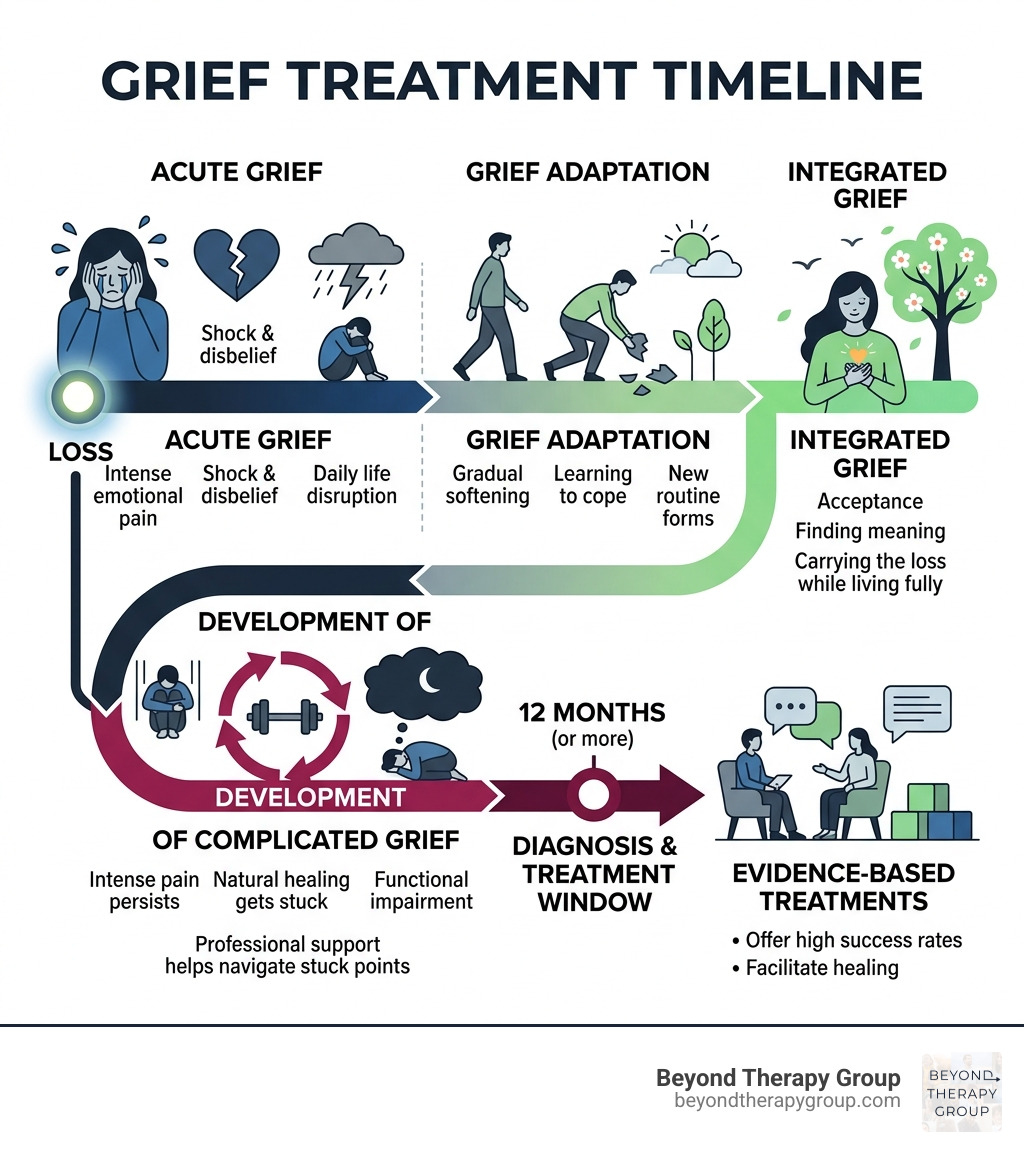
- Grief is a natural response to loss that typically evolves over time
- Complicated grief affects approximately seven percent of bereaved adults
- Evidence-based treatments like Prolonged Grief Therapy offer high success rates
- Professional support helps individuals navigate stuck points in the healing process
Grief treatment refers to the professional therapies and strategies used to help people heal after a significant loss. Here is a quick overview of what it involves:
- Complicated grief affects about 7% of bereaved adults and requires specialized care
- First-line treatment is targeted psychotherapy such as Prolonged Grief Therapy (PGT) or Complicated Grief Therapy (CGT)
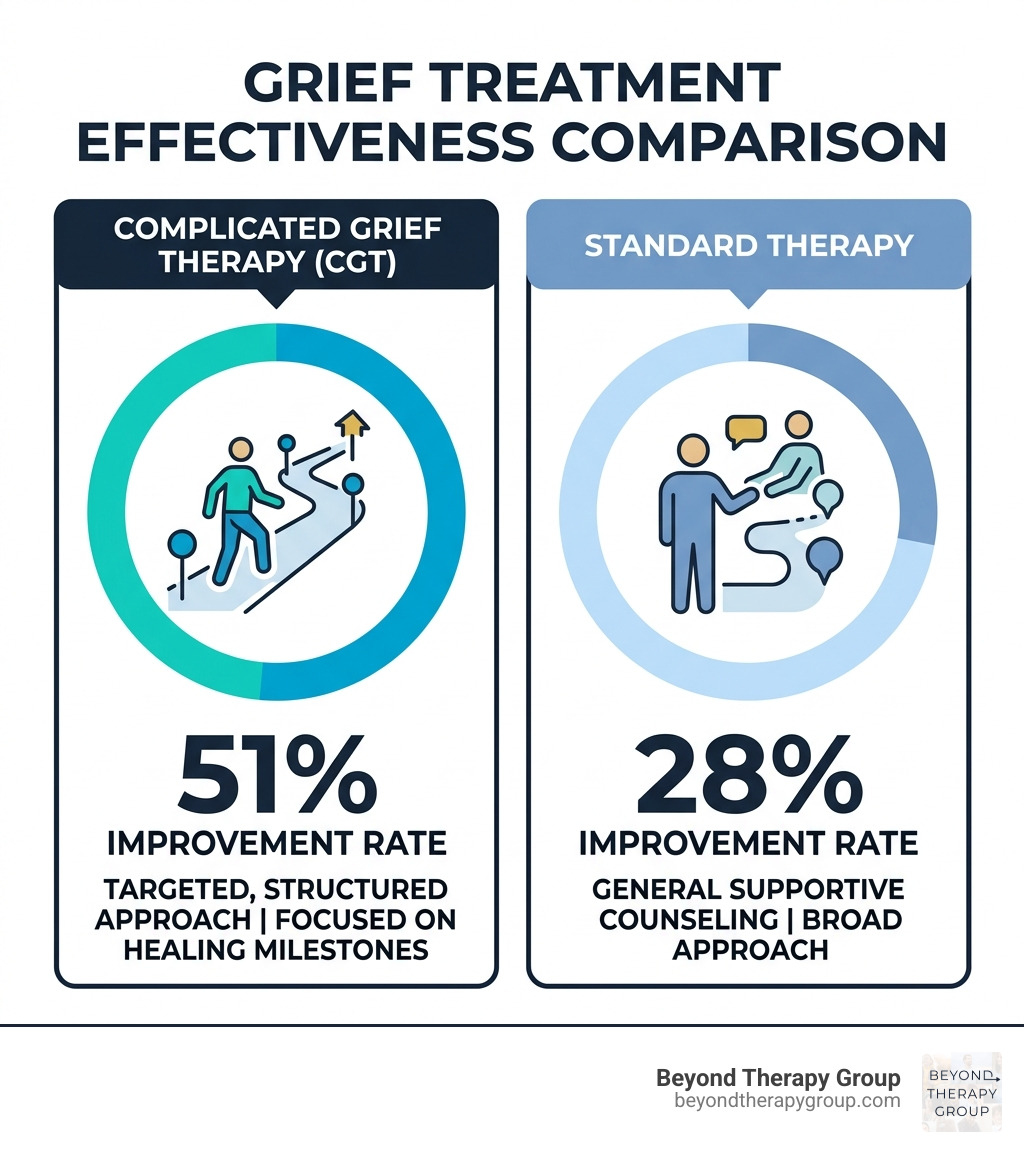
- CGT has shown a 51% improvement in grief symptoms versus 28% for standard therapy
- Medications like antidepressants may help if depression is present alongside grief but do not treat grief itself
- Self-help strategies such as stress management, social support, and planning for grief triggers also play an important role
- When to seek help: if intense grief persists for 12 months or more in adults and 6 months in children and affects daily functioning
Losing someone close is one of life’s most painful experiences. For most people, grief is intense at first and then slowly softens over time. Life gradually finds a new shape.
But for roughly 1 in 14 bereaved adults, that natural healing process gets stuck.
The pain does not fade. The longing stays sharp. Daily life feels impossible to navigate. This is not a sign of weakness. It is a recognized clinical condition called prolonged grief disorder also known as complicated grief. And it responds well to the right treatment.
Nearly 2.5 million people die in the United States each year. That means millions of family members and friends enter a period of bereavement annually. Most will grieve and adapt. Some will need more support to get there.
The good news: evidence-based treatments work. With the right care, most people do recover and find a way to carry their loss while still living a full life.
Quick grief treatment terms:
Understanding Complicated Grief and the Need for Grief Treatment
As we move through April 2026, the mental health community has gained a much deeper understanding of why some people stay “stuck” in their mourning. While most people eventually reach a state of “integrated grief”—where the loss is tucked into their life story rather than dominating it—others experience what the DSM-5 now officially labels as Prolonged Grief Disorder.
This condition is also frequently called Persistent Complex Bereavement Disorder. It is not just “extra sad” grief. It is a state where the natural healing process is blocked by specific “stuck points.” These might include intense guilt, difficulty accepting the reality of the death, or a total loss of purpose.
In our work at Beyond Therapy, we often see how this differs from the standard ups and downs of mourning. If you are struggling with professional grief loss therapy, you aren’t just missing someone. You might feel like your life ended when theirs did.

Identifying When You Need Professional Grief Treatment
How do you know if what you are feeling is “normal” or if it is time to seek a specific grief treatment? The diagnostic criteria usually look for symptoms that persist for at least 12 months in adults (or 6 months in children and adolescents).
Key symptoms of complicated grief include:
- Intense, persistent yearning for the person who died.
- Preoccupation with the deceased or the circumstances of their death.
- Emotional numbness or a feeling that a part of yourself died with them.
- Difficulty moving on, such as trouble engaging with friends or pursuing interests.
- Intense emotional pain, such as bitterness, sorrow, or anger related to the loss.
- Functional impairment, where you find it hard to maintain your job, home, or relationships.
If these feelings occur almost every day for at least a month after that one year mark, it is a strong indicator that specialized grief counseling techniques could be life-changing.
Differentiating Mourning from Clinical Depression
It is very common for people to confuse grief with Major Depressive Disorder (MDD). While they share a lot of “sadness real estate,” they are different neighbors.
In MDD, the sadness is often general. You might feel worthless, have low self-esteem, or feel a pervasive sense of guilt about many things in life. In complicated grief, the focus is almost entirely on the loss. The guilt is specifically about the death (e.g., “I should have been there”). The “emptiness” is specifically because that person is gone.
Interestingly, research shows that about 55% of people seeking treatment for complicated grief also meet the criteria for MDD, and 49% have PTSD. Because these conditions often overlap, having a skilled clinician who can tell the difference is vital for effective grief treatment.
If you are looking for redondo beach grief therapists, our team specializes in parsing these differences to ensure you get the right support for your specific South Bay experience.
Evidence Based Approaches to Healing
When it comes to grief treatment, not all talk therapy is created equal. While general supportive counseling is wonderful for many, those with prolonged grief usually need something more targeted.
Two of the most effective, research-backed models are Complicated Grief Therapy (CGT) and Prolonged Grief Treatment (PGT). These are short-term, structured programs—usually around 16 sessions—that help you “unblock” the natural mourning process.
The Mechanics of Effective Grief Treatment
How does this actually work in the room? PGT and CGT focus on “Six Healing Milestones.” Instead of just talking about how sad you feel, we work on active exercises to help your brain process the loss.
Some of these techniques include:
- Restorative Retelling: We gently help you tell the story of the death. This helps reduce the “trauma” aspect of the memory so you can eventually remember the person’s life, not just their end.
- Imaginal Conversations: This involves “talking” to the deceased in your mind to express unsaid things or to say a healthy goodbye. It sounds a bit “woo-woo,” but it is actually a powerful way to resolve unfinished business.
- Managing Triggers: We identify the places or objects you might be avoiding (like a favorite restaurant or their old clothes) and slowly help you re-engage with them.
- Future Planning: A huge part of the healing journey in therapy sessions is figuring out who you are now and what a meaningful future looks like without your loved one.
Studies have shown that PGT was twice as effective as Interpersonal Psychotherapy (IPT) in reducing the intensity of grief. It also substantially reduced suicidal thoughts in those struggling with their loss.
Specialized Interventions for Trauma and Families
Sometimes grief is complicated by the way the person died. If the loss was sudden, violent, or involved a child, it is often categorized as traumatic grief. This requires a blend of PTSD-style treatment and grief treatment.
For children, the timeline for diagnosis is shorter (6 months) because their development is so rapid. Specialized interventions like Grief and Trauma Intervention (GTI) for children focus on 10-session protocols to help them process the loss through age-appropriate activities.
In the South Bay and Redondo Beach areas, we see many families navigating these complex losses. Whether it is anticipatory grief (mourning someone before they pass, often due to terminal illness) or ambiguous loss (where there is no closure, such as a missing person or a loved one with Alzheimer’s), the approach must be tailored.
Risk Factors and Diagnostic Tools
Why does one person adapt to loss while another develops complicated grief? It is usually a combination of factors.
Common Risk Factors Include:
- The Nature of the Loss: Unexpected or violent deaths, or the death of a child or spouse.
- Personal History: Previous struggles with depression, anxiety, or multiple losses in a short time.
- Attachment Style: If the relationship was highly dependent or characterized by deep insecurity, the loss can feel more destabilizing.
- Lack of Support: Social isolation makes the burden of grief much heavier.
To help determine if you are experiencing this, clinicians often use tools like the Inventory of Complicated Grief (ICG). A score higher than 30 usually indicates that professional grief treatment is necessary. There is also a shorter Brief Grief Questionnaire where a score of 5 or more suggests you might be “stuck.”

Self Help Strategies and Support Systems
While professional grief treatment is the “gold standard” for prolonged grief, there are many things you can do in your daily life in Redondo Beach to support your own healing. These aren’t meant to replace therapy, but they act as the “physical therapy” for your soul between sessions.
- Plan for Triggers: Anniversaries, birthdays, and holidays are notoriously difficult. Don’t let them sneak up on you. Decide in advance if you want to be alone, be with friends, or start a new tradition to honor the person.
- Lifestyle Foundations: Grief is physically exhausting. It affects your immune system and your heart. Focus on the “boring” but essential basics: moving your body, eating actual meals, and trying to maintain a sleep routine.
- Stress Management: Practices like yogic breathing, meditation, and journaling have been shown to lower the “high alert” state your nervous system enters during acute grief.
- Social Connection: While you might want to withdraw, staying connected to at least one or two trusted people is vital. You don’t have to talk about the grief every time; just “being” with others helps.
If you are looking for therapy sessions for finding your way back, self-care is a prerequisite for the deeper work we do in the office.
Frequently Asked Questions about Grief Treatment
When should I seek professional help for my loss?
While everyone’s timeline is different, the general rule is to seek help if your grief remains “acute” (meaning it feels like the death happened yesterday) for more than 6 to 12 months. If you are having thoughts of self-harm, find yourself unable to work, or are using substances to numb the pain, please reach out immediately. You don’t have to wait for a specific “anniversary” to get support.
Do medications like antidepressants help with mourning?
This is a common question. Research suggests that antidepressants don’t actually “cure” grief. They don’t make you miss the person less or resolve the longing. However, they can be very helpful if you have a co-occurring clinical depression. They can help lift the “heavy fog” enough so that you have the energy to participate in psychotherapy. We often recommend a combination of the two if the symptoms are severe.
How long does the recovery process typically take?
Evidence-based grief treatment like PGT or CGT is typically designed for about 16 sessions. Most people start to feel a significant shift in their perspective and daily functioning within that timeframe. However, “recovery” doesn’t mean you stop missing the person. It means the grief becomes “integrated”—it becomes a part of you that you can carry without it crushing you.
Conclusion
Grief is the price we pay for love, but it shouldn’t cost you your entire life. If you feel like you’ve been walking through a dark tunnel for a year or more with no light in sight, please know that specialized grief treatment exists to help you find the exit.
At Beyond Therapy, we understand the unique landscape of loss in our South Bay community. We offer a warm, expert approach to help you navigate these “stuck points” and find your way back to a life that feels meaningful again.
We know that taking the first step is the hardest part. That’s why we offer a free 15-minute consultation with our therapists. This allows you to ask questions, get a feel for our style, and ensure you’re matched with the right person for your journey.
Whether you are in Redondo Beach or the surrounding South Bay area, you don’t have to carry this weight alone. We are here to help you move from acute pain to a place of integrated, peaceful remembrance.
Contact us today to schedule your consultation and begin your healing journey.
Recent Posts


