
June 20, 2026
Alcoholism Treatment Options: A Comprehensive Guide

Why Alcoholism Treatment Options Matter More Than You Think
Key Takeaways
- Alcoholism treatment options range from outpatient counseling to residential care and FDA-approved medications
- Alcohol use disorder (AUD) is a medical condition, not a moral failing
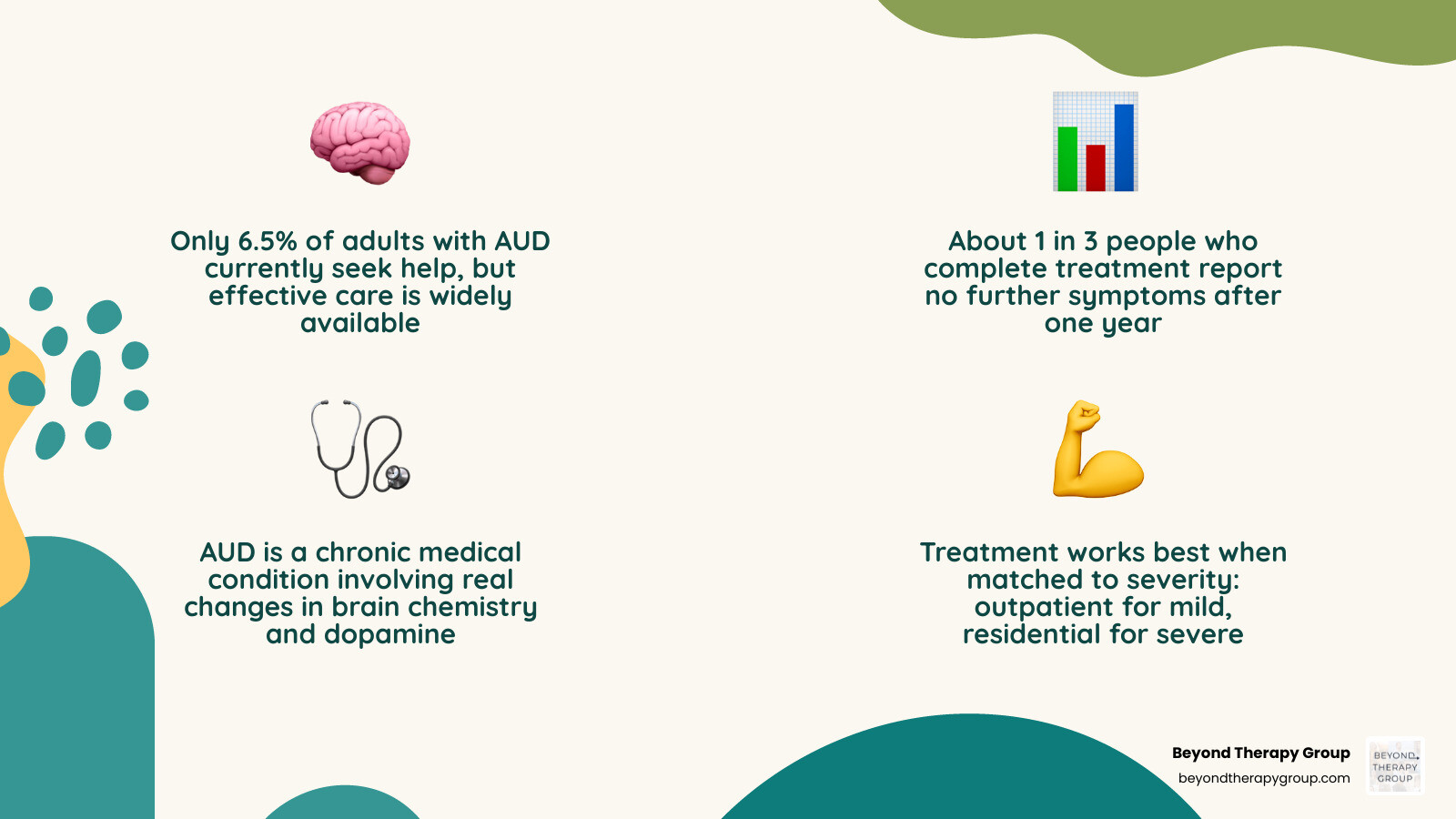
- Treatment works: about 1 in 3 people who complete treatment report no further symptoms after one year
- Only 6.5% of adults with AUD currently seek help, but effective care is widely available
- The right treatment depends on your individual needs, severity, and life circumstances
Understanding your alcoholism treatment options is the first step toward reclaiming your health and your life.
Alcohol use disorder affects an estimated 14.8 million Americans aged 12 and older. Yet only a small fraction ever seek professional help. That gap is not about willpower. It is about not knowing where to start.
Here is a quick overview of the main treatment options available in 2026:
| Treatment Type | What It Involves | Best For |
|---|---|---|
| Medical Detox | Supervised withdrawal, usually 2 to 7 days | Heavy, long-term drinkers |
| Outpatient Therapy | Regular sessions while living at home | Mild to moderate AUD |
| Intensive Outpatient (IOP) | More frequent sessions, structured support | Moderate AUD, busy schedules |
| Residential Rehab | 24/7 structured care in a live-in facility | Severe AUD or relapse history |
| FDA-Approved Medications | Naltrexone, acamprosate, or disulfiram | Any severity, often combined with therapy |
| Mutual Support Programs | Peer-led meetings like AA or SMART Recovery | Ongoing maintenance and community |
AUD is a chronic medical condition. Research shows it involves real changes in brain chemistry, particularly around dopamine and habit formation. That means quitting is rarely as simple as “just stopping.”
The good news? Treatment genuinely works. According to research, roughly one-third of people who complete alcohol treatment report no further symptoms a year later. And today, there are more paths to recovery than most people realize.
Whether you are a busy professional trying to maintain your routine or someone ready for a more intensive level of support, there is a treatment path that can fit your life.
Learn more about alcoholism treatment options:
Understanding the Main Alcoholism Treatment Options

When we look at the landscape of recovery in 2026, it is clear that there is no one-size-fits-all solution. In fact, the National Institute on Alcohol Abuse and Alcoholism (NIAAA) emphasizes that the most successful outcomes often come from a combination of different alcoholism treatment options.
The journey usually begins with an assessment. This helps determine the severity of the disorder, which the DSM-5 classifies as mild, moderate, or severe based on how many symptoms a person experiences. From there, we can look at the primary pillars of care:
- Medical Detox: For many, the first step is safely removing alcohol from the system. Because alcohol withdrawal can be physically dangerous, medical supervision is essential. This process typically lasts between 2 and 7 days.
- Behavioral Treatments: Also known as alcohol counseling, these involve working with licensed therapists to identify the root causes of drinking and develop new coping mechanisms.
- Medications: There are several FDA-approved medications that can help reduce cravings or create a physical deterrent to drinking. These are non-addictive and can be a vital “foot in the door” for those struggling with intense urges.
- Mutual-Support Programs: Peer-led support provides a sense of community and shared experience that professional treatment alone sometimes lacks.
Modern alternatives have also made treatment more accessible. For those in the South Bay or Redondo Beach areas, telehealth and e-health options allow for high-quality care without the need to commute to a facility every day. This maintains privacy and allows individuals to keep up with their work and family responsibilities.
For a deeper dive into these categories, you can explore the Types of Alcohol Treatment | Alcohol Treatment Navigator | NIAAA.
Behavioral Therapies and Counseling Approaches

Behavioral therapy is the cornerstone of long-term recovery. It is not just about talking; it is about retraining the brain to respond differently to stress, social pressure, and internal triggers. In our practice, we focus on evidence-based modalities that have been proven to help people change their relationship with alcohol.
Cognitive Behavioral Therapy (CBT) is perhaps the most well-known approach. It focuses on the link between thoughts, feelings, and actions. By identifying the specific “scripts” that lead to a drink, we can help you rewrite them. For example, if you think, “I had a hard day, I deserve a drink,” CBT helps you challenge that thought and find a healthier way to reward yourself.
Motivational Enhancement Therapy (MET) is another powerful tool. It is designed to build internal motivation for change. Rather than telling you why you should quit, a therapist helps you discover your own reasons for wanting a different life. This approach is particularly helpful for those who feel “on the fence” about their sobriety.
To see what this looks like in practice, read our guide on Inside the Session: How Alcohol Counseling Works.
Evidence-Based Behavioral Alcoholism Treatment Options
Beyond CBT and MET, several other specialized therapies have gained significant traction.
Acceptance and Commitment Therapy (ACT) is a modern approach that encourages you to accept your urges without acting on them. Instead of fighting the “craving monster,” you learn to sit with it while staying committed to your core values. It is about building psychological flexibility so that a bad mood doesn’t automatically result in a trip to the liquor store.
Dialectical Behavior Therapy (DBT) is often used when there are intense emotions involved. It teaches distress tolerance and emotional regulation. If you find that you use alcohol to “numb out” from overwhelming feelings, DBT provides a concrete toolkit of skills to manage those emotions safely.
You can learn more about how these modern techniques work in our article How ACT Therapy Helps You Quit Drinking for Good.
Counseling for Alcoholism and How It Changes Lives
Individual counseling sessions provide a safe, confidential space to unpack the complexities of addiction. Unlike talking to a friend or family member, a professional therapist offers an objective perspective backed by clinical expertise.
In these sessions, we focus on:
- Identifying Triggers: Is it a certain person? A specific time of day? A feeling of boredom?
- Developing Coping Strategies: What will you do the next time a trigger appears? We help you build a “relapse prevention plan” that is unique to your life.
- Healing Relationships: Alcoholism rarely affects just the individual. Counseling can help you navigate the difficult process of making amends and rebuilding trust with loved ones.
The impact of this work is profound. Research shows that engaging in talk therapy significantly increases the chances of maintaining long-term sobriety compared to trying to quit alone. Explore more about this in Counseling for Alcoholism and How It Changes Lives.
Medication-Assisted Treatment (MAT)
One of the most underutilized alcoholism treatment options is medication. Only about 1.6% of adults with AUD are prescribed these medications, despite their proven effectiveness. These are not “crutches”; they are medical tools designed to stabilize brain chemistry.
| Medication | How It Works | Key Benefit |
|---|---|---|
| Naltrexone | Blocks opioid receptors that cause the “high” from drinking. | Reduces cravings and heavy drinking days. |
| Acamprosate | Stabilizes brain chemicals (glutamate/GABA) disrupted by alcohol. | Helps maintain abstinence in those who have already quit. |
| Disulfiram | Causes physical illness (nausea, flushing) if alcohol is consumed. | Acts as a powerful deterrent for supervised use. |
These medications are non-addictive. They do not make you feel “high,” and they do not simply trade one addiction for another. Instead, they help restore neurobiological stability, making it easier for you to focus on the work of therapy.
For healthcare professionals and patients alike, the NIAAA provides a comprehensive resource: Recommend Evidence-Based Treatment: Know the Options | NIAAA.
FDA-Approved Medications as Alcoholism Treatment Options
The three main FDA-approved medications offer different paths depending on where you are in your journey.
Naltrexone can be taken as a daily pill or a monthly injection called Vivitrol. The injection is particularly helpful for those who struggle with remembering to take a daily pill. Research shows that naltrexone decreases heavy drinking with a “number needed to treat” (NNT) of 10, meaning it is highly effective for a wide range of patients.
Acamprosate (Campral) is typically started after someone has achieved a few days of sobriety. It helps the brain return to its normal state, reducing the “brain fog” and anxiety that often follow quitting. Cochrane reviews of thousands of patients have shown that acamprosate significantly increases the likelihood of remaining abstinent.
For more on the latest medical advances, see Innovations in Treatment for Alcohol Use Disorder: From Medications to Digital Therapies.
Off-Label Pharmacotherapy Options
In some cases, doctors may prescribe medications that are FDA-approved for other conditions but have shown promise in treating AUD. This is known as “off-label” use.
- Gabapentin: Originally an anti-seizure medication, it has been shown to improve abstinence rates (NNT of 8) and help with sleep and mood during early recovery.
- Topiramate: This medication can help reduce the number of drinking days and heavy drinking days.
While these are not the first line of defense, they offer additional alcoholism treatment options for those who may not respond well to the standard three medications. You can find more clinical details on these options at MedlinePlus.
Determining the Appropriate Level of Care
Choosing the right setting for your treatment is just as important as the treatment itself. The American Society of Addiction Medicine (ASAM) defines four basic levels of care based on the intensity of the program.
- Outpatient Care: This is the most common and flexible option. You live at home and attend therapy sessions once or twice a week. It is ideal for those with mild AUD and a stable home environment.
- Intensive Outpatient (IOP) / Partial Hospitalization (PHP): These programs offer several hours of therapy per day, several days a week. It provides more structure than standard outpatient care while still allowing you to sleep in your own bed.
- Residential Rehab: This involves living at a facility for 30 to 90 days. It removes you from your daily triggers and provides 24/7 support. It is often recommended for those with severe AUD or those who have tried outpatient care without success.
- Inpatient Hospitalization: This is the highest level of care, usually reserved for those with serious medical complications or those undergoing a dangerous withdrawal that requires constant nursing care.
When determining the best path, a professional evaluation is key. Doctors look at your physical health, your mental health history, and your social support system. For more guidance on diagnosis, visit the Diagnosis and treatment – Mayo Clinic.
Addressing Co-occurring Mental Health Disorders
It is extremely common for alcohol use disorder to walk hand-in-hand with other mental health challenges. This is known as a dual diagnosis.
Research indicates that people with anxiety, depression, PTSD, or ADHD are at a much higher risk for developing AUD. Often, the alcohol is used as a form of “self-medication” to quiet the symptoms of the mental health disorder. However, over time, alcohol actually makes these conditions worse.
Effective alcoholism treatment options must address both issues simultaneously. If you only treat the drinking but leave the underlying depression unaddressed, the risk of relapse is very high. Integrated care ensures that you are learning to manage your mental health while also staying sober.
Learn more about this vital connection in Dual Diagnosis: Substance Use and Mental Health.
Maintaining Long-Term Sobriety and Aftercare
Recovery doesn’t end when you finish a program; in many ways, that is just where it begins. Aftercare refers to the ongoing support and lifestyle changes that help you maintain your sobriety over the long haul.
According to SAMHSA, 84% of treatment facilities offer aftercare services. This might include:
- Continuing individual therapy.
- Alumni meetings.
- Sober living environments.
- Regular check-ins with a primary care doctor.
Lifestyle changes are also critical. This might mean finding new hobbies that don’t revolve around alcohol, adjusting your social circle to include people who support your recovery, and focusing on physical health through exercise and nutrition.
Building a sustainable life is the best defense against relapse. For more tips on this transition, see Sobriety Starts Here with Alcohol Recovery Counseling.
Why Your Recovery Needs More Than Just a 12-Step Program
For decades, Alcoholics Anonymous (AA) was the only well-known option for recovery. While the 12-step model has helped millions, it is not the only way—and for some, it isn’t the best fit.
A holistic approach to recovery looks at the whole person. This might include:
- Secular Support Groups: Programs like SMART Recovery use tools based on cognitive therapy rather than spiritual principles.
- Mindfulness and Yoga: These practices help manage the stress and physical tension that can lead to cravings.
- Personalized Care: Your treatment should be tailored to your specific goals, whether that is total abstinence or a significant reduction in drinking.
We believe in offering a full menu of options so you can choose what resonates with you. Read more about why Your Recovery Needs More Than Just a 12-Step Program.
Frequently Asked Questions about Alcohol Recovery
What are the signs that I need professional help?
If you are wondering whether your drinking has become a problem, you are already taking a brave step. Common signs of alcohol use disorder include:
- Feeling a strong urge or craving to drink.
- Finding that you cannot control how much you drink once you start.
- Giving up activities you used to enjoy in order to drink.
- Experiencing withdrawal symptoms (shaking, sweating, nausea) when you stop.
- Continuing to drink even though it is causing problems in your relationships or at work.
Clinicians often use the AUDIT questionnaire to help determine the severity of the issue. If you find yourself nodding along to these signs, it may be time to explore alcoholism treatment options.
How long does the detoxification process usually take?
Medical detox generally takes 2 to 7 days. The timeline depends on how long you have been drinking, how much you usually consume, and your overall physical health.
During this time, medical professionals use safety protocols to prevent dangerous complications like seizures or delirium tremens (DTs). They may use medications to keep you comfortable and stable. Because of the risks involved, you should never attempt to “cold turkey” from heavy, long-term drinking without medical advice.
Are medications for alcohol use disorder addictive?
No. This is a common myth that prevents many people from getting the help they need. The FDA-approved medications for AUD—naltrexone, acamprosate, and disulfiram—are not addictive.
They do not produce a “high” or a euphoric feeling. Instead, they work by stabilizing the brain’s reward system or by creating a physical deterrent. They are used to manage a chronic condition, much like someone might use insulin for diabetes or an inhaler for asthma.
Conclusion
Navigating alcoholism treatment options can feel overwhelming, but you don’t have to do it alone. Whether you are in Redondo Beach, the South Bay, or elsewhere, help is available and recovery is possible.
At Beyond Therapy Group, we specialize in providing evidence-based, personalized care that meets you exactly where you are. We understand that the path to sobriety is rarely a straight line, and we are here to provide the tools, support, and expertise needed for lasting change.
If you are ready to take the next step, we offer a free 15-minute consultation with our therapists. This is a no-pressure way to ask questions, explore your options, and find the right fit for your journey.
Your recovery starts with a single conversation. Let’s start it today.
Recent Posts