October 29, 2026
Controlled Drinking Therapy Explained for Anyone Questioning Total Abstinence

Can Therapy Help You Drink Less Without Quitting?
- Controlled drinking therapy helps you set clear limits, track what you drink, and practice ways to stay within those limits. It aims to reduce drinking and related harm rather than require total abstinence.
- It may be an option for someone with milder alcohol problems who wants to cut back. If you drink heavily every day, have withdrawal symptoms, or have serious alcohol-related health problems, speak with a clinician before changing how much you drink.
You do not have to settle your drinking goal before asking for help. A therapist can help you assess what feels possible, make a plan, and revisit that plan if moderation is not working.
Understanding Controlled Drinking vs. Abstinence in Modern Care
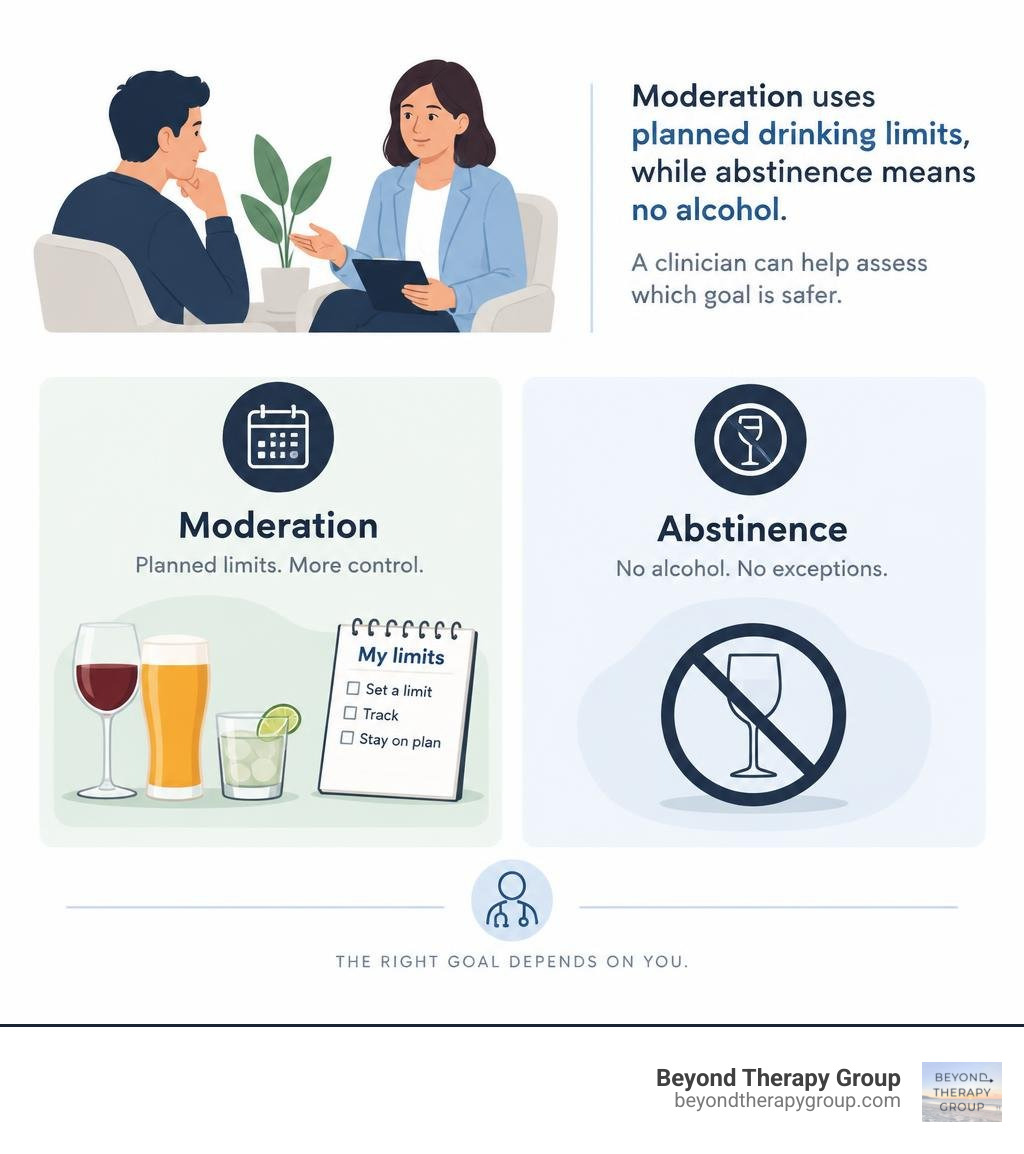
For decades, traditional care models viewed total sobriety as the only acceptable milestone for anyone struggling with alcohol. Modern behavioral healthcare has evolved. Today, clinicians recognize that alcohol problems exist on a broad continuum ranging from mild risk to severe physical dependence.
Complete abstinence remains necessary for individuals facing severe dependence or medical complications. However, an all-or-nothing requirement creates a high barrier to entry. Research shows that only 10% to 20% of people with alcohol use disorder seek professional help globally. A primary reason is reluctance to quit drinking entirely.
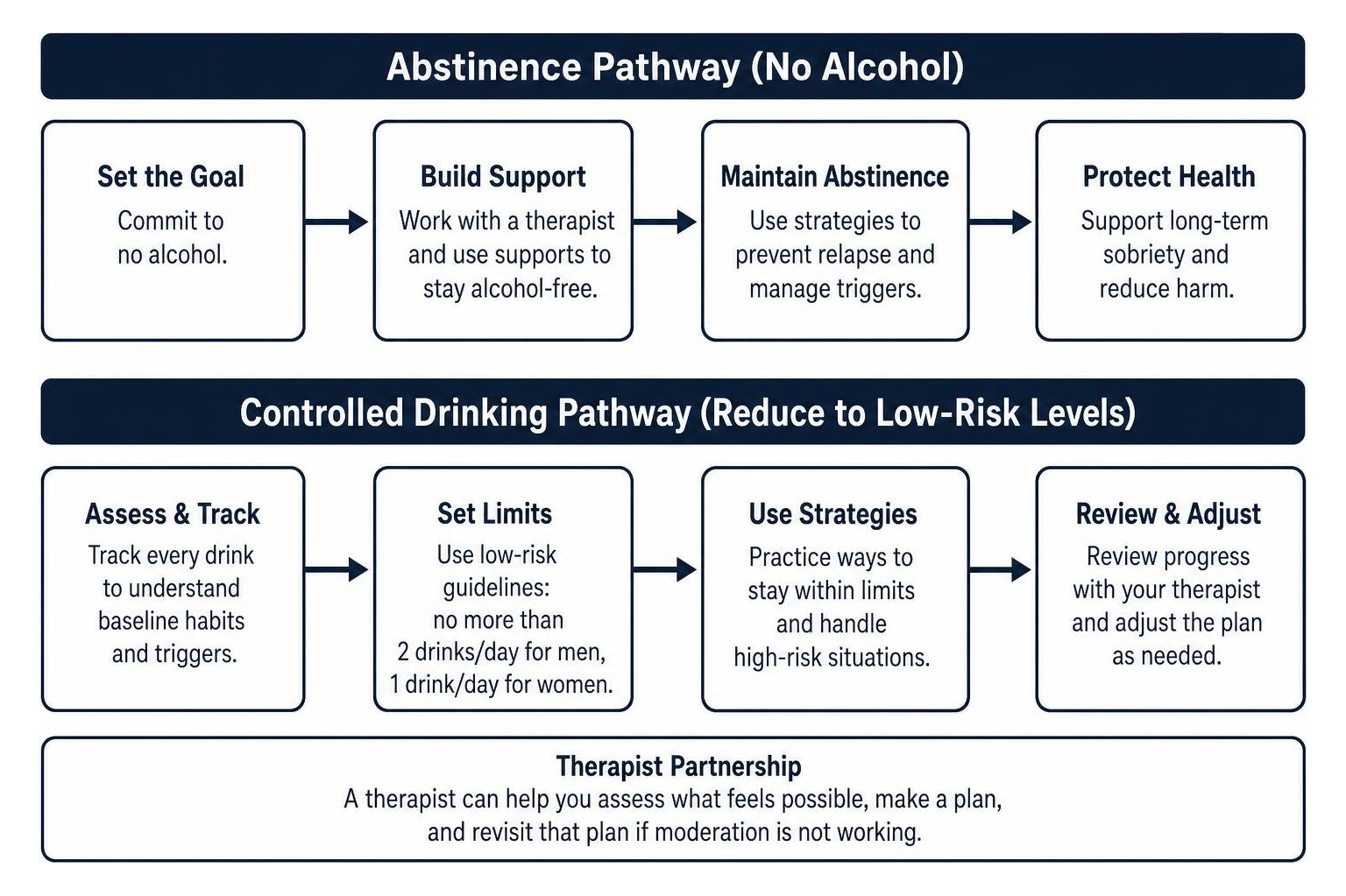
Controlled drinking approaches this challenge through the lens of harm reduction. The primary goal is reducing consumption to low-risk levels to protect physical health and improve day-to-day life. Low-risk guidelines generally define moderation as no more than two standard drinks per day for men and one standard drink per day for women. A standard drink equals roughly 12 ounces of regular beer, 5 ounces of wine, or 1.5 ounces of distilled spirits.
A strong therapeutic relationship allows you to explore these targets without fear of judgment. You do not have to commit to lifelong sobriety on day one. By learning why recovery can include more than one approach, you can evaluate treatment pathways that align with your personal needs and biological reality.
Core Principles of Controlled Drinking Therapy
Controlled drinking is an active, structured clinical process rather than unmonitored drinking. It relies on concrete behavioral rules and self-monitoring protocols designed to restore self-regulation.
- Baseline Assessment and Self-Monitoring: You track every drink consumed over several weeks using daily logs or digital tools. This uncovers baseline habits, standard drink volume miscalculations, and situational triggers.
- Pre-Determined Drinking Rules: You define clear boundaries before entering a drinking situation. These include maximum drinks per occasion, mandatory alcohol-free days, and predetermined cutoff times.
- Pacing and Rate Control: You learn practical techniques to slow absorption, such as alternating alcoholic drinks with non-alcoholic beverages and spacing drinks at least one hour apart.
- Trigger Management: Therapy identifies high-risk internal states like stress, fatigue, or loneliness, as well as external social environments that prompt heavy consumption.
- Evaluating Control: Regular check-ins assess whether you can stick to your limits when alcohol is present, providing clear data on treatment feasibility.
Debunking Common Misconceptions and Controversies
A long-standing debate exists between traditional disease models of addiction and modern behavioral self-regulation frameworks. Historically, critics argued that offering non-abstinent goals would give false hope to dependent drinkers and delay essential medical care.
Evidence shows that goal-open treatment systems lower stigma and bring people into care much earlier. When individuals learn about different alcohol treatment options, they feel respected as active partners in their health decisions.
Offering moderation as a starting point does not mean ignoring health risks. In clinical practice, starting with a moderation goal often helps clients recognize when their consumption cannot be safely controlled. This collaborative process makes transitioning to abstinence a clear, self-directed choice rather than an imposed rule.
What Clinical Science Reveals About Controlled Drinking Therapy

Clinical research on non-abstinent treatment pathways has expanded significantly. Robust systematic reviews offer valuable insights into how moderation strategies perform compared to traditional abstinence models.
A comprehensive systematic review and meta-analysis on controlled drinking versus abstinence examined 22 studies encompassing 4,204 participants (Henssler et al., 2021). The authors evaluated whether treatment goals fundamentally dictated long-term success, social functioning, and consumption reduction.
The clinical findings challenge the assumption that abstinence is the only viable treatment goal. When clients receive structured, goal-specific behavioral therapy, controlled drinking delivers meaningful reductions in alcohol-related harm and improvements in overall life functioning.
Meta-Analyses and Randomized Trial Findings
In randomized controlled trials comparing controlled drinking interventions directly to abstinence-based protocols, researchers observed no statistically significant difference in overall success rates (odds ratio 1.32, 95% confidence interval 0.51 to 3.39) (Henssler et al., 2021). Controlled drinking interventions performed on par with abstinence programs across clinical endpoints.
In non-randomized studies where clients chose their goals freely, abstinence-oriented cohorts initially appeared to have better outcomes (odds ratio 0.60, 95% confidence interval 0.40 to 0.90) (Henssler et al., 2021). However, this gap vanished when studies provided goal-specific psychotherapy tailored to moderation (odds ratio 0.79, 95% confidence interval 0.40 to 1.56) or when researchers analyzed high-quality trials with low risk of bias (odds ratio 0.73, 95% confidence interval 0.49 to 1.09) (Henssler et al., 2021).
Long-term follow-up studies revealed a non-significant trend favoring controlled drinking interventions over time (odds ratio 1.49, 95% confidence interval 0.78 to 2.85) (Henssler et al., 2021).
| Study Type / Subcategory | Odds Ratio (OR) | 95% Confidence Interval | Clinical Interpretation |
|---|---|---|---|
| Randomized Controlled Trials | 1.32 | 0.51 to 3.39 | No significant difference between approaches |
| Non-Randomized Studies (Overall) | 0.60 | 0.40 to 0.90 | Favors abstinence in unadjusted naturalistic cohorts |
| Non-Randomized (Goal-Specific Care) | 0.79 | 0.40 to 1.56 | No significant difference when tailored care is given |
| Low Risk of Bias Studies | 0.73 | 0.49 to 1.09 | Outcomes remain comparable when bias is minimized |
| Long-Term Follow-Up Cohorts | 1.49 | 0.78 to 2.85 | Trend favors controlled drinking durability |
Patient Selection: Who Benefits Most from Moderation Goals?
Controlled drinking is not suitable for everyone. Accurate patient selection is essential to balance harm reduction with personal safety.
Moderation goals work best for individuals with mild to moderate alcohol use disorder or hazardous drinking habits without physical dependence. Clinicians use the Alcohol Use Disorders Identification Test (AUDIT) to assess readiness:
- AUDIT Scores 8 to 14: Indicates hazardous or harmful drinking. These individuals frequently achieve good outcomes with structured moderation.
- AUDIT Scores 15 and Above: Suggests moderate to severe dependence. Abstinence is strongly recommended as the safer medical goal.
Beyond assessment scores, key predictors of moderation success include high baseline confidence in personal self-control, strong social stability, and lower historical loss of control. Research also indicates that women often succeed at higher rates in moderation programs, partly due to seeking care earlier in the progression of alcohol-related problems.
Abstinence is clinically mandatory for individuals with a history of severe withdrawal symptoms like seizures or delirium tremens, alcohol-related liver disease, cardiomyopathy, or pregnancy. It is also required when alcohol is combined with medications that cause severe adverse interactions.
Evidence-Based Psychosocial Approaches
To make sustained changes, individuals benefit from structured clinical frameworks. Partnering with a specialized substance and alcohol therapist helps translate moderation goals into repeatable daily habits.
A comprehensive systematic review of controlled drinking interventions highlights that individualized behavioral therapies and self-help tools reliably reduce consumption and related complications. Modern care combines cognitive behavioral tools, daily digital tracking logs, and personalized coping strategies to manage cravings without relying on alcohol.
Behavioral Self-Control Training vs. Motivational Interventions
Behavioral Self-Control Training (BSCT) has emerged as the gold standard behavioral protocol for moderation goals, replacing older behavioral conditioning models. BSCT combines self-monitoring, rate-control techniques, setting consumption limits, self-reinforcement, and identifying personal risk factors.
A randomized trial comparing BSCT and MET for individuals pursuing controlled drinking evaluated the distinct strengths of these two therapies (Hammarberg et al., 2023). Motivational Enhancement Therapy (MET) focuses on exploring ambivalence and strengthening personal motivation through reflective questioning.
Over a 26-week assessment period, both approaches produced substantial, sustained drops in weekly consumption (Hammarberg et al., 2023):
- BSCT participants reduced average weekly intake from 23.9 to 13.9 standard drinks (Hammarberg et al., 2023).
- MET participants reduced average weekly intake from 25.5 to 15.4 standard drinks (Hammarberg et al., 2023).
- BSCT proved significantly superior in reducing total weeks of hazardous drinking (46% versus 57%) and earned higher participant satisfaction ratings (Hammarberg et al., 2023).
While motivational therapy helps build readiness to change, structured behavioral training provides the practical tools needed to maintain daily drinking limits.
Clinical Implementation: Practical Steps and Goal Setting

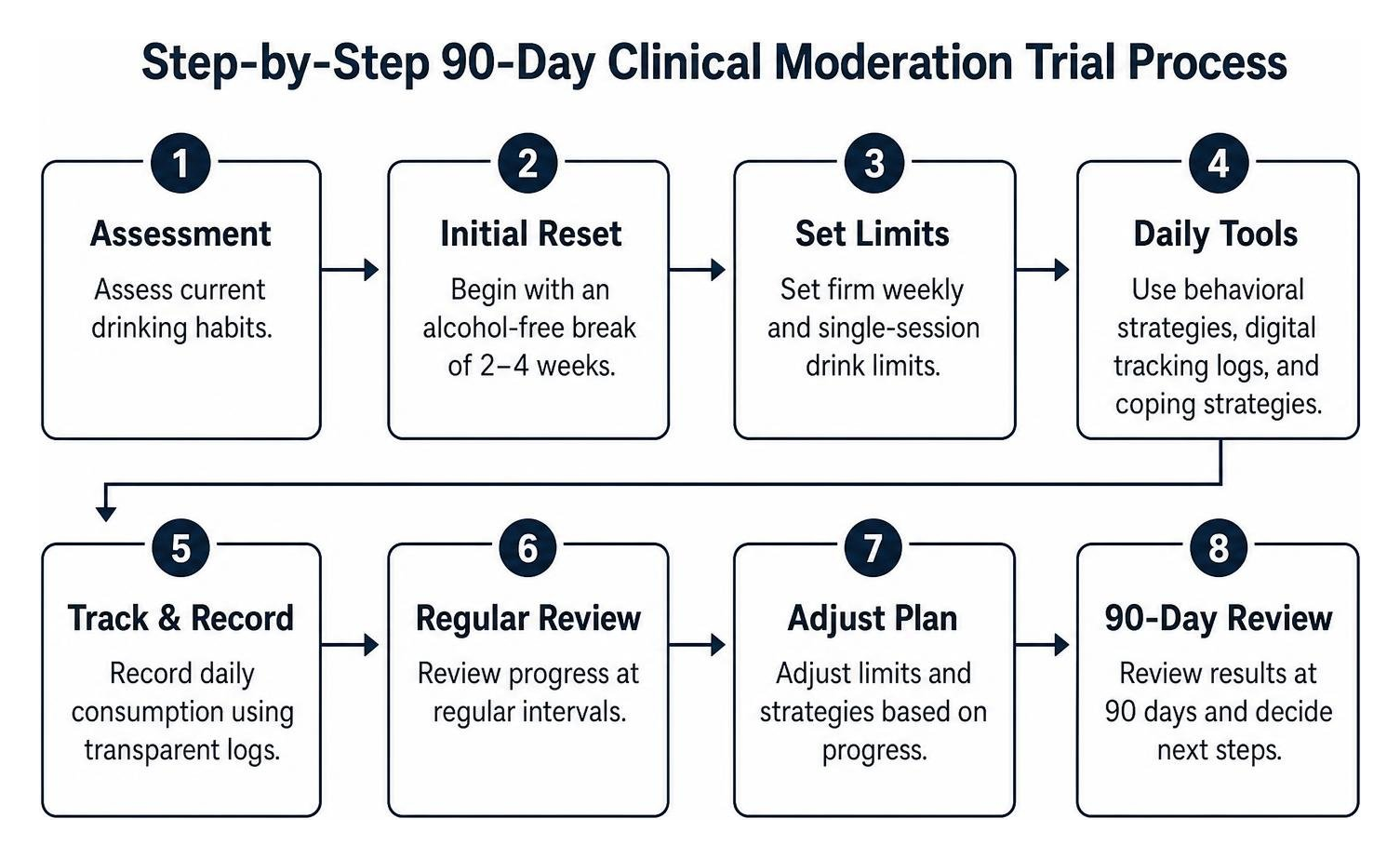
Controlled drinking therapy is implemented through clear, measurable steps. Rather than making vague promises to cut back, you work with a clinician to establish a structured, time-limited trial, typically lasting 90 days.
This trial starts with an assessment of current habits, followed by setting firm weekly and single-session drink limits. Progress is reviewed at regular intervals using transparent consumption logs.
How Clinicians Implement Controlled Drinking Therapy in Practice
Clinicians use evidence-based behavioral strategies to help clients maintain self-control in real-world settings:
- The Initial Reset Period: Starting with a brief alcohol-free break of two to four weeks helps clear physical tolerance, breaks automatic daily drinking loops, and establishes a clear baseline.
- Zebra Striping: Alternating every alcoholic drink with an alcohol-free beverage, such as sparkling water, slows down consumption rates and keeps blood alcohol concentration low.
- Scheduled Cutoffs: Setting a strict two-drink maximum per event alongside a predetermined ending time prevents open-ended drinking.
- Behavioral Replacements: Finding enjoyable non-alcoholic substitutes and stress-relief activities addresses the underlying emotional reasons for drinking.
- Drink-Refusal Rehearsal: Roleplaying practical ways to decline unwanted drinks in social settings builds confidence and reinforces personal boundaries.
Establishing Safety Rules and Knowing When to Switch to Abstinence
Controlled drinking therapy relies on objective, pre-established safety rules. When beginning a moderation trial, you and your therapist agree on clear indicators that signal when moderation is no longer effective or safe.
Common criteria for re-evaluating goals include:
- Exceeding agreed-upon daily drink limits more than twice within a single month.
- Experiencing memory lapses or blackouts after drinking events.
- Neglecting family, work, or personal commitments due to alcohol use.
- The emergence of physical withdrawal symptoms such as morning tremors, sweating, or rapid heart rate.
If these issues arise, switching to an abstinence goal is treated as helpful clinical feedback rather than personal failure. It shows that your brain’s neurochemical adaptations respond better to total sobriety. When physical withdrawal risks are identified, your clinician will coordinate medical stabilization to help you stop drinking safely.
Frequently Asked Questions About Controlled Drinking
Is controlled drinking possible for someone with severe alcohol dependence?
Controlled drinking is generally not recommended for individuals with severe alcohol dependence. Sustained heavy drinking changes brain chemistry, particularly in pathways regulating dopamine and gamma-aminobutyric acid. These changes lead to physical tolerance, neuroadaptation, and severe impaired control.
When someone with severe dependence drinks even small amounts of alcohol, intense physiological cravings can quickly trigger an escalating cycle of heavy use. Severe dependence also carries significant risks of medical withdrawal complications, including autonomic instability, hallucinations, and seizures. For these individuals, medically supervised abstinence provides the safest and most effective foundation for long-term health.
What happens if an attempt at controlled drinking is unsuccessful?
If a moderation trial does not hold, the experience serves as valuable diagnostic information rather than a setback. In non-judgmental clinical practice, testing a moderation goal offers real-world data about your current level of physical dependence and habit automaticity.
When limits are consistently exceeded despite using behavioral strategies, you and your therapist discuss the results openly. This direct experience often resolves lingering doubts about moderation. It allows you to step up to abstinence protocols with clear insight, commitment, and renewed purpose.
How does international healthcare policy view non-abstinent treatment goals?
Healthcare policies worldwide increasingly support non-abstinent treatment options. In the United Kingdom, guidelines from the National Institute for Health and Care Excellence (NICE) explicitly support moderation goals for individuals with mild to moderate alcohol difficulties who prefer not to pursue total abstinence.
Across Europe, national addiction frameworks incorporate harm reduction and non-abstinent approaches to help engage individuals who might otherwise avoid care. In the United States, clinical practice is moving beyond rigid abstinence-only models. Major public health organizations recognize that significant reductions in heavy drinking days provide meaningful health, relational, and social benefits.
Conclusion
The scientific evidence confirms that complete abstinence is not the only pathway to resolving alcohol problems. While sobriety remains essential for severe dependence, controlled drinking therapy offers an evidence-based alternative for individuals with mild to moderate alcohol misuse who want to reduce consumption and minimize harm.
Success depends on honest self-assessment, structured behavioral skills, continuous self-monitoring, and a willingness to adapt your goals based on real-world results. A customized treatment plan ensures your strategies match your unique health profile, lifestyle, and goals.
If you are exploring your relationship with alcohol and want to discuss your options, we invite you to take the next step. Learn more about how alcohol counseling works inside therapy sessions with our clinical team. Beyond Therapy provides compassionate, personalized care throughout Redondo Beach and the South Bay. Reach out today to schedule a free 15-minute consultation with a therapist to explore the treatment pathway that best fits your life.
Recent Posts