
November 5, 2026
A Quick Start Guide to Trauma-Informed Therapy

Key Takeaways
Trauma-informed care in 2026 recognizes that healing happens in a safe, supportive therapeutic setting where the nervous system, not just the mind, is treated with care. Below is a quick summary of what this guide covers before diving into the details.
- Trauma-informed therapy shifts the clinical focus from personal dysfunction to adaptive survival responses.
- The approach emphasizes safety, trustworthiness, peer support, collaboration, empowerment, and cultural humility.
- Evidence-based modalities such as EMDR and TF-CBT safely reprocess traumatic memories to support long-term healing.
- Addressing co-occurring trauma and substance use together improves therapeutic outcomes.
At its core, this shift moves the clinical question from “What is wrong with you?” to “What happened to you?” reframing symptoms as understandable responses rather than flaws, and building a stronger therapeutic alliance between client and provider.
Understanding Clinical Trauma and Its Systemic Impact
Trauma-informed therapy is an evidence-based clinical approach that shifts the primary therapeutic focus from “What is wrong with you?” to “What happened to you?” It creates a safe, collaborative environment where symptoms are understood as adaptive survival mechanisms rather than personal deficits. A quick start guide to trauma-informed care begins with establishing emotional safety, understanding autonomic nervous system responses, fostering mutual trust with providers, and using targeted modalities to reprocess distressing events without fear of retraumatization.
In clinical practice, trauma represents an overwhelming event or series of events that exceeds an individual’s psychological and physiological ability to cope. According to the Diagnostic and Statistical Manual of Mental Disorders, Fifth Edition, Text Revision (DSM-5-TR), trauma involves exposure to actual or threatened death, serious injury, or sexual violence. This exposure can occur through direct experience, witnessing the event, learning that it occurred to a close loved one, or repeated extreme exposure to aversive details of traumatic events.
Outside of strict diagnostic criteria, clinical frameworks rely on broader, practical definitions. The Substance Abuse and Mental Health Services Administration (SAMHSA) conceptualizes trauma through the “Three E’s” framework ((US), 2014):
- Events: The occurrence of one or more deeply threatening circumstances, such as physical violence, natural disasters, severe neglect, or systemic oppression.
- Experience: How the individual internalizes, interprets, and feels the event. The subjective meaning attached to the event determines whether it overwhelms the nervous system.
- Effects: The long-term physical, emotional, neurological, and social consequences that impair daily functioning.
Trauma generally presents in two primary forms: acute trauma and complex trauma. Acute trauma results from a single isolated incident, such as a motor vehicle accident or sudden medical emergency. Complex trauma stems from prolonged, repeated interpersonal distress, such as ongoing developmental neglect, emotional abuse, or domestic conflict.
The consequences of unaddressed trauma extend far beyond emotional distress. Chronic stress floods the body with cortisol and adrenaline, keeping the autonomic nervous system locked in persistent fight, flight, or freeze states. Over time, this dysregulation damages physiological systems.
Research indicates that individuals with lifetime posttraumatic stress disorder (PTSD) face a significantly elevated risk of chronic medical conditions (Yadav et al., 2024). These include hypertension, tachycardia, angina pectoris, other cardiovascular disorders, gastritis, and chronic inflammatory conditions such as arthritis. Integrating clinical guidelines for trauma-informed care allows practitioners to identify the hidden root causes behind complex somatic symptoms.
The Intersection of Trauma and Co-Occurring Conditions
When painful memories and nervous system activation become unbearable, people naturally seek relief. For many, substance use develops as an understandable attempt to downregulate intense anxiety, numb painful intrusions, or escape emotional numbness.
Data shows that more than 50% of individuals seeking substance use support report experiencing significant lifetime trauma. Trauma disrupts emotional regulation circuits in the brain, impairing the prefrontal cortex while keeping the amygdala on high alert. Without adaptive self-soothing tools, substances often become a fast-acting coping mechanism to manage distressing internal states.
Understanding how trauma and unresolved emotional pain contribute to addiction allows clinicians to address underlying emotional wounds rather than treating substance use in isolation. When providers approach co-occurring conditions with empathy rather than judgment, clients experience lower dropout rates and achieve more sustainable emotional stability.
What Is Trauma-Informed Therapy and How Does It Work?
Trauma-informed practice represents a fundamental shift in clinical philosophy. Rather than viewing distress as personal dysfunction, this model views symptoms as adaptive survival responses to intolerable circumstances.
The central aim is to create an environment that actively resists retraumatization. Traditional clinical settings can inadvertently recreate dynamics of powerlessness through rigid schedules, invasive questioning, or clinical aloofness. A trauma-informed framework dismantles these barriers by prioritizing transparency, predictable boundaries, and shared decision-making.
It is helpful to understand the distinction between trauma-informed care and trauma treatment. While trauma-informed care refers to an overall clinical philosophy applicable across all healthcare environments, trauma-specific treatment involves targeted clinical protocols designed to process and resolve specific traumatic memories.
Trauma-informed care and trauma-specific treatment differ in several practical ways:
- Primary focus: Trauma-informed care emphasizes safety, atmosphere, and systemic sensitivity. Trauma-specific treatment directly processes traumatic memories.
- Target audience: Trauma-informed care applies to all clients across healthcare settings. Trauma-specific treatment supports individuals diagnosed with PTSD or acute trauma.
- Core goal: Trauma-informed care prevents retraumatization and fosters trust. Trauma-specific treatment desensitizes triggers and resolves symptoms.
- Clinical scope: Trauma-informed care shapes organizational policies, screening, and the care environment. Trauma-specific treatment uses specific therapeutic interventions such as EMDR and TF-CBT.
- Practitioner role: Trauma-informed care relies on universal awareness by all staff and clinicians. Trauma-specific treatment requires specialized clinical training and certification.
Core Principles of Trauma-Informed Therapy
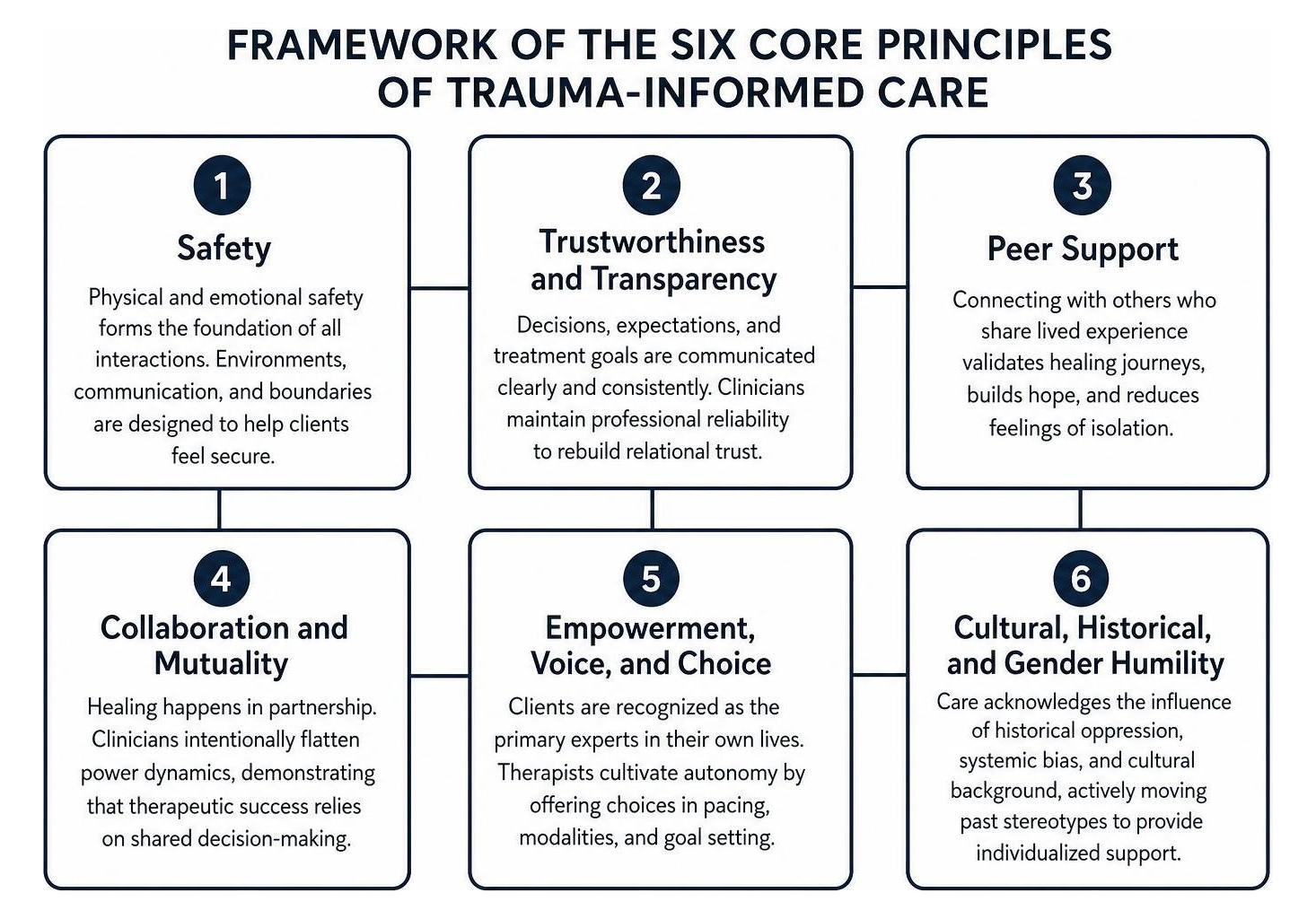
SAMHSA identifies six foundational principles that guide trauma-informed environments and clinical interactions ((US), 2014):
- Safety: Physical and emotional safety forms the foundation of all interactions. Office spaces, communication styles, and interpersonal boundaries are designed to help clients feel secure.
- Trustworthiness and Transparency: Decisions, expectations, and treatment goals are communicated clearly and consistently. Clinicians maintain professional reliability to rebuild relational trust.
- Peer Support: Connecting with others who share lived experience validates healing journeys, builds hope, and reduces feelings of isolation.
- Collaboration and Mutuality: Healing happens in partnership. Clinicians intentionally flatten power dynamics, demonstrating that therapeutic success relies on shared decision-making.
- Empowerment, Voice, and Choice: Clients are recognized as the primary experts in their own lives. Therapists cultivate autonomy by offering choices in pacing, modalities, and goal setting.
- Cultural, Historical, and Gender Humility: Care acknowledges the influence of historical oppression, systemic bias, and cultural background, actively moving past stereotypes to provide individualized support.
Effective Clinical Modalities for Trauma Treatment
When clients feel sufficiently grounded and safe, clinicians utilize specialized, evidence-based therapies to resolve traumatic stress. These interventions do not simply review past events. They help the nervous system reprocess stuck material so memory no longer triggers an automatic crisis response.

A comprehensive StatPearls overview of trauma-informed therapy highlights several proven clinical modalities:
- Trauma-Focused Cognitive Behavioral Therapy (TF-CBT): An intervention that helps clients identify distorted trauma-related beliefs, develop healthy coping mechanisms, and process traumatic narratives safely.
- Prolonged Exposure (PE): A behavioral protocol that gradually helps clients face trauma-related memories and situations they have avoided, teaching the nervous system that these cues are no longer dangerous. Meta-analyses demonstrate that exposure protocols consistently outperform waitlist and basic treatment-as-usual controls for adult PTSD (Yadav et al., 2024).
- Somatic Interventions: Body-oriented therapies that focus on tracking physical sensations, discharging trapped fight-or-flight energy, and restoring nervous system flexibility.
- Dialectical Behavior Therapy (DBT): A skills-based approach that emphasizes mindfulness, distress tolerance, emotion regulation, and interpersonal effectiveness to support emotional balance.
- Virtual Reality Exposure Therapy (VRET): An emerging modality utilizing controlled, multisensory digital environments to deliver precisely calibrated exposure cues under close clinical guidance.
Evidence-Based Modalities in Trauma-Informed Therapy
Among modern clinical protocols, Eye Movement Desensitization and Reprocessing (EMDR) stands out as an exceptionally well-researched approach for posttraumatic recovery.
EMDR facilitates memory reconsolidation through bilateral stimulation, typically using side-to-side eye movements, auditory tones, or alternating tactile taps. This bilateral sensory input engages the brain’s information processing mechanisms while keeping the client firmly anchored in the present moment.
During an EMDR session, the client recalls a distressing memory while following the clinician’s bilateral cues. This process reduces the emotional charge of the memory, allowing the brain to integrate the experience and replace negative self-beliefs (such as “I am in danger” or “It was my fault”) with adaptive truths (such as “I am safe now” or “I did the best I could”).
For those exploring targeted recovery options, specialized EMDR therapy offers insight into how structured protocols resolve acute and chronic trauma effectively.
Implementing Trauma-Informed Practices Across Healthcare Settings
Implementing trauma-informed care requires intentional operational protocols across behavioral health and medical settings. Universal screening ensures that trauma histories are recognized early, preventing misdiagnosis and inappropriate treatment planning.

Clinicians frequently use validated, standardized assessment tools to identify trauma-related needs respectfully:
- Primary Care PTSD Screen (PC-PTSD): A brief, validated screening instrument designed for rapid clinical settings to identify potential PTSD symptoms.
- Startle, Physiological Arousal, Anger, and Numbness (SPAN): A targeted four-item assessment used to screen for hyperarousal and emotional constriction.
- PTSD Checklist for DSM-5 (PCL-5): A comprehensive 20-item self-report measure assessing symptom severity across diagnostic criteria.
Screening must always be conducted with sensitivity. Clinicians introduce questionnaires transparently, explain how the information will be used, and remind clients that answering every question is entirely voluntary.
Following established SAMHSA TIP 57 behavioral health protocols, clinical teams also prioritize provider wellness. Working with severe trauma creates a real risk of secondary traumatic stress, compassion fatigue, and burnout. Organizations protect their staff through consistent clinical supervision, balanced caseloads, and routine professional quality-of-life evaluations.
Organizational Workforce Development and Training
Transforming a clinical environment into a trauma-informed setting requires training for every member of the workforce, from intake coordinators to licensed clinicians.
Organizations achieve sustained culture change through clear steps:
- Assessing existing operational policies to identify and remove potentially coercive or retraumatizing practices.
- Establishing transparent communication regarding intake procedures, billing, and clinical expectations.
- Training non-clinical administrative staff in verbal de-escalation, active listening, and calm problem-solving.
- Supporting clinicians in pursuing advanced continuing education and specialized credentials.
Mental health professionals interested in formal credentialing can review the pathway for becoming trauma-informed certified. For clients seeking local clinical support, working with a local trauma-informed therapist can clarify what compassionate, evidence-based care looks like in daily practice.
Frequently Asked Questions About Trauma-Informed Care
How does trauma-informed therapy differ from traditional therapy?
Traditional therapy models often focus primarily on symptom reduction, behavioral management, and identifying pathological thoughts. While helpful, these models can sometimes overlook how past survival strategies shape current reactions.
Trauma-informed care actively addresses power dynamics between clinician and client. It emphasizes personal agency, offers choices at every step of treatment, and frames challenging behaviors as understandable adaptations to past adversity rather than personal deficits.
Who should seek a trauma-informed therapeutic approach?
Anyone experiencing chronic stress, relational difficulties, or lingering emotional pain can benefit from this approach. It is especially valuable for:
- Survivors of single-incident or complex childhood trauma.
- Professionals experiencing severe workplace burnout or compassion fatigue.
- Individuals navigating chronic medical illnesses or somatic pain syndromes.
- People managing co-occurring anxiety, depression, or substance use concerns.
- Anyone who has felt misunderstood, rushed, or invalidated in past clinical settings.
What happens during an initial trauma-informed intake assessment?
An initial trauma-informed intake moves at a comfortable, collaborative pace. You will never be forced to recount graphic details of past distressing events during your first appointment.
Instead, the clinician focuses on clarifying your current goals, discussing what helps you feel safe, explaining practical privacy boundaries, and establishing a clear plan for moving forward. You maintain control over what you share and when you choose to share it.
Conclusion
Healing from traumatic stress is a deeply personal process that requires patience, safety, and specialized clinical care. Whether you are dealing with recent life disruptions, long-standing emotional burdens, or burnout, the right therapeutic environment makes a profound difference.
At Beyond Therapy, our clinicians provide compassionate, evidence-based care tailored to your unique history and goals. We proudly support individuals throughout Redondo Beach and the broader South Bay community.
To help you get started with confidence, we offer a free 15-minute consultation to answer your questions and guide your next steps. Take the first step toward lasting relief by exploring our trauma-informed therapy services today.
References
Garima Yadav, Susan McNamara, Sasidhar Gunturu. “Trauma-Informed Therapy.” StatPearls Publishing, 2024. NBK604200. Center for Substance Abuse Treatment (US). “Trauma-Informed Care in Behavioral Health Services.” Substance Abuse and Mental Health Services Administration (US), 2014. NBK207201.
Recent Posts