September 24, 2026
The Ultimate Guide to Accredited Trauma-Focused CBT Training

Key Takeaways
- Evidence-Based Care: TF-CBT is a leading, research-backed model for youth aged 3 to 18 and their non-offending caregivers.
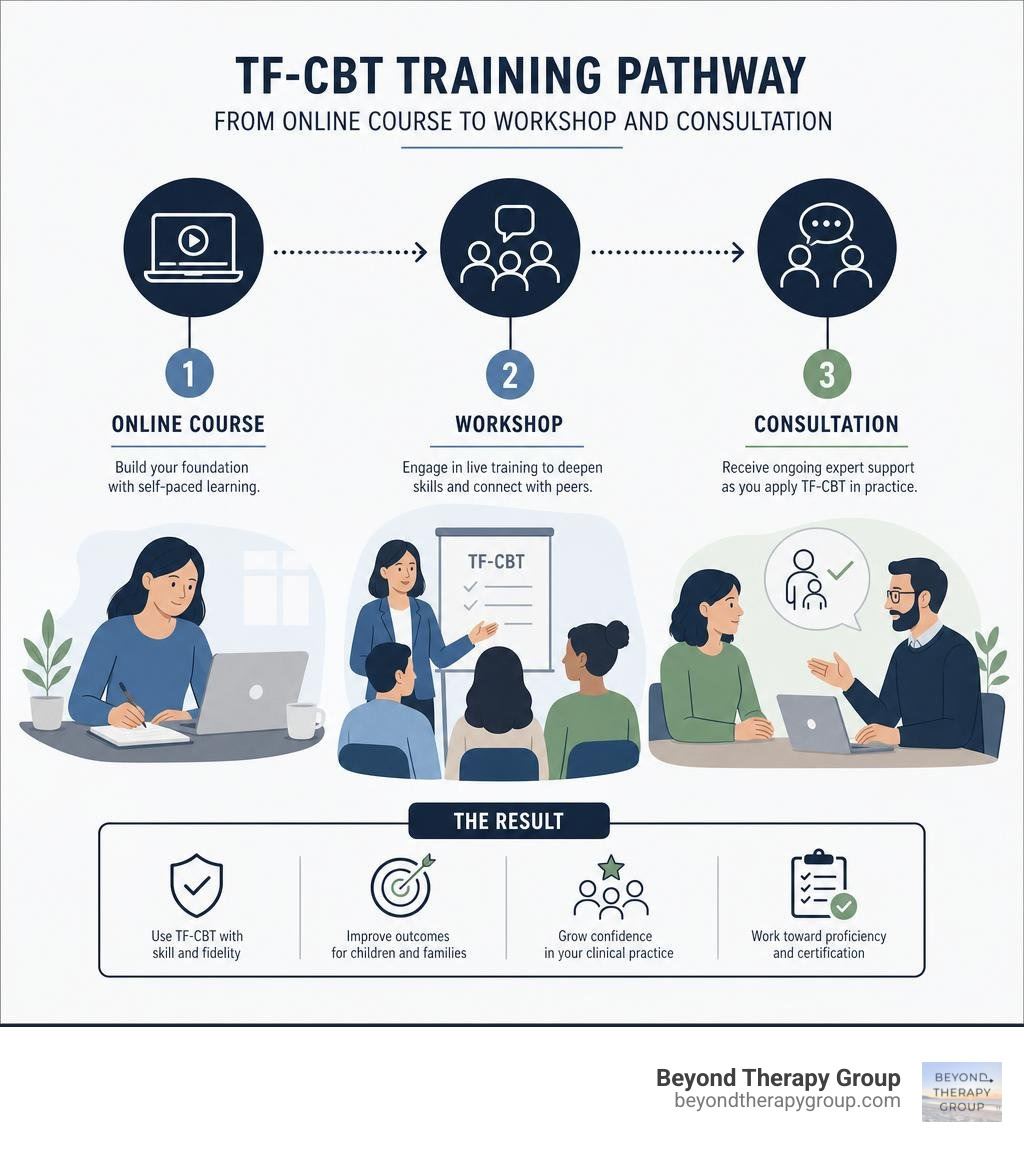
- Structured Training Path: Clinical training includes online prerequisite coursework, interactive workshops, and ongoing consultation.
- PRACTICE Model: Trainees learn eight sequential components to guide emotional regulation, coping, and trauma processing.
- Certification Pathway: National certification requires prerequisite coursework, live training, case consultation, completed cases, and an exam.
Find the Right Trauma-Focused CBT Training Path
Trauma-focused cbt training helps qualified mental health clinicians learn a proven treatment model for children and teens affected by trauma, while involving their non-offending caregivers whenever possible.
- Who it serves: Youth ages 3 to 18 with trauma-related stress, mood, or behavior symptoms and their caregivers.
- What training usually includes: Online foundation coursework, a live workshop or virtual learning community, and ongoing case consultation.
- Why consultation matters: It helps clinicians use TF-CBT with skill and fidelity while they apply the model to real cases.
- What to look for: A program that includes the full PRACTICE model, continuing education credit where needed, and a clear route to proficiency or certification.
TF-CBT is one of the most researched treatments for childhood trauma, with support from more than 25 randomized trials and additional quasi-experimental studies. Treatment commonly lasts 8 to 25 weekly sessions and combines practical coping skills, trauma processing, caregiver support, and safety planning.
For busy clinicians, the key is not simply finding a course. It is choosing a training path that fits your license level, active caseload, schedule, and professional goals. This guide compares the major accredited training formats and explains what comes after the first workshop.
Core Components and Clinical Outcomes of TF-CBT
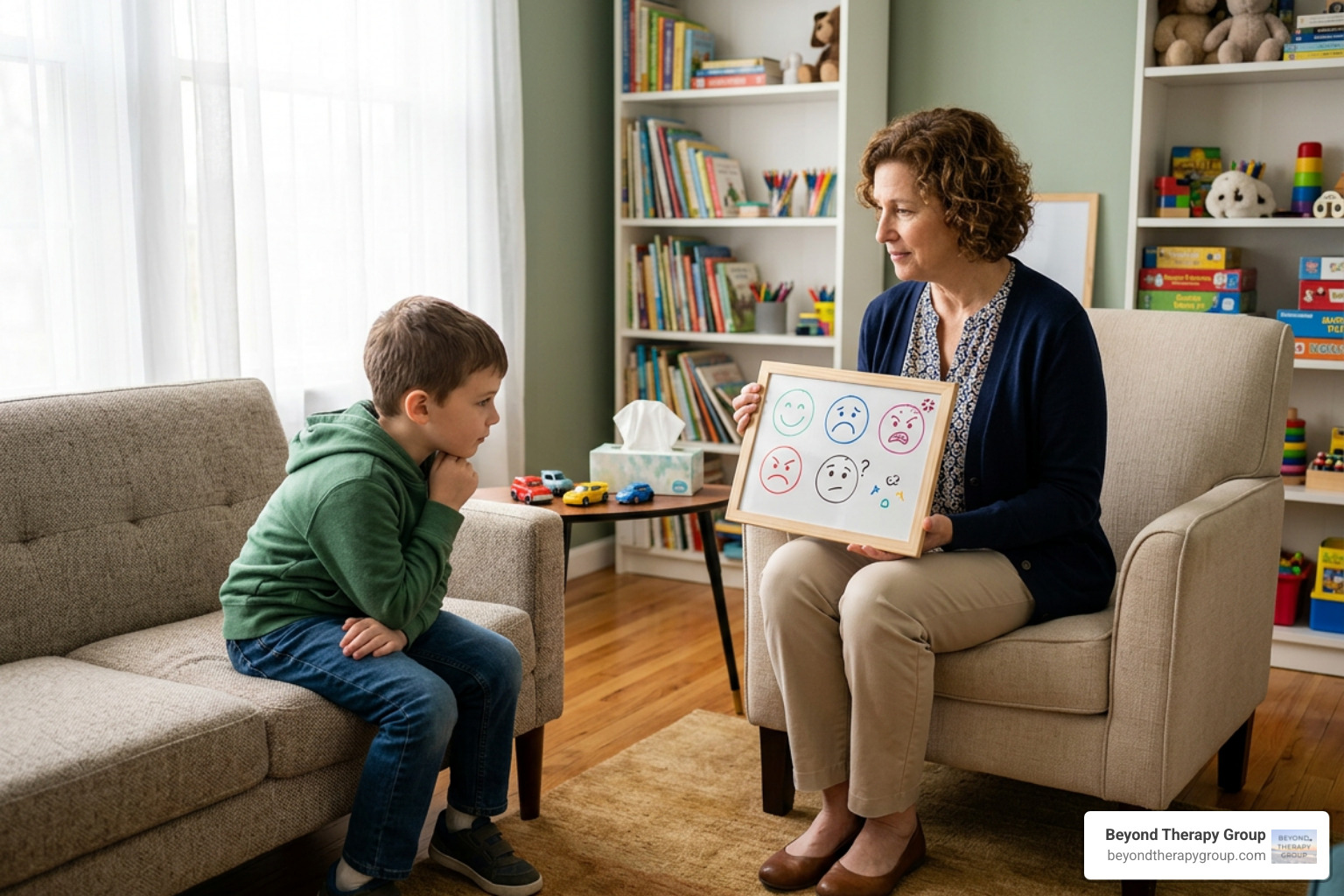
When clinicians explore evidence-based protocols for youth, Trauma-Focused Cognitive Behavioral Therapy stands out as a gold standard. Designed for youth ages 3 through 18, this structured approach addresses post-traumatic stress, depressive symptoms, and behavioral challenges resulting from single or repeated traumatic events.
A central strength of the model is the inclusion of a non-offending caregiver. Children do not process trauma in isolation. Involving parents or guardians helps rebuild safety, reduces parenting distress, and reinforces coping strategies at home. Standard treatment typically spans 8 to 25 weekly sessions, lasting between 60 and 90 minutes each. You can read more about how specialized protocols contrast with broader clinical approaches in our guide on Trauma-Informed Care Versus Trauma Treatment.
Clinicians who complete formal instruction learn how to evaluate youth using validated assessment instruments. Learn more about regional training options through the Trauma-Focused Cognitive-Behavioral Therapy (TF … program resources.
Phase-Oriented Treatment and the PRACTICE Model
The model follows a clear phase-oriented structure summarized by the PRACTICE acronym. Each component plays a distinct role in guiding the child and caregiver toward healing.
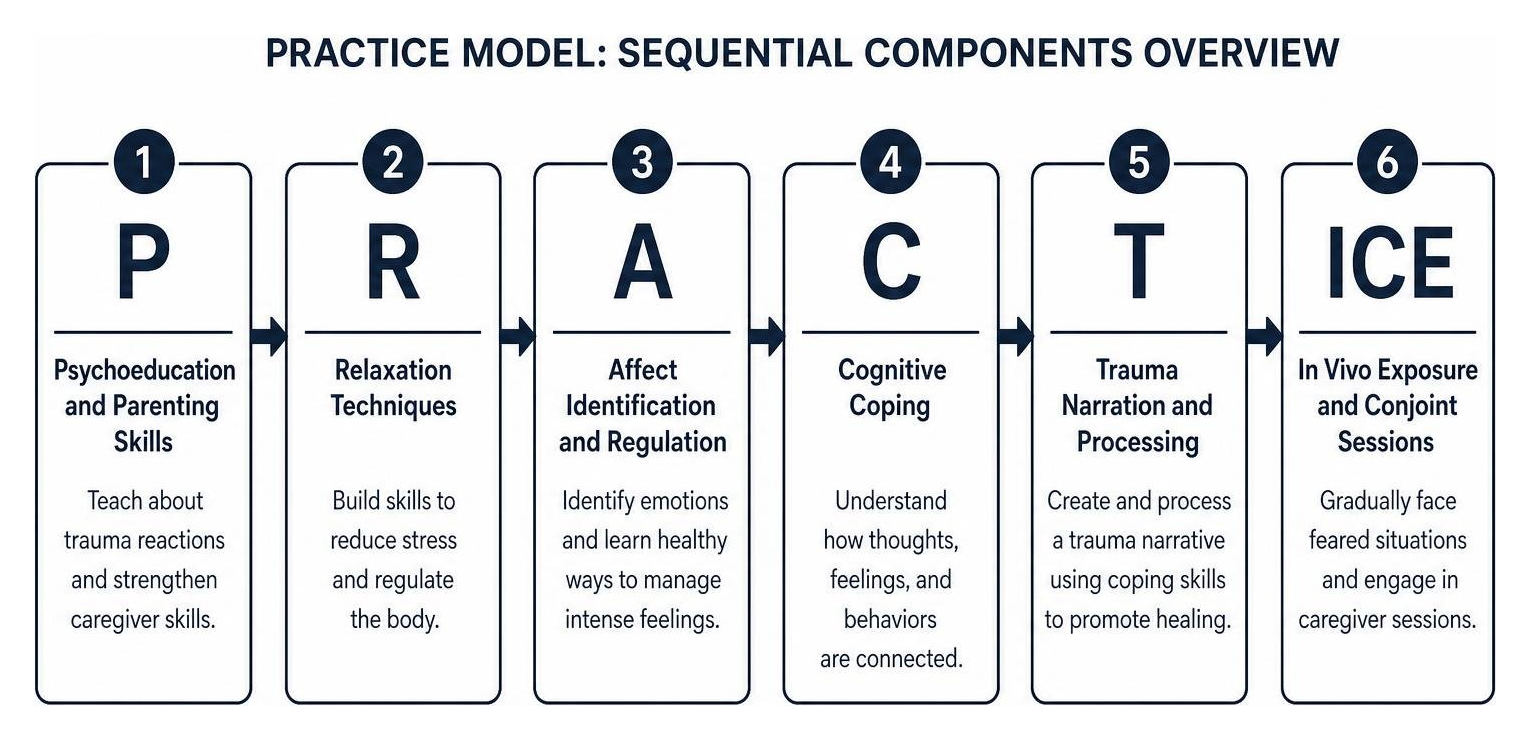
- P: Psychoeducation and Parenting Skills: Clinicians teach families about common trauma reactions, normalize post-traumatic stress responses, and equip caregivers with positive discipline and supportive management tools.
- R: Relaxation Techniques: Youth and caregivers learn practical somatic techniques, including deep breathing, progressive muscle relaxation, and mindfulness, to regulate distress.
- A: Affect Identification and Regulation: Children expand their emotional vocabulary and learn healthy ways to express and manage intense feelings such as anger, fear, or sadness.
- C: Cognitive Coping: Therapists help clients understand the relationship between thoughts, feelings, and behaviors, teaching youth how to replace inaccurate or unhelpful thoughts with balanced ones.
- T: Trauma Narration and Processing: Youth directly address their trauma memories by creating a written, visual, or spoken trauma narrative while using coping strategies to process difficult memories safely.
- I: In Vivo Mastery: Clinicians assist children in gradually overcoming real-life trauma reminders and non-dangerous avoided situations.
- C: Conjoint Parent-Child Sessions: The child shares their completed trauma narrative with their non-offending caregiver, fostering open communication, mutual trust, and emotional processing.
- E: Enhancing Safety and Future Development: Therapists and families develop practical personal safety plans and practice problem-solving strategies for future challenges.
Long-Term Efficacy and Symptom Reduction
The empirical foundation of TF-CBT is extensive. Extensive clinical studies show that children who complete the full intervention demonstrate substantial improvements across multiple areas of functioning.
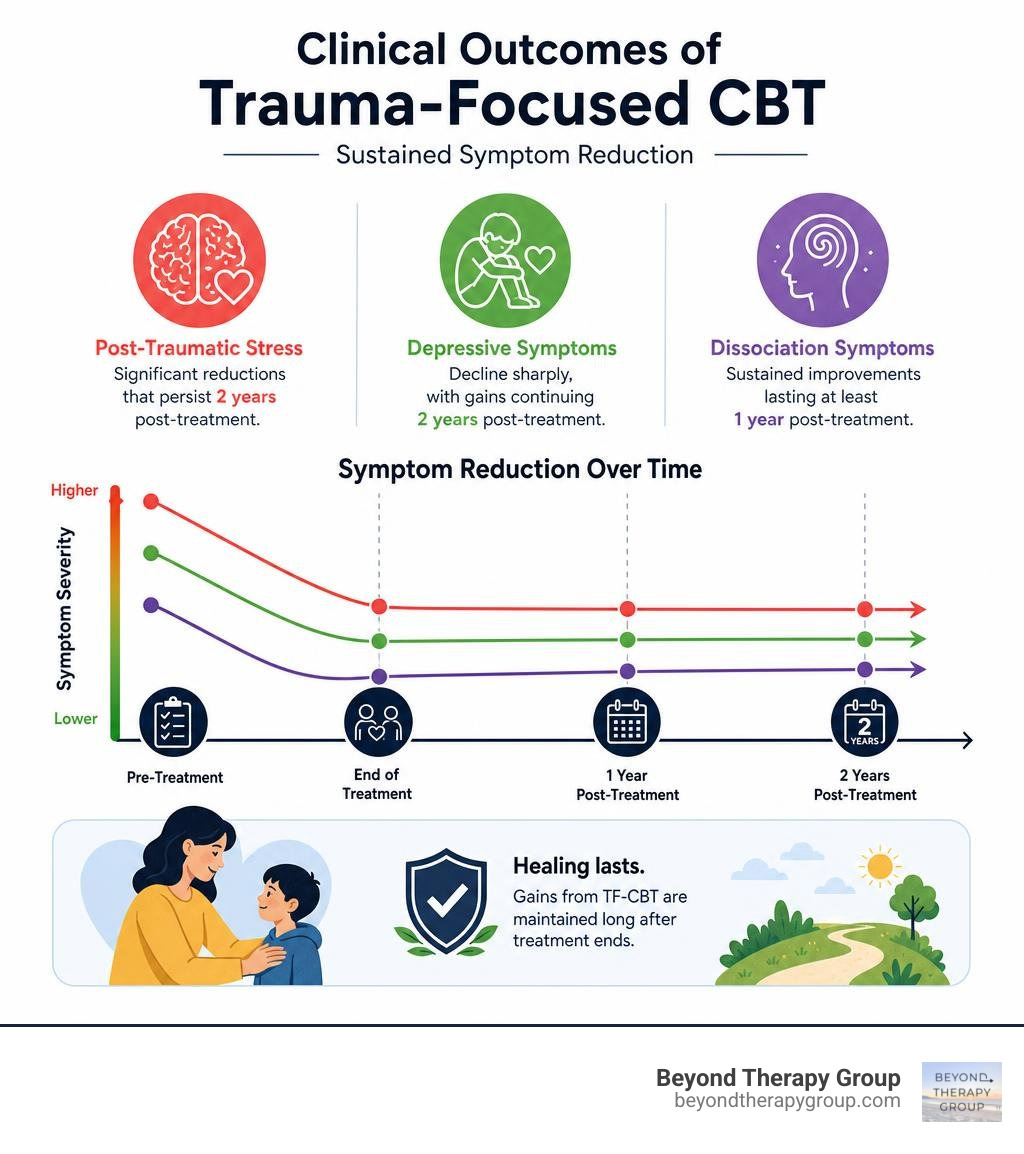
Research demonstrates that treatment gains are maintained well beyond the final clinical session:
- Post-traumatic stress symptoms show significant reductions that persist 2 years post-treatment.
- Depressive symptoms decline sharply, with gains continuing 2 years post-treatment.
- Dissociation symptoms show sustained improvements lasting at least 1 year post-treatment.
- Caregiver distress decreases substantially, maintaining lower levels 1 year post-treatment.
By providing therapists with tools to address both emotional processing and behavioral stabilization, the intervention delivers lasting positive outcomes for families.
Prerequisites and Pathways for Trauma-Focused CBT Training

Navigating the landscape of professional education requires understanding specific entry criteria and structural expectations. Accredited courses are tailored for Master’s level mental health professionals, including licensed marriage and family therapists, clinical social workers, professional counselors, psychologists, and pre-licensed interns working under direct clinical supervision.
Because coursework involves applying learned skills immediately, trainees must maintain an active clinical caseload with access to child and adolescent clients experiencing trauma. In agency environments, agency readiness and administrative support from senior leaders are critical to maintaining model fidelity and sustaining clinical practices over time.
| Training Pathway | Primary Target Audience | Typical Duration | CEU Credits Awarded | Key Features & Inclusions |
|---|---|---|---|---|
| Online Prerequisites (TF-CBTWeb) | Licensed clinicians & pre-licensed interns | Self-paced (approx. 10 hours) | 11 CEUs | Interactive modules, clinical video scripts, foundational concepts |
| Introductory Workshop | Master’s level mental health providers | 2 to 3 days (or 6 virtual half-days) | 12 to 15 CEUs | Intensive skill building, PRACTICE model role-play, case formulation |
| Learning Community / Collaborative | Agency teams & individual practitioners | 6 to 12 months | 20+ CEUs | Combined workshops, ongoing consultation, resource libraries |
Prerequisites for Online Trauma-Focused CBT Training
Before attending live workshops, practitioners complete foundational web training. The primary platform for this initial step is TFCBT-Web , an online learning resource developed by the Medical University of South Carolina.
This prerequisite course provides 11 CEUs upon completion. It contains interactive modules covering each PRACTICE component, complete with streaming clinical video demonstrations, sample therapy scripts, cultural adaptation guidance, and solutions for common clinical challenges. Completing this online course ensures all workshop attendees enter live training with a baseline understanding of core concepts.
Primary Pathways for Trauma-Focused CBT Training
Once prerequisite web modules are complete, clinicians select a live or virtual interactive pathway. You can explore official training schedules directly through Trauma-Focused Cognitive Behavioral Therapy Training .
Primary training pathways include:
- 3-Day Introductory Workshops: These interactive trainings offer approximately 15 CEUs over three days. They focus heavily on skill application, script rehearsal, and PRACTICE model delivery.
- Learning Communities: Structured over several months, learning communities combine initial didactic days with follow-up training sessions, peer forums, and downloadable resource banks.
- Specialized Regional Offerings: Regional virtual courses, such as the 2025, Dec 8, 9, & 10, Initial Trauma-Focused CBT Training with Leila Keen, CIBHS , provide comprehensive instruction paired with long-term consultation support.
Therapists looking to broaden their overall clinical toolset often explore complementary modalities. To see how cognitive frameworks integrate with other trauma approaches, read The Ultimate Guide to EMDR Therapy in Redondo Beach. Furthermore, advanced practitioners sometimes examine integrative frameworks detailed in the Online Course: TEAM-CBT and IFS for Healing Trauma .
Case Supervision, Certification, and Specialized Tracks
Attending an initial workshop is only the first phase of achieving true clinical mastery. Translating workshop concepts into daily practice requires structured consultation, ongoing supervision, and fidelity tracking.
Consultation typically involves twice-monthly or monthly conference calls spread across six months to one year. During these calls, clinicians present active cases, review audio recordings or clinical notes, receive peer feedback, and troubleshoot unexpected roadblocks. Participating in standard 6-month consultation programs earns clinicians approximately 12 CEUs while ensuring that treatment delivery strictly adheres to evidence-based standards.
Achieving National Certification and Proficiency
Achieving national certification or official proficiency elevates clinical credibility and demonstrates advanced competency. Requirements for national certification include:
- Completion of the 11-CEU online prerequisite course.
- Attendance at an approved 2-day or 3-day introductory workshop.
- Active participation in mandatory post-workshop consultation calls.
- Successful completion of at least three child trauma cases, with at least two cases including active caregiver participation.
- Passing a national standardized certification exam.
Clinicians can review national criteria and community programs at the Trauma-Focused Cognitive Behavioral Therapy (TF-CBT) Basic Learning Community, TF-CBT Certification Program listing.

Once earned, national TF-CBT proficiency certification remains valid for five years. To maintain certified status after five years, clinicians must complete an approved refresher course and pass a recertification examination, ensuring their practice stays aligned with updated clinical literature.
Training Adaptations for Complex Trauma and Specialized Populations
Standard treatment protocols can be adapted to support youth facing complex clinical presentations, severe dissociation, or acute behavioral challenges.
For example, clinicians seeking to utilize specialized protocols for children experiencing problematic sexual behaviors must meet rigorous entry criteria. Specialized tracks require clinicians to have already completed a full foundational training pathway and successfully carried at least three standard cases to completion.
When working with youth affected by chronic physical abuse, community violence, or complex loss, clinicians learn how to lengthen the coping skills phase, incorporate enhanced somatic grounding, and adapt narrative exercises to accommodate multiple traumatic events.
Frequently Asked Questions About TF-CBT Training
How long does it take to complete the full TF-CBT certification process?
The complete path to national certification usually takes between 6 and 12 months. This timeframe includes completing the self-paced online modules, attending a 3-day workshop, participating in 6 to 12 months of required consultation calls, carrying 3 active cases to completion, and passing the national certification exam.
Can pre-licensed clinicians participate in accredited TF-CBT workshops?
Yes, pre-licensed clinicians and Master’s level interns can participate in accredited workshops, provided they deliver therapy under the direct supervision of a licensed mental health professional. Pre-licensed trainees must also have an active client caseload of youth and families affected by trauma to meet clinical practice requirements.
How many total continuing education credits (CEUs) are earned?
A clinician completing the full standard training pathway typically earns between 38 and 47 total CEUs:
- 11 CEUs from the TF-CBTWeb prerequisite modules.
- 15 CEUs from the 3-day introductory workshop.
- 12 CEUs from the 6-month case consultation program.
- Additional CEUs from advanced or booster workshops when pursued.
Conclusion and Finding Accredited Trauma Care
Choosing the right trauma-focused cbt training pathway equips clinicians with the skills, structure, and confidence needed to guide young clients and their families through trauma recovery. From mastering the PRACTICE framework to completing post-workshop consultation and national certification, each step strengthens clinical fidelity and improves therapeutic outcomes.
At Beyond Therapy, we are dedicated to clinical excellence and compassionate, evidence-based care. Serving South Bay communities, including Redondo Beach, our practice provides tailored support for individuals and families seeking dedicated healing pathways. To learn more about our trauma recovery services, explore our dedicated page on Trauma-Informed Therapy.
If you are ready to find tailored therapeutic support for yourself or a loved one, we invite you to connect with us today. Schedule a free 15-minute consultation with our experienced therapists to ask questions, explore options, and take your next step toward lasting wellness.
Recent Posts