July 11, 2026
A – Z Guide to Anxiety Around Social Events

Why Anxiety Around Social Events Is More Common Than You Think
Key Takeaways
- Anxiety around social events affects 3 to 7% of people in any given year and up to 13% over a lifetime.
- It is much more intense than normal shyness and can interfere with work, relationships, and daily life.
- Physical symptoms include blushing, sweating, rapid heart rate, and nausea.
- Cognitive behavioral therapy (CBT) is the gold standard treatment.
- Practical coping strategies can help you manage symptoms before, during, and after social events.
- Professional support can build long-term resilience and improve overall well-being.
What is anxiety around social events?
Anxiety around social events is an intense, persistent fear of being judged, embarrassed, or negatively evaluated in social situations. It goes beyond normal nerves. It can cause people to avoid parties, work events, family gatherings, and everyday interactions entirely.
Here is a quick overview:
| Feature | Normal Nerves | Social Event Anxiety |
|---|---|---|
| When it starts | Just before the event | Days or weeks before |
| How it feels | Mild unease | Intense dread or panic |
| What happens after | You calm down | You replay the event repeatedly |
| Impact on life | Minimal | Affects work, relationships, and daily routines |
| Duration | Short-lived | Persistent (6+ months for a clinical diagnosis) |
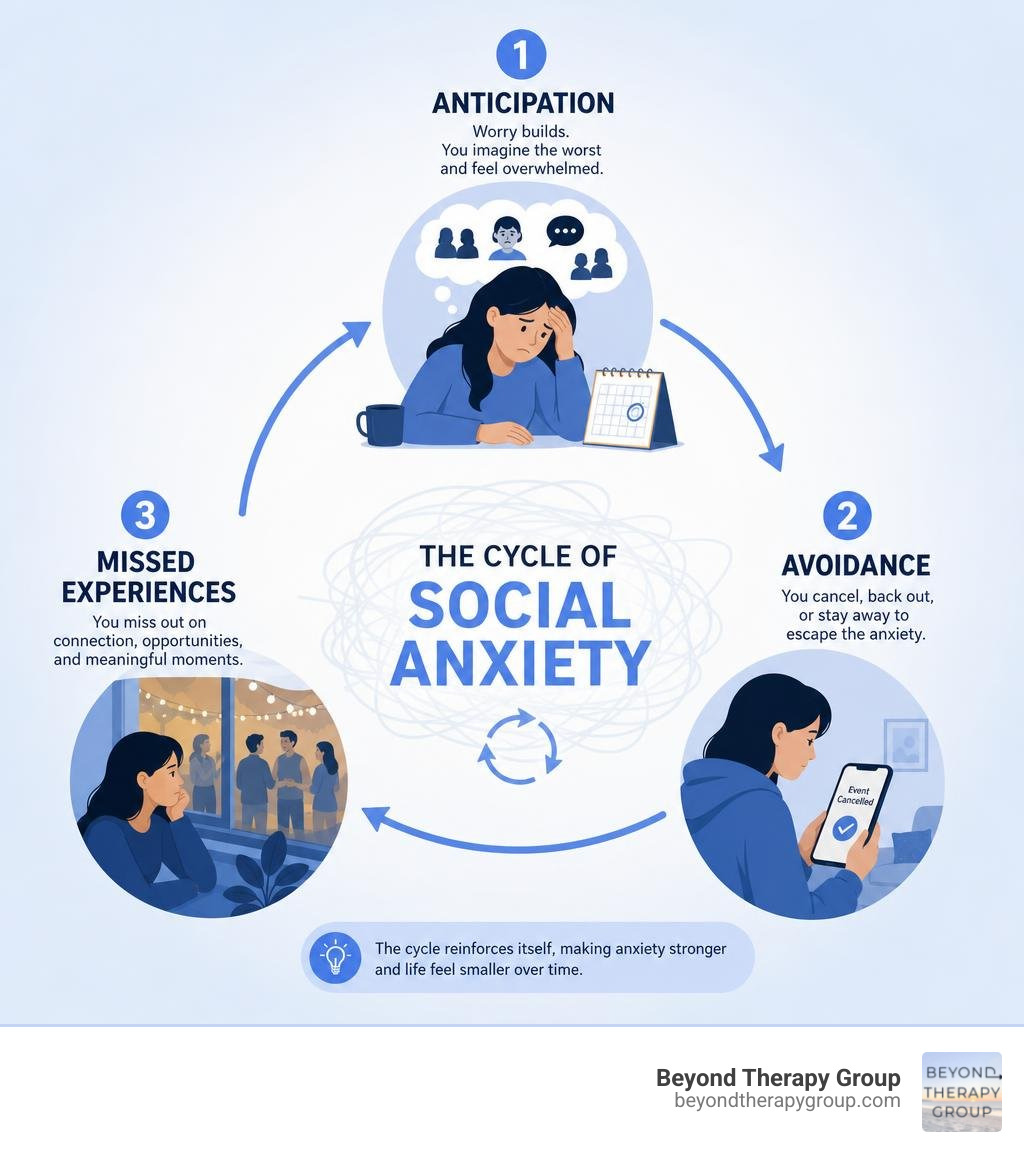
Picture this. You get a party invitation. Instead of feeling excited, your stomach drops. You spend the next week dreading it. You rehearse conversations. You imagine everything going wrong. By the time the event arrives, you are exhausted before you even walk through the door.
If that sounds familiar, you are not alone.
Social event anxiety is one of the most common mental health challenges people face. It affects an estimated 3 to 7% of people in any given year, and as many as 13% of people will experience it at some point in their lives. It is also the most common anxiety disorder worldwide.
Yet many people suffer in silence. They assume they are just shy, or that everyone feels this way. They push through events feeling miserable, or they cancel plans and withdraw from the people and experiences that matter to them.
The truth is that social anxiety is a recognized mental health condition, not a personality flaw. And the good news is that it responds well to treatment and practical strategies.
This guide covers everything you need to know: what social event anxiety really is, what causes it, how it is diagnosed, and most importantly, what you can do about it.
Understanding Anxiety Around Social Events
To truly understand anxiety around social events, we have to look at how it operates. It is not just about feeling a little self-conscious when you walk into a crowded room. For many, it is a chronic mental health condition that can completely take over their thought patterns.
According to the NIMH Social Anxiety Fact Sheet, this condition is characterized by an intense, persistent fear of being watched and judged by others. This fear can become so overwhelming that it gets in the way of school, work, and other daily activities.
Differentiating Normal Shyness From Anxiety Around Social Events
It is completely normal to feel a bit nervous before public speaking or when walking into a room full of strangers. The key difference lies in the intensity and the duration of the feelings.
Normal shyness is a personality trait. People who are shy may feel quiet or reserved in new situations, but they generally warm up after a while. They do not experience extreme physical distress or spend weeks dreading a social gathering.
In contrast, clinical social anxiety involves an ongoing, deeply rooted fear of negative evaluation. This fear is often out of proportion to the actual threat of the situation.
Here is a closer look at how they differ:
- Shyness: You might feel quiet at a party, but you still go. You might feel a little awkward, but you can still hold a conversation and enjoy yourself once you settle in.
- Social Anxiety: You might make up an excuse to skip the party entirely. If you do go, you might spend the entire time planning your escape, hiding in the bathroom, or hovering near the exit. After you leave, you might spend days analyzing every single word you said.
Physical and Psychological Symptoms of Social Anxiety
Anxiety is not just in your head. It is a full-body experience. When you feel anxious about a social event, your brain perceives a threat. This triggers your fight-or-flight response, which floods your body with adrenaline and causes a range of physical symptoms.
Common physical manifestations include:
- Blushing or feeling hot in the face
- Excessive sweating, especially in the palms or underarms
- A rapid, pounding heart rate
- Trembling or shaking hands and legs
- Nausea, stomach cramps, or a sudden urge to use the restroom
- A rigid, stiff body posture
- Difficulty making eye contact or speaking in a clear voice
- Your mind going completely blank when someone asks you a question
On a psychological level, social anxiety involves a constant stream of negative self-talk. You might assume that everyone is looking at you, judging your appearance, or waiting for you to make a mistake. These thoughts can be incredibly loud and exhausting.
How Social Anxiety Impacts Daily Life and Relationships
When you live with constant anxiety about social gatherings, your world can start to shrink. You might find yourself turning down promotions at work because they require public speaking or managing others. You might avoid networking events, which can limit your career growth.
Relationships can also take a heavy hit. It is hard to date or make new friends when the thought of meeting someone new fills you with dread. Even existing relationships can suffer if your friends and family feel like you are constantly blowing them off or avoiding their invitations.
Over time, this pattern of avoidance can lead to deep feelings of isolation and loneliness. You want to connect with others, but the anxiety acts like a barrier that keeps you locked away.
Causes, Risk Factors, and Clinical Diagnosis
Why do some people develop severe anxiety around social events while others seem to glide through gatherings with ease? The answer is complex. Like most mental health conditions, social anxiety is caused by a combination of biological, genetic, and environmental factors.
According to the Mayo Clinic Guide on Social Anxiety, research suggests that multiple factors play a role in how this condition develops and persists over time.
Biological and Environmental Risk Factors
From a biological standpoint, your brain chemistry and structure play a major role. Research highlighted in the StatPearls Clinical Review suggests that a structure in the brain called the amygdala may be overactive in people with anxiety disorders. The amygdala is responsible for controlling your fear response. When it is hyperactive, it can trigger an intense fear reaction even in completely safe social situations.
Genetics also play a part. Anxiety disorders tend to run in families, though researchers are still trying to determine how much of this is inherited and how much is learned behavior from growing up around anxious parents.
Environmental factors are just as important. Some common risk factors include:
- Childhood experiences: Being bullied, teased, rejected, or ridiculed by peers can leave lasting scars that contribute to social anxiety later in life.
- Parenting styles: Having parents who were overprotective, controlling, or highly critical can make children feel like the world is a dangerous place and that they are constantly being evaluated.
- New demands: Sometimes, social anxiety only emerges when someone faces new social or professional demands, such as starting a new job, moving to a new city, or getting married.
Diagnostic Criteria and When to Seek Professional Help
In the clinical landscape of July 2026, healthcare professionals use the Diagnostic and Statistical Manual of Mental Health Disorders (DSM-5-TR) to diagnose social anxiety disorder.
To meet the criteria for a clinical diagnosis, your fear or anxiety must be persistent, typically lasting for six months or more. It must also cause significant distress or interfere with your ability to function in daily life, such as at work, school, or in your relationships.
If you find that your fear of social situations is keeping you from living the life you want, it is time to seek professional help. You do not have to wait until your symptoms are severe to reach out. Early intervention can make a massive difference in your recovery.
If you are wondering how to take that first step, you can read our guide on How to Find a Therapist Near Me in Person Without Losing Your Mind to learn how to navigate the process of finding a local professional in the Redondo Beach or South Bay area.
Common Co-occurring Mental Health Conditions
Social anxiety rarely travels alone. Because it can be so isolating and stressful, it often leads to other mental health challenges.
Some of the most common co-occurring conditions include:
- Depression: The isolation and loneliness caused by social avoidance can easily trigger depressive episodes.
- Panic Disorder: Some people with social anxiety also experience full-blown panic attacks when faced with their triggers.
- Substance Misuse: It is very common for people to use alcohol or drugs to take the edge off their anxiety before a social event, which can lead to substance use issues over time.
- ADHD and Bipolar Disorder: These conditions can sometimes co-occur, making social interactions even more complex to navigate.
Evidence-Based Treatment Options
The most important thing to know about anxiety around social events is that it is highly treatable. You do not have to live with this level of distress forever.
According to the Merck Manual Professional Edition, a combination of therapy, lifestyle adjustments, and sometimes medication is the most effective approach for managing symptoms.
Psychotherapy and Cognitive Behavioral Approaches
Psychotherapy is widely considered the first line of treatment for social anxiety. Specifically, Cognitive Behavioral Therapy (CBT) is the gold standard approach.
CBT helps you identify the negative, distorted thought patterns that fuel your anxiety. Once you recognize these thoughts, your therapist will help you challenge them and replace them with more realistic, balanced perspectives.
Other effective therapeutic approaches include:
- Exposure Therapy: This involves gradually and systematically facing the social situations you fear, starting with small, manageable steps. Over time, your brain learns that these situations are not actually dangerous.
- Acceptance and Commitment Therapy (ACT): This approach uses mindfulness techniques to help you accept your anxious thoughts and feelings without judgment, while still taking action toward your values.
If you are looking for support in the South Bay area, you can explore our advice on How to Choose the Right Anxiety Counseling in Redondo Beach to find a therapist who specializes in these evidence-based techniques.
Pharmacotherapy and Medical Interventions
For some individuals, medication can be an incredibly helpful tool, especially when combined with therapy.
Common medications prescribed for social anxiety include:
- SSRIs and SNRIs: These daily medications are commonly used to treat depression but are also highly effective for long-term anxiety management. They help balance the neurotransmitters in your brain.
- Beta-blockers: These medications are often used to treat heart conditions, but they can also be taken on an as-needed basis to block the physical symptoms of performance anxiety, such as a racing heart or shaking hands, before a presentation or event.
Always consult with a qualified medical professional to discuss whether medication is right for you and to manage any potential side effects.
Peer Support Networks and Lifestyle Habits
In addition to professional treatment, daily habits can play a massive role in how you manage your anxiety.
- Sleep Hygiene: Lack of sleep makes your brain more reactive to stress. Prioritize getting seven to nine hours of quality sleep each night.
- Regular Exercise: Physical activity is a natural anxiety reliever. It releases endorphins, which boost your mood and help burn off excess stress hormones.
- Limit Caffeine and Alcohol: While a cup of coffee might wake you up, too much caffeine can mimic the physical sensations of a panic attack. Similarly, while alcohol might make you feel more relaxed in the moment, it actually disrupts your brain chemistry and can make your anxiety much worse the next day.
Coping Strategies and Supporting Loved Ones

While long-term therapy and lifestyle changes build a strong foundation, you also need practical, real-time strategies to help you get through social events right now.
Practical Strategies to Manage Anxiety Around Social Events
Here are some actionable steps you can take before, during, and after an event to keep your anxiety at a manageable level:
- Engage in a worry dump: Before the event, grab a piece of paper and write down every single worry you have. Getting these thoughts out of your head and onto paper can help desensitize your brain to them.
- Use grounding techniques: If you start to feel overwhelmed during an event, try the 5-4-3-2-1 method. Look around and name five things you can see, four things you can physically feel, three things you can hear, two things you can smell, and one thing you can taste. This brings your focus back to the present moment and away from your anxious thoughts.
- Set realistic time limits: You do not have to stay until the very end of a party. Give yourself permission to leave after an hour or two. Knowing you have a planned exit strategy can make attending much easier.
- Take micro breaks: If you feel your anxiety rising, excuse yourself to the restroom, step outside for some fresh air, or offer to help the host in the kitchen. These small breaks can give your nervous system a chance to reset.
How to Support a Loved One Struggling With Social Anxiety

Watching someone you care about struggle with social anxiety can be difficult. You might want to push them to “just get out there,” but this approach can often backfire and make them feel even more misunderstood and isolated.
Instead, try these supportive strategies:
- Practice active listening: Let them express their fears without immediately trying to fix their problems or dismiss their feelings. Validate their experience by saying things like, “I understand that feels really scary for you.”
- Avoid putting pressure on them: Do not force them into large social gatherings or make them feel guilty for declining an invitation. Encourage them to take small steps at their own pace.
- Offer to be their support person: If they agree to go to an event, offer to attend with them. Agree on a signal they can use if they feel overwhelmed and need to leave.
- Celebrate their small wins: If they manage to stay at a gathering for thirty minutes, acknowledge that effort. Building confidence takes time, and every small step counts.
Building Long-Term Resilience and Preventing Symptoms From Worsening
It is encouraging to know that change is possible. One long-term study found that 37% of social anxiety sufferers showed significant improvement in their symptoms over a 12-year period, even without receiving formal treatment.
However, you do not have to wait twelve years to start feeling better. With the right tools and support, you can build resilience and speed up your recovery process.
Building long-term resilience involves consistently challenging your negative thoughts and gradually exposing yourself to social situations rather than avoiding them. Every time you face a feared situation and survive, you teach your brain that you are stronger and more capable than you think.
If you are ready to find professional support to guide you through this process, check out our resource on Finding Your Perfect Match: How to Find a Therapist Online to learn how to connect with a professional who meets your unique needs.
Conclusion
Living with anxiety around social events can feel incredibly heavy, but you do not have to carry this burden alone. Whether you are dealing with mild pre-party jitters or severe social anxiety that keeps you isolated at home, change is entirely possible.
At Beyond Therapy, we are committed to helping individuals in Redondo Beach and the South Bay area find relief from anxiety and reclaim their social lives. We offer personalized therapy services designed to meet you exactly where you are on your mental health journey.
If you are ready to take that first step toward a more confident, connected life, we are here to make the process as simple as possible. We offer a free 15-minute consultation with our therapists to help guide your booking and answer any questions you might have.
To learn more about how we match you with the right professional, read about our process for Quick Therapist Matching from Consultation to Booking.
You can also explore our specialized services by visiting our page on Therapy for Anxiety and Depression. Reach out to us today, and let us help you build the tools and resilience you need to thrive in any social setting.
Recent Posts


