
August 21, 2026
The Definitive Guide to Grief Resilience Building Therapy

Key Takeaways
- Normal grief evolves over time, while complicated grief lingers and severely impairs daily functioning.
- Grief resilience building therapy helps individuals process painful loss while re-engaging with daily life using structured coping frameworks.
- Modalities like Cognitive Behavioral Therapy and Narrative Exposure Therapy offer proven tools to process traumatic loss and reduce emotional avoidance.
- Practical strategies including TIPP skills and the TEAR model help regulate intense emotional surges and restore balance.
Understanding Loss: Normal Grief vs Complicated Grief
Bereavement is a universal human experience, but the pathway through mourning varies dramatically from person to person. Immediately following a significant loss, individuals typically experience acute grief. This state includes intense sorrow, frequent crying, persistent thoughts of the deceased, and physical exhaustion. In standard mourning, these acute reactions gradually evolve over time as individuals adapt to their new reality.
When the natural adaptation process becomes stalled, acute grief can transition into complicated grief, clinically referred to as Prolonged Grief Disorder. Individuals suffering from complicated grief remain caught in an endless loop of intense yearning, emotional numbness, and profound disbelief.
| Dimension | Normal Grief | Complicated Grief |
|---|---|---|
| Duration | Symptoms naturally decrease in intensity over 3 to 6 months. | Severe symptoms persist unabated beyond 6 to 12 months. |
| Functional Impact | Daily tasks are painful but manageable, and routine resumes gradually. | Severe functional impairment with inability to work or maintain relationships. |
| Preoccupation | Memories bring sadness mixed with warmth over time. | Painful, intrusive preoccupation with the loss or avoidance of memories. |
| Sense of Identity | Identity adjusts to the loss over time. | Feeling that life is meaningless or that a part of oneself has died. |
| Emotional Focus | Pain comes in waves, punctuated by moments of relief or humor. | Continuous emotional numbness, deep bitterness, or relentless yearning. |
Understanding these distinctions is crucial when seeking support. You can explore further guidance in our Grief Treatment Survival Guide.
Defining Prolonged Grief and Complicated Grief
To receive a clinical diagnosis of Prolonged Grief Disorder under the DSM-5-TR, the loss must have occurred at least 12 months prior for adults (or 6 months for children and adolescents). The individual must exhibit persistent grief responses characterized by intense longing or preoccupation with the deceased, accompanied by severe emotional distress and social or occupational impairment.
Complicated grief affects millions of bereaved individuals worldwide. Left unaddressed, it increases the risk of medical issues, major depressive disorder, and long-term disability.
How Grief Resilience Building Therapy Promotes Adaptation
Grief resilience building therapy does not aim to eliminate feelings of sadness or force you to forget your loved one. Instead, it expands your capacity to hold grief while re-engaging with life. It supports the natural adaptive process by helping you achieve emotional homeostasis.
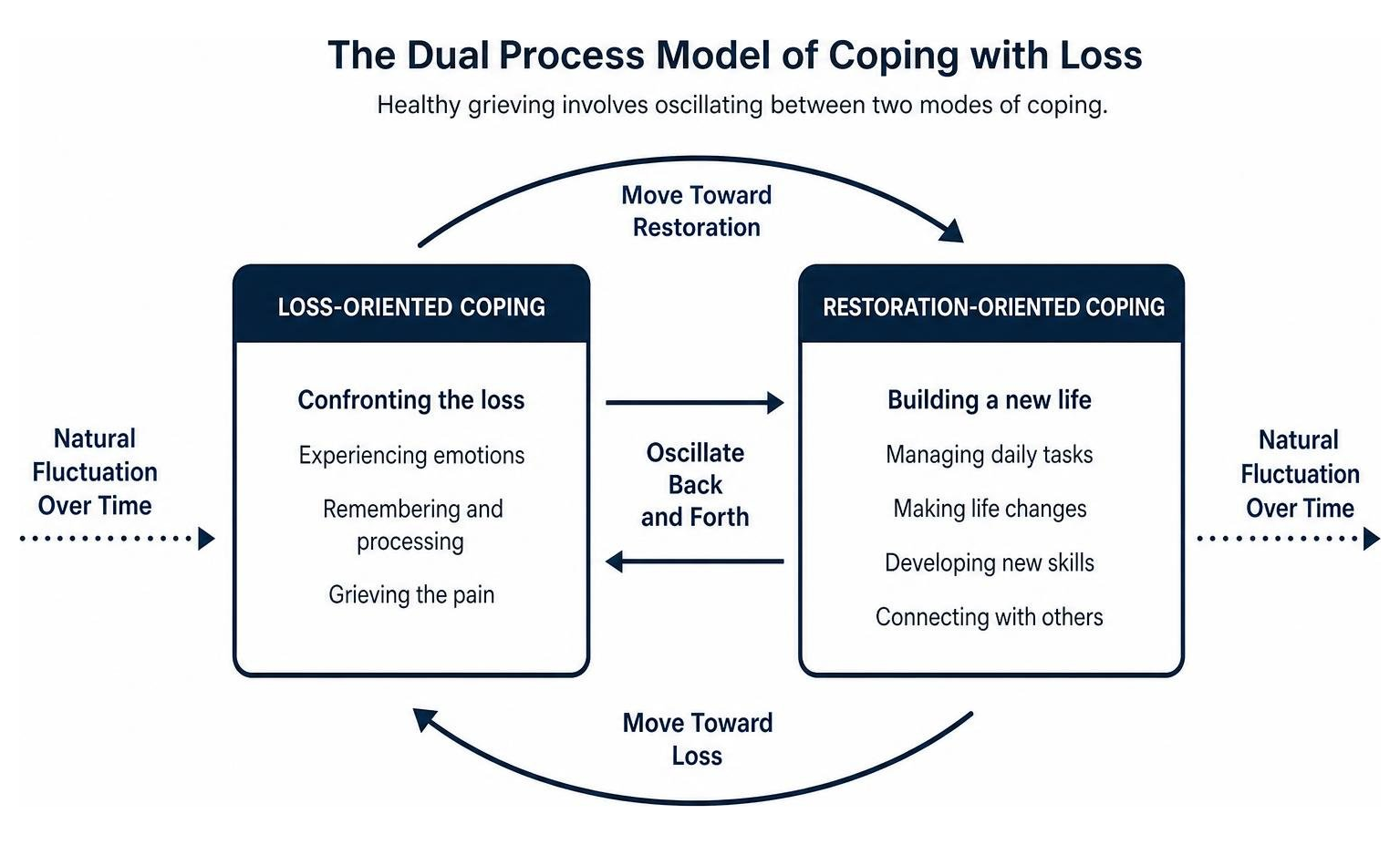
A core framework used in grief resilience therapy is the Dual Process Model of Coping with Loss. Healthy grieving requires oscillating between two distinct modes:
- Loss-oriented coping: Directly confronting the pain of loss, viewing photos, crying, and processing grief memories.
- Restoration-oriented coping: Attending to practical life changes, learning new skills, rebuilding identity, and engaging in social activities.
Oscillation acts as a psychological dosage mechanism. It allows you to process loss in manageable increments without becoming overwhelmed or falling into permanent avoidance.
Evidence-Based Modalities in Grief Resilience Building Therapy

Modern grief therapy relies on clinically validated protocols designed to target the mechanisms that keep grief stuck. Rather than offering passive listening, structured therapy provides targeted interventions that rewire avoidance pathways.
Cognitive Behavioral Therapy and Narrative Exposure Therapy
Cognitive Behavioral Therapy (CBT) adapted for complicated grief targets fear-driven avoidance and unhelpful thinking patterns, such as self-blame or guilt. CBT protocols guide individuals through gradual exposure to loss-related stimuli, such as visiting places associated with the deceased or handling their belongings.
NIMH-funded clinical trials show that Complicated Grief Treatment (CGT), an integrative CBT model, achieves an impressive 70% response rate across hundreds of participants.
Another highly effective approach is Narrative Exposure Therapy (NET). Originally developed to treat severe psychological trauma, NET helps individuals construct a detailed chronological narrative of their life, carefully contextualizing the loss within their overall biography.
Clinical research published in the Journal of Psychological Science highlights the Efficacy of Narrative Exposure Therapy for prolonged grief disorder. The study demonstrated that just five 90-minute NET sessions resulted in statistically significant improvements across multiple outcomes:
- Resilience: Increased significantly (t = -2.367, P = 0.033)
- Quality of Life: Improved markedly (t = -4.608, P = 0.001)
- Mindfulness: Showed substantial gains (t = -8.306, P = 0.001)
By placing the loss into a structured narrative timeline, NET prevents painful memories from triggering uncontrolled trauma responses. To learn more about what occurs during structured clinical care, read The Healing Journey: What to Expect in Overcoming Grief Therapy Sessions.
Integrating BEP-TG for Traumatic Loss
When a loss occurs suddenly, violently, or under traumatic circumstances, grief often becomes tangled with Post-Traumatic Stress Disorder (PTSD) and depression. In such cases, standard grief counseling may fall short.
Brief Eclectic Psychotherapy for Traumatic Grief (BEP-TG) is a specialized 16-session manualized protocol designed to address this complex overlap. BEP-TG integrates five key treatment steps:
- Information and motivation: Educating the individual and their support system on traumatic grief.
- Grief-focused exposure: Safely confronting painful memories of the death event.
- Mementos and writing assignments: Re-integrating fragmented memories using symbolic physical items.
- Finding meaning and activation: Addressing guilt, self-blame, and restoring daily routines.
- Farewell ritual: Performing a personalized symbolic ritual to mark acceptance of the reality of loss.
Individuals processing sudden or violent losses can benefit significantly from our specialized Trauma Informed Therapy services.
Core Components and Practical Tools for Building Resilience
Building grief resilience requires combining structured therapy sessions with practical self-regulation tools you can use at home.
Core Components of Grief Resilience Building Therapy
Structured grief resilience programs focus on three primary therapeutic tasks:
- Confronting the loss and pain: Using imaginal and stimulus exposure to reduce emotional avoidance.
- Restoring cognitive trust: Restructuring unhelpful thoughts regarding the future, safety, and self-efficacy.
- Behavioral re-engagement: Systematically rebuilding daily routines, social connections, and meaningful pursuits.
Actionable Coping Tools: TIPP Skills, TEAR Model, and Self-Care
When emotional distress spikes, practical regulation tools help restore calm and balance.
TIPP Skills for Crisis Regulation
Derived from Dialectical Behavior Therapy, TIPP skills provide immediate physiological regulation when grief emotional surges occur:
- Temperature: Splash freezing cold water on your face or hold an ice cube to rapidly lower a racing heart rate.
- Intense exercise: Engage in 10 to 15 minutes of rapid walking, jumping jacks, or sprinting to expend excess nervous energy.
- Paced breathing: Practice deep abdominal breathing using a ratio of 3 counts inhaling and 9 counts slowly exhaling to activate the parasympathetic nervous system.
- Progressive muscle relaxation: Tense and slowly release major muscle areas from head to toe to discharge physical distress.
The TEAR Model of Grief Processing
The TEAR model outlines four fundamental tasks for long-term emotional adaptation:
- T = To accept the reality of the loss.
- E = Experience the pain of the loss.
- A = Adjust to an environment in which the deceased is missing.
- R = Reinvest emotional energy into new relationships, goals, and life pursuits.
Holistic Self-Care Dimensions

Sustaining resilience requires maintaining balance across six key dimensions of self-care:
- Physical: Gentle daily movement, proper nutrition, and restful sleep hygiene.
- Psychological: Processing thoughts through journaling and cognitive reframing.
- Emotional: Allowing space for crying, laughing, and emotional expression without self-judgment.
- Spiritual: Reconnecting with personal values, nature, or community traditions.
- Personal: Engaging in recreational activities, creative arts, or play.
- Professional: Setting healthy workplace boundaries during acute mourning.
If persistent sadness affects your daily mood, exploring Therapy for Anxiety and Depression can provide additional targeted relief.
The Neuroscience of Grief and Measuring Progress
Understanding how grief impacts the brain helps demystify painful emotional responses, reassuring you that your reactions are a normal physiological response to loss.
Neuroplasticity and Amygdala Regulation in Loss Recovery
Traumatic loss directly affects brain structure and function:
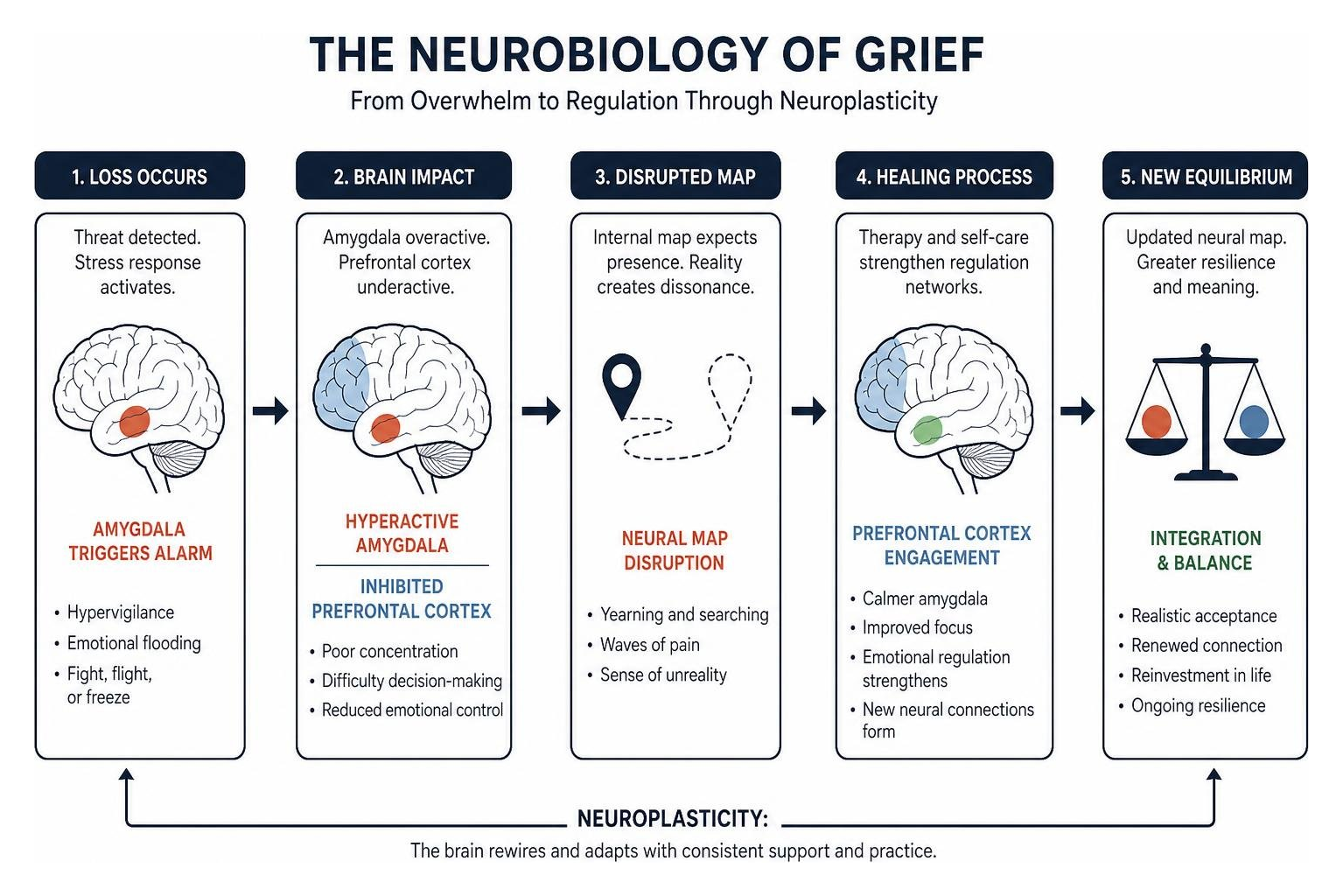
- Amygdala activation: The brain’s threat-detection center enters hyperdrive, placing you in a continuous state of high alert.
- Prefrontal cortex inhibition: Executive functions such as concentration, decision-making, and emotional control become impaired.
- Neural map disruption: The brain’s internal map of the world still expects your loved one to be present, creating severe cognitive dissonance whenever reality interferes.
Through neuroplasticity, the brain is fully capable of rewiring these neural pathways. Grief resilience building therapy helps calm amygdala reactivity, strengthen prefrontal regulation, and update the brain’s internal map to reflect current reality.
Validated Metrics for Measuring Grief Resilience
Progress in grief recovery can be measured objectively using validated clinical assessment tools:
- Inventory of Complicated Grief (ICG): A 19-item instrument used to assess complicated grief severity. Scores of 30 or higher indicate a need for specialized clinical intervention.
- Connor-Davidson Resilience Scale (CD-RISC): Evaluates stress-coping capacity, personal tenacity, and emotional adaptability during major life changes.
- Brief Grief Questionnaire (BGQ): A quick 5-item screening tool used during clinical intake to identify individuals at risk for prolonged grief.
Regularly tracking these metrics during therapy ensures treatment stays focused and delivers measurable improvements.
Frequently Asked Questions About Grief Therapy
What is grief resilience building?
Grief resilience building is an integrative therapeutic approach designed to strengthen an individual’s psychological capacity to adapt to severe loss. Rather than encouraging emotional suppression, it combines structured exposure, cognitive restructuring, and physical grounding techniques to help you process loss while gradually rebuilding a meaningful life.
How long does it take to see results in grief therapy?
Most evidence-based grief protocols, such as Cognitive Behavioral Therapy for complicated grief or Brief Eclectic Psychotherapy, are short-term and structured across 12 to 16 weekly sessions. However, studies show that brief modalities like Narrative Exposure Therapy can deliver statistically significant improvements in resilience and quality of life in as few as 5 sessions.
When should someone seek professional help for grief?
While intense grief is natural immediately following a loss, professional therapeutic support is strongly recommended if severe symptoms persist beyond six months. Key warning signs include persistent disbelief, intense emotional pain, social isolation, an inability to manage daily responsibilities, or a feeling that life no longer holds meaning.
Rebuilding Life After Loss
Navigating life after a profound loss is one of the most challenging experiences you will ever face. You do not have to walk this path alone or struggle through overwhelming grief without guidance.
At Beyond Therapy, we provide compassionate, evidence-based care tailored to your unique history and needs. We serve clients in Redondo Beach and across the South Bay, offering dedicated support to help you process pain, regulate difficult emotions, and rebuild your life.
Take the first step on your healing journey today. Reach out to schedule a free 15-minute consultation with one of our expert therapists to discuss your needs, answer your questions, and connect with our Professional Grief Loss Therapy services.
Recent Posts


