
September 22, 2026
The Complete Guide to Understanding Pre-Marital Relationship Norms

Understanding a Pre Marital Relationship Today
- A pre marital relationship is the stage before marriage when partners build trust, discuss shared goals, set boundaries, and decide whether long-term commitment fits both people.
- Healthy relationships do not follow one universal timeline. What matters most is mutual consent, clear expectations, and intentional choices.
- Conversations about sex, living together, money, faith, family, and conflict can prevent assumptions from becoming bigger problems later.
A pre marital relationship includes much more than dating or deciding whether to have sex before marriage. It is the time when two people learn how they handle stress, communicate after conflict, manage closeness, and make major decisions together.
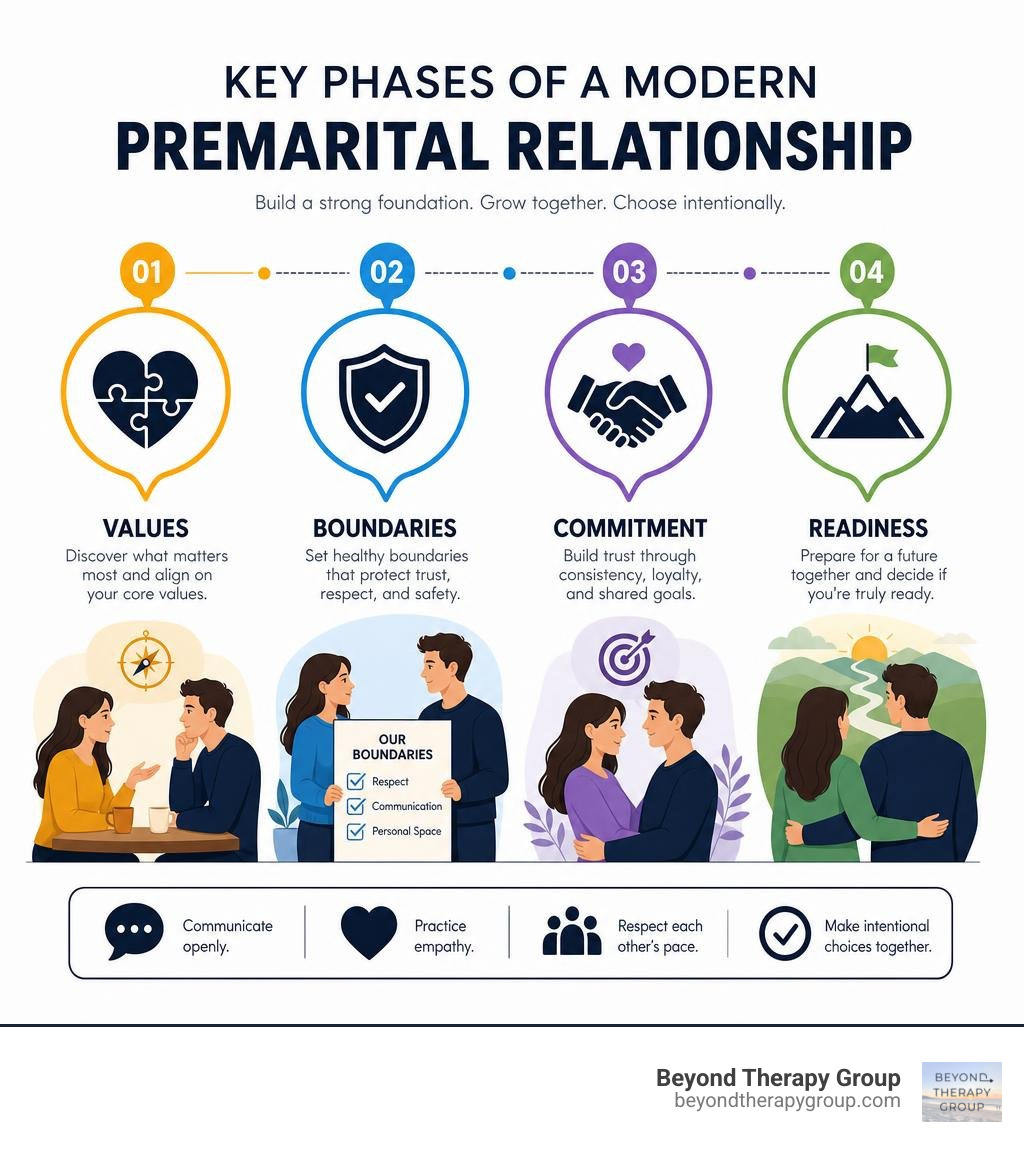
Start with honest conversations about what each of you wants. Discuss your views on commitment, physical intimacy, cohabitation, finances, children, religion, and the timing of marriage. Respect each person’s boundaries, including the right to slow down or say no. If you choose to be sexually active, use reliable contraception and condoms to reduce the risk of unintended pregnancy and sexually transmitted infections.
Relationship norms have changed greatly across generations and cultures. Premarital sex and cohabitation are widely accepted in some countries and communities, while religious beliefs, family expectations, and cultural traditions make them unacceptable in others. There is no one correct path, but partners need a shared understanding of the path they choose.
Research on young adults also suggests that expectations about marriage and comfort with premarital intimacy can shape the desire and readiness to marry. The key is not to drift through major milestones because they seem convenient. Make decisions together, with clarity about what each step means for the relationship.
Historical and Cultural Shifts in Pre Marital Relationship Norms

Romantic partnerships have undergone immense social and legal transformations over the last several centuries. In earlier eras, premarital intimacy was often regulated through rigid community customs and legal frameworks. In colonial New England, for instance, between 30% and 40% of brides were pregnant at the altar, and couples practiced customs like bundling, where young adults shared a bed separated by wooden boards or sewn sacks to prevent full intercourse while allowing courtship.
Prior to the English Marriage Act of 1753, formal betrothal contracts known as spousals carried binding legal weight. Because a promise to marry established an enforceable union in the eyes of local communities, sexual intimacy following formal betrothal was commonplace and socially accepted. However, as marriage laws centralized legal authority within church and civil records, non-marital intimacy became strictly categorized as fornication, carrying heavy social stigma and economic penalties.
The twentieth century accelerated a complete paradigm shift. The widespread availability of effective contraception dramatically reduced the biological and financial risks of pregnancy. This technological revolution, alongside the sexual liberation movement and broad secularization, shifted courtship from parental supervision toward autonomous partnership exploration. By the late 1990s, approval of premarital sex among young American women surged from 12% in 1943 to 73%, while approval among young men reached 79%. By 2005, less than 25% of the public viewed premarital intimacy as inherently wrong, marking the transition of premarital exploration from a cultural taboo into a normative developmental stage of emerging adulthood.
Global Perspectives and Religious Variations
Current attitudes toward premarital intimacy and partnership milestones vary dramatically across geographic regions and religious traditions. Data from Pew Research highlights stark cultural contrasts worldwide. In Muslim-majority nations such as Jordan, Egypt, and Pakistan, over 90% of the population views premarital sex as morally unacceptable. In Pakistan, survey data indicates that only 11% of men report engaging in premarital sex. Similar expectations around premarital virginity remain prevalent in parts of South Asia. In India, the National Family Health Survey (NFHS-5) recorded that sexual intercourse among never-married males rises from 4% at ages 15 to 17 up to 23% by ages 23 to 24, while among never-married females, rates increase from 2% to only 5% over the same age span.
In contrast, Western European nations exhibit widespread acceptance. Disapproval rates remain below 10% in countries like France, Spain, and Germany. In the United Kingdom, non-marital births reached 47.6% by 2012, and only 13% of the public disapproved of premarital intimacy in 2014. UNICEF data from the early 2000s showed that over 80% of teenagers in Nordic countries, Germany, the UK, and the United States engaged in intercourse before their twenties.
Religious doctrine continues to serve as a primary anchor for personal values. Monotheistic frameworks within traditional Christianity, Orthodox Judaism, and Islam emphasize marital exclusivity, framing intimacy as a sacred bond reserved for marriage. Eastern traditions and secular societies often approach partnership through family lineage continuity or mutual personal fulfillment. Even in regions undergoing secularization, religious active participation remains the single strongest predictor of delayed sexual debut and intentional relationship pacing.
Psychological and Emotional Reactions Across Genders
The emotional experience of early physical intimacy and dating transitions often diverges based on gender socialization, personal values, and individual psychological attachment. Studies show that men are culturally conditioned toward permissive sexual attitudes, whereas women frequently report higher rates of emotional vulnerability, relationship anxiety, or post-intimacy regret if intimacy occurs outside of mutual emotional commitment.
A significant psychological factor in modern dating is comparison bias. When individuals accumulate multiple romantic and sexual partners before marriage, they develop an extensive catalog of reference points. While romantic experience can offer clarity regarding personal needs, it can also lead individuals to make persistent comparisons regarding conflict styles, emotional attentiveness, physical traits, and communication habits. Exploring attachment patterns in therapy helps individuals understand how their past relational baggage influences their present emotional security, allowing them to engage with their partner on authentic terms rather than through reflexive comparison.
Cohabitation, Inertia, and Marital Durability
Living together before marriage has become standard practice for many modern couples. Today, roughly 70% of couples cohabit before marriage, and between 50% and 65% of young adults believe that moving in together acts as an effective test drive that protects against future divorce. However, demographic and sociological research reveals a nuanced reality.
According to Pew Research data on adult cohabitation, approximately 77% of adults in the United States aged 38 to 43 have lived with an unmarried romantic partner. Two-thirds of these cohabiting adults eventually married a partner they lived with, and 70% of those individuals married their very first cohabiting partner. The median cohabiting union lasts roughly 18 months before transitioning into either formal marriage or a breakup. Educational attainment plays a powerful role in these transitions, as 77% of college graduates who cohabit transition into marriage with their partner compared to 59% of individuals with a high school education or less.
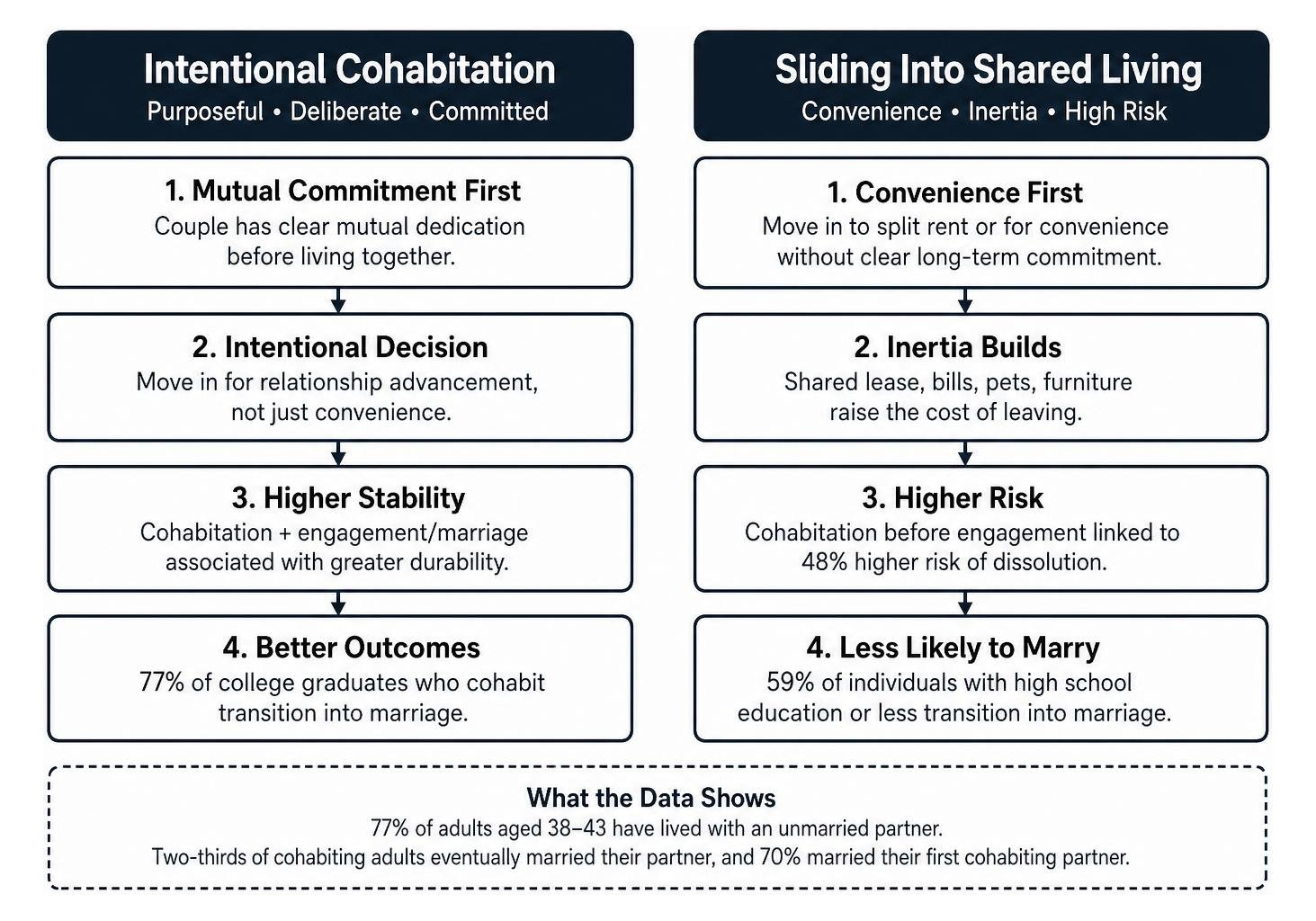
Sociologists explain the relationship between cohabitation and marital instability through two primary lenses: the selection effect and relationship inertia theory. Selection effects suggest that individuals who choose cohabitation may hold lower conventional attitudes toward marital permanence. Inertia theory focuses on the practical mechanics of shared living. When couples move in together purely for convenience or to split rent, they dramatically raise the logistical costs of ending the relationship. Shared leases, joint utility accounts, pets, and shared furniture create structural barriers to breaking up. Consequently, couples often slide into marriage because of logistical momentum rather than making a deliberate, conscious decision to commit for life.
Empirical data published in IFS findings on cohabitation and divorce risk demonstrates that marriages preceded by cohabitation prior to engagement carry a 48% higher relative risk of dissolution compared to those where couples waited until engagement or marriage. Moving in together before establishing clear mutual dedication increases the risk of trapping incompatible couples in high-constraint partnerships.
Timing of Engagement and Living Together
The chronological sequence of romantic milestones directly predicts marital longevity. Research consistently indicates that the risk associated with cohabitation is not caused by living under the same roof, but by the timing of the underlying commitment.
Couples who get engaged first and then move in together exhibit marital stability rates virtually identical to couples who wait until the wedding day to share a home. In contrast, couples who move in together prior to engagement face an 11 percentage point increase in marital dissolution rates (34% divorce rate versus 23% for those who waited).
According to National Marriage Project research on premarital experiences, individuals who cohabited only with their future spouse reported significantly higher marital quality (42%) than those who had cohabited with multiple prior partners (35%). Furthermore, 43% of couples who moved in together only after making a formal commitment to marry scored in the highest tier of marital happiness, compared to 31% of couples who cohabited without clear future plans. Testing compatibility by sliding into shared living often backfires by adding artificial constraints before mutual values and goals are fully verified.
Establishing Healthy Physical and Emotional Limits in a Pre Marital Relationship
Establishing clear, proactive limits ensures that both individuals feel physically safe and emotionally respected throughout courtship. When physical intimacy outpaces emotional trust, couples frequently struggle with obscured judgment, staying in unfulfilling dynamics simply because of physical bonds or convenience.
Practicing comprehensive sexual health is an essential baseline. This includes transparent communication regarding sexual health histories, regular screening for sexually transmitted infections, and consistent use of barrier methods alongside reliable contraception.
Equally vital is setting intentional emotional pacing. Couples should openly discuss their personal values, timelines for commitment, and boundaries around privacy and personal space. Implementing essential relationship boundaries preserves individuality while building relational intimacy. In addition, understanding emotional boundaries ensures that neither partner compromises their emotional integrity, personal goals, or family ties to satisfy relationship pressures.
Psychological Readiness and Communication Frameworks

A thriving long-term marriage requires emotional maturity, psychological self-awareness, and constructive conflict resolution habits. Unrealistic expectations regarding marriage are among the most common precursors to marital dissatisfaction. When partners assume that romance will effortlessly resolve underlying incompatibilities, daily friction can quickly erode goodwill.
Healthy premarital communication relies on the ability to navigate disagreement without resorting to contempt, defensiveness, or emotional withdrawal. Couples who establish structured rules of repair can apologize with specificity, validate each other’s emotional experience, and resolve disputes without lingering resentment. Developing empathetic listening techniques allows partners to understand the underlying needs beneath surface complaints. When paired with effective communication skills, couples learn to articulate personal boundaries, align long-term priorities, and build mutual psychological safety.
How Attachment Styles Shape a Pre Marital Relationship
Individual attachment styles formed during early childhood and past romantic experiences heavily influence premarital relationship dynamics. Partners with anxious attachment tendencies often experience heightened fears of abandonment, interpreting minor relational shifts or brief periods of silence as imminent rejection. This can trigger hyper-vigilance, emotional demands, and boundary overstepping.
Conversely, partners with avoidant attachment tendencies may interpret deep emotional vulnerability or discussions about long-term commitment as threats to their independence, instinctively retreating or shutting down during intense conversations. Recognizing how fear manifests across attachment styles allows partners to recognize these defensive behaviors as self-protective reactions rather than personal attacks. Through conscious effort, couples can cultivate an earned secure attachment characterized by emotional accessibility, mutual responsiveness, and steady trust.
Proactive Counseling and Evaluation Models
Premarital therapy and structured diagnostic assessments offer invaluable support for couples preparing for long-term commitment. Rather than serving as an emergency intervention for relationships in distress, premarital counseling acts as a proactive investment in relationship longevity.
Validated inventories like Prepare/Enrich, SYMBIS (Saving Your Marriage Before It Starts), and RELATE evaluate key domains such as communication styles, conflict habits, financial philosophies, leisure expectations, and family-of-origin patterns. Research indicates that completing a standardized premarital assessment like Prepare/Enrich can reduce future divorce risks by roughly 31%. In some clinical contexts, personality diagnostics such as the MMPI (Minnesota Multiphasic Personality Inventory) help identify underlying mood patterns, trauma reactions, or coping limitations that require direct therapeutic care.
Structured preparation requires couples to achieve complete transparency regarding personal finances, debt structures, credit profiles, and joint budgeting philosophies. Integrating these divorce-proofing strategies before marriage provides a comprehensive roadmap for long-term health. Grounding these efforts in the principles of relational life therapy empowers both partners to shed relational blind spots, foster mutual respect, and step into full relational equality.
Frequently Asked Questions About Pre-Marital Dynamics
How does living together before marriage affect long-term relationship stability?
Living together before marriage can influence marital stability depending on the timing of the transition and the motivations behind it. When couples slide into cohabitation due to financial convenience or as an informal test of compatibility, they build relationship inertia. Shared leases, joint finances, and domestic entanglements create structural constraints that make breaking up difficult, often leading incompatible couples to marry out of momentum.
Research shows that couples who cohabit prior to formal engagement experience higher rates of marital disruption than those who move in together after engagement or marriage. Establishing clear, mutual long-term commitment prior to sharing a residence significantly protects marital longevity.
What role does premarital sexual permissiveness play in the decision to marry?
Premarital sexual permissiveness significantly influences marital readiness by altering how relationship expectations shape the intention to marry. In a 2022 study on emerging adults, researchers found that sexual permissiveness acts as a key mediating variable between marital expectations and actual marital intention.
Individuals with high permissiveness often utilize distinct criteria for selecting long-term partners, placing different weight on physical compatibility, emotional intimacy, and timing. Emerging adults with clear, balanced marital expectations who align their sexual values with their relationship goals exhibit stronger readiness for long-term commitment.
When should a couple consider premarital therapy?
Couples should consider premarital counseling whenever they begin discussing a lifelong commitment, well before the formal wedding planning begins. Engaging in therapy 6 to 12 months before marriage gives partners sufficient space to explore family-of-origin dynamics, address persistent conflict cycles, establish financial transparency, and align their expectations on children, careers, and intimacy. Exploring these relational therapy benefits helps couples identify blind spots, strengthen their communication tools, and transition into marriage with clarity and confidence.
Conclusion
A fulfilling, enduring partnership is not built on romantic intuition alone. It is cultivated through deliberate decision-making, transparent communication, and proactive emotional alignment. Navigating the modern landscape of dating, cohabitation, and commitment requires partners to understand their personal values, honor each other’s boundaries, and approach major relationship milestones with conscious intention.
At Beyond Therapy, we support couples throughout the South Bay and Redondo Beach communities as they build resilient, meaningful relationships. Our experienced clinicians offer tailored support to help you align your goals, resolve hidden conflict areas, and cultivate emotional security. Reach out today to schedule a free 15-minute consultation to learn how our specialized relationship and relational therapy can help you prepare for a strong, lifelong union.
Recent Posts
- « Previous
- 1
- …
- 8
- 9
- 10