
August 10, 2026
The Complete Guide to Effective Communication Basics

The Core Pillars and the 7 C’s of Effective Communication
Key Takeaways
- Strong human connection relies on four foundational pillars: verbal expression, nonverbal cues, written documentation, and active listening.
- The 7 C’s framework offers a practical blueprint for effective interactions in workplace and personal settings.
- Placing essential details at the beginning of digital messages reduces confusion and improves productivity.
- Legal frameworks like the ADA require accessible communication accommodations for people with disabilities.
Clear human connection rests on four foundational pillars: verbal expression, nonverbal cues, written documentation, and active listening. When one pillar fails, the structure of a conversation weakens. Strong communication reduces misunderstanding, saves valuable resources, and builds trust among colleagues, clients, friends, and family members.
To bridge communication gaps, many people rely on proven frameworks. The classic 7 C’s framework offers a useful checklist for refining every interaction. Originally developed by Scott Cutlip and Allen Center, these guidelines help messages land clearly without unnecessary confusion. You can explore The 7 Cs of Communication to see how these principles support day-to-day messaging.
Verbal and Written Clarity Across Platforms
In work environments, placing the main point first is critical. This means putting the key decision, request, or update in the first sentence. Whether writing an email or sending a digital chat message, concise phrasing prevents important details from being buried under filler. Structured messages help readers digest complex topics quickly without asking for repeated follow-up explanations.
Matching your message to the correct platform saves time and reduces stress. Asynchronous documentation works best for status updates and detailed instructions, while real-time calls or face-to-face conversations are better for sensitive interpersonal friction. Learning how to speak up directly without hostility is equally important, as detailed in our guide on Mastering Assertive Communication Skills.
The 7 C’s Framework in Daily Practice
Applying Cutlip’s structure transforms unclear exchanges into productive outcomes:
- Clear: Limit the number of ideas per sentence so your intent is obvious.
- Concise: Trim unnecessary filler words like “basically” or “kind of.”
- Concrete: Use specific, factual details rather than vague generalizations.
- Correct: Verify facts, check grammar, and ensure spelling accuracy.
- Coherent: Arrange thoughts in a logical sequence that carries the listener forward.
- Complete: Give all essential information, including deadlines, times, and next steps.
- Courteous: Maintain a polite, empathetic tone that respects the recipient’s viewpoint.
Mastering these core habits supports social and emotional health. For further insights into developing these foundational traits, review our resource on the Essential Traits of Great Communicators.
When Effective Communication Is Required: ADA Accessibility and Professional Standards
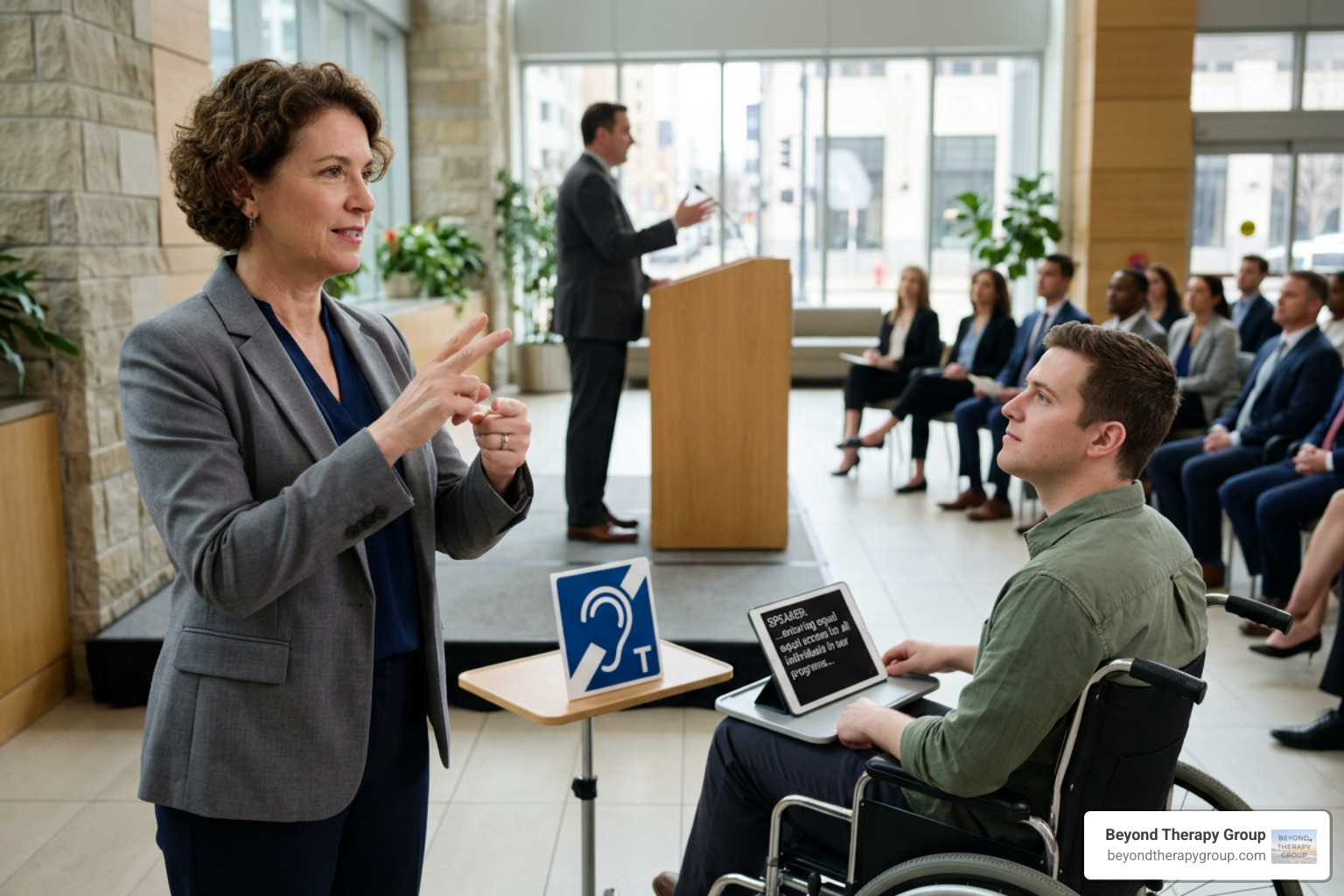
Beyond workplace efficiency, clear communication is also a legally protected right under federal civil rights laws. When an effective communication requirement is triggered by law, organizations must provide reasonable accommodations so people with disabilities can access services, programs, and opportunities. Meeting these standards requires proactive planning, continuous training, and accessible technology.
Title II and Title III Standards: When ADA Mandates Accommodations
Under Title II, which covers state and local government entities, and Title III, which covers public accommodations and commercial facilities, the Americans with Disabilities Act requires covered entities to furnish auxiliary aids and services when needed. You can review local administrative guidelines on ADA Compliance Guidance to understand how these standards apply to public programs.
These accommodations must be provided in a timely manner and in a way that protects the privacy and independence of the person with a disability. Organizations must evaluate individual communication needs case by case. Common auxiliary aids include:
- Qualified sign language interpreters on site or through video remote interpreting services.
- Assistive listening systems for public events and large meeting spaces.
- Accessible digital formats, such as screen reader compatible PDFs, large print materials, and Braille documents.
- Real-time captioning for live broadcast events and interactive video meetings.
State and municipal policies, such as the SF Government Effective Communication Policy, emphasize that public services cannot charge people extra fees for essential accommodation services. Ensuring full accessibility builds an inclusive organizational culture where every participant can contribute meaningfully.
Executive Leadership: Why Effective Communication Matters in High-Stakes Workplace Scenarios
In corporate settings, high-stakes scenarios require intentional leadership communication. Under pressure, stress can weaken cognitive processing and language clarity. Leaders who do not manage their stress response may default to vague or defensive messages.
Using frameworks like CELL, which stands for Caring, Explaining, Listening, and Living the role, helps leaders stay grounded. By explaining the underlying “why” behind executive decisions and prioritizing empathy, leaders reduce anxiety across their teams and support strategic alignment during organizational transitions. Clear direction during change builds confidence and keeps projects moving forward.
Overcoming Communication Barriers Through Active Listening and Nonverbal Cues
Communication breakdowns occur when perceptual bias, emotional flooding, or physical noise interrupt the exchange between sender and receiver. Overcoming these obstacles requires focused mental effort and continuous practice. When individuals learn to manage emotional reactions and remove environmental distractions, conversations become significantly more productive.

Master Active and Empathetic Listening
Active listening means listening to understand rather than simply waiting for your turn to speak. To hone this skill, explore our detailed AZ Guide to Active Listening Training.
Key reflective listening practices include:
- Paraphrasing the speaker’s core message before offering a response.
- Withholding early judgment or unsolicited advice while the person is speaking.
- Validating emotional states by recognizing their feelings explicitly.
- Maintaining a silent two-second pause before responding to process what was said.
By practicing these steps regularly, team members create a safe psychological environment where open dialogue can flourish without fear of immediate criticism. For deeper clinical and relational methods, see our comprehensive Empathetic Listening Techniques Guide.
Decoding Body Language and Tone
Nonverbal cues carry significant weight in face-to-face interactions. Research pioneered by Albert Mehrabian highlights that nonverbal body language and vocal inflection account for a massive share of message interpretation when feelings and attitudes are being conveyed. Paying close attention to subtle physical signs prevents misinterpretation during critical conversations.
- Receptive Posture: Keep your torso turned toward the speaker with uncrossed arms to signal openness.
- Vocal Inflection: Maintain a calm, deliberate cadence around 120 to 140 words per minute to project confidence.
- Eye Contact Pulse: Maintain comfortable eye contact in short three-second intervals to convey attention without creating an uncomfortable stare.
Practical Roadmap to Assess and Improve Communication Skills
Improving your conversational presence requires systematic evaluation and consistent practice over time. Developing actionable strategies helps people move from passive or aggressive patterns toward authentic assertiveness.
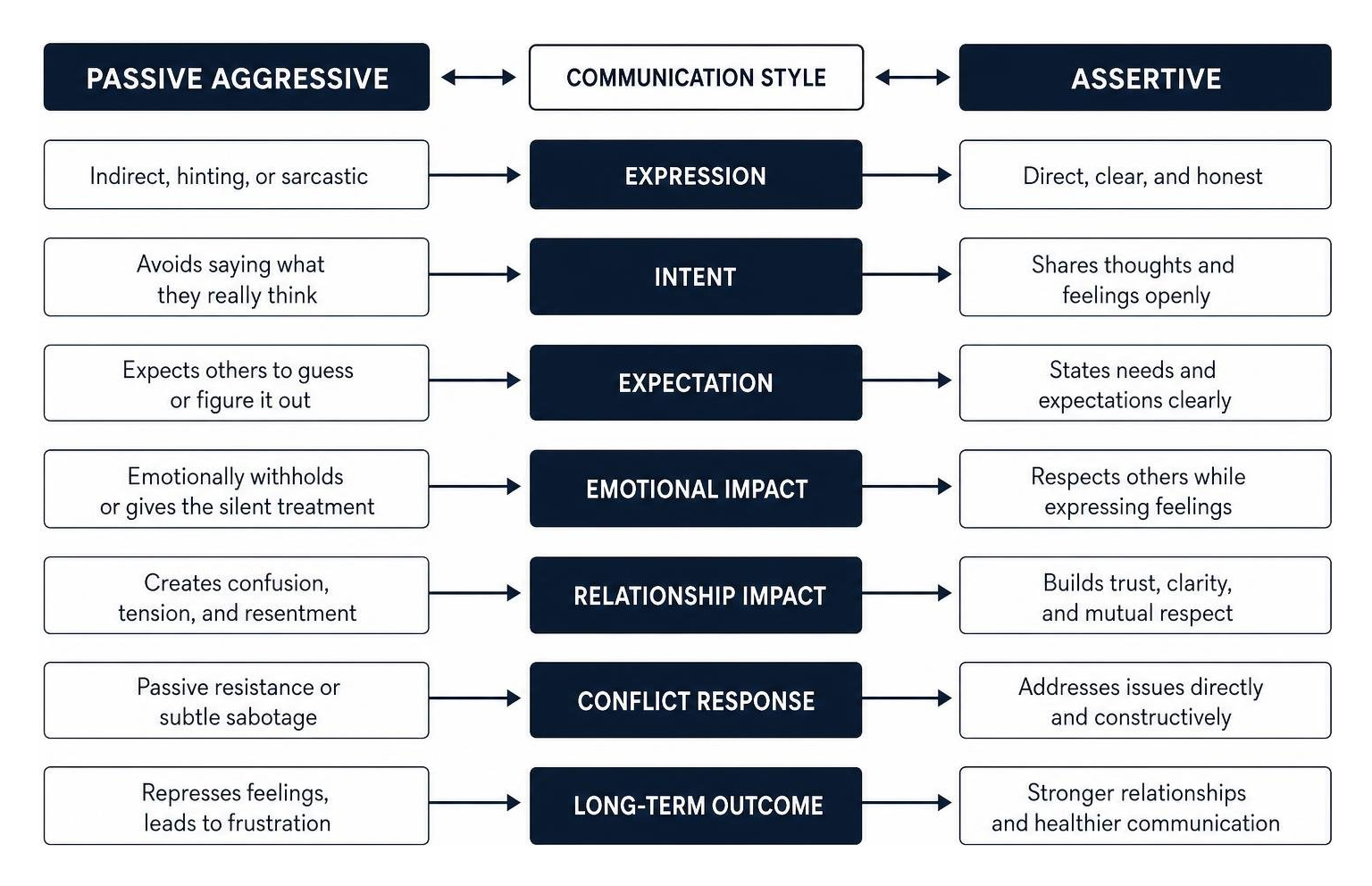
To build confidence and eliminate vocal fillers, practice the physical drills found in Stop Mumbling and Start Speaking.
Step-by-Step Skill Improvement Strategy
- Self-Awareness Audit: Record three meetings, then review the recordings on mute to assess your nonverbal habits, posture, and facial expressions.
- Micro-Scripting: Prepare structured micro-scripts for challenging conversations using the PREP model, which stands for Point, Reason, Evidence, Point.
- Structured Handoffs: Use the SBAR framework, which stands for Situation, Background, Assessment, Recommendation, when delivering concise, urgent updates.
- 30-Day Feedback Loop: Ask a trusted peer to evaluate one written message and one live interaction each week.
Following this strategy step by step builds long-term confidence and helps your message come across clearly in any setting.
Adapting Communication to Different Audiences
Tailoring your delivery to the background of your audience is essential for true clarity. High-context cultural backgrounds rely heavily on shared history, nonverbal nuance, and implicit meaning. In contrast, low-context cultural settings prioritize explicit, direct language where expectations are stated clearly. Recognizing these shifts helps your message land as intended across diverse teams.
Frequently Asked Questions about Effective Communication
What are the main pillars of effective communication?
The four main pillars are verbal communication, which includes the actual words chosen, nonverbal cues, which include body language, eye contact, and tone of voice, written communication, which includes digital messages, emails, and documentation, and active listening, which includes processing and validating the speaker’s intent.
How does ADA compliance define required effective communication?
Under the ADA, public entities and businesses open to the public must provide auxiliary aids and services, such as qualified sign language interpreters, assistive listening devices, or accessible electronic formats, so people with disabilities have equal access to information and services.
How can I practice active listening to reduce workplace conflict?
You can practice active listening by pausing for two seconds before responding, paraphrasing the other person’s points to confirm accurate understanding, avoiding interruptions, and asking open-ended questions to discover underlying interests rather than arguing over fixed positions.
Conclusion
Developing strong conversational habits transforms personal relationships, strengthens team performance, and opens up new professional opportunities. Clear expression is a skill that grows richer with practice, attention, and structured feedback.
At Beyond Therapy, we believe that clear communication is essential for mental health and personal growth. Our team provides tailored one-on-one therapy services designed to help you express your needs with clarity and build deeper connections. We invite you to schedule a free 15-minute consultation with our therapists to explore our services and ask any questions you may have about starting your therapy journey.

To discover how tailored support can help you communicate with clarity and conviction, explore our Tailored Therapy Services today.
Recent Posts


