
September 19, 2026
Emotional Boundaries 101: Learn to Set Them Today

Key Takeaways
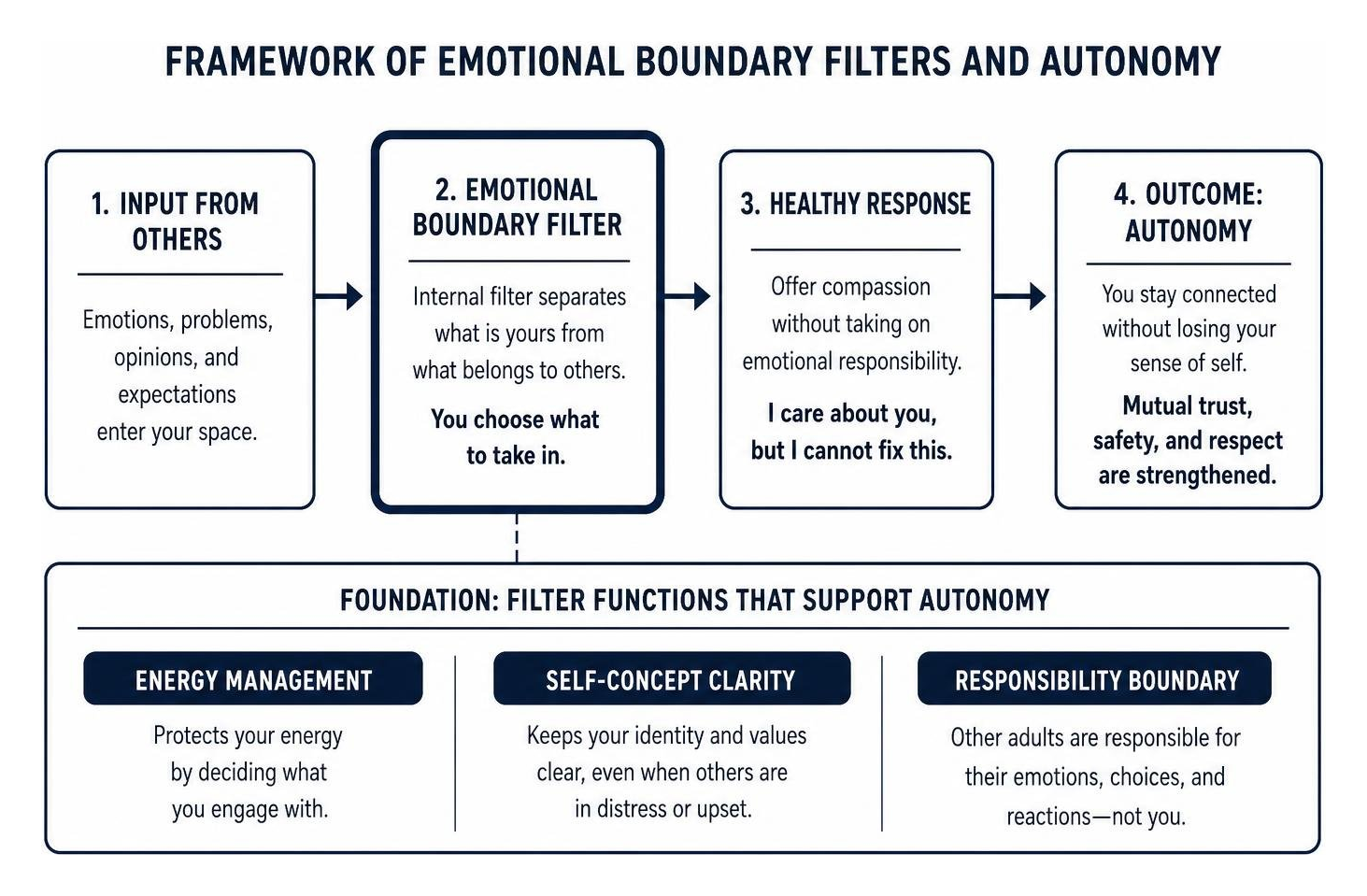
- Emotional boundaries serve as an internal filter that separates your personal feelings from the experiences of others.
- Maintaining healthy limits protects your well-being, supports autonomy, and fosters mutual trust without creating emotional walls.
- Understanding the distinction between compassionate connection and emotional absorption prevents resentment and burnout.
What Are Emotional Boundaries and Why Do They Matter?
When we think about boundaries, physical space or scheduled time often comes to mind first. Yet our internal limits are just as essential. Understanding how to set clear parameters starts with defining personal boundaries across every area of our lives.
Emotional containment is the ability to separate your internal reality from the experiences of those around you. In psychological theory, this is known as self-differentiation. Self-differentiation allows you to remain closely connected to someone without losing your sense of identity in their problems, anger, or sadness. When both people in a partnership or friendship possess this skill, mutual trust flourishes. You can trust that the other person will speak up about their needs, and they can trust that you will not silently harbor resentment while attempting to rescue them.
| Trait | Healthy Emotional Boundaries | Emotional Walls and Stonewalling |
|---|---|---|
| Primary Goal | Protect well-being while staying open | Shut down communication to avoid pain |
| Connection Level | Warm, flexible, and present | Detached, rigid, and distant |
| Response to Others | “I care about you, but I cannot fix this.” | “I do not care. Do whatever you want.” |
| Emotional Impact | Builds mutual trust and safety | Generates isolation and confusion |
Understanding the Internal Filter
Think of an emotional boundary as an internal filter rather than a barricade. It governs energy management, clarifies your self-concept, and supports your autonomy. When you have a working filter, you recognize that other adults are responsible for their emotions, choices, and reactions.
You can offer compassion without taking on emotional responsibility for their internal state. Helpful guidance on emotional boundaries highlights that separating your emotional obligations from those of others is the cornerstone of psychological maturity and self-respect.
Boundaries vs. Walls, Control, and Emotional Coldness
A common misunderstanding is that setting limits makes a person unfeeling or unapproachable. In reality, emotional availability requires safety. When you know you have the power to step back when overwhelmed, you feel safe enough to open up.
Defensive stonewalling and building rigid walls are fear-based reactions designed to lock everyone out. Control is an external demand attempting to dictate how someone else behaves. In contrast, genuine limits focus entirely on your own actions and capacity. Setting a boundary is about self-respect and honest communication, which forms the bedrock of true intimacy and emotional maturity.
Recognizing Weak Limits and Emotional Absorption
When our internal limits are thin or porous, we experience empathy enmeshment. Instead of observing someone else’s emotional storm from a safe place on the shore, we jump directly into the waves with them. This leads to somatic reactions like tight shoulders, a knot in the stomach, sudden fatigue, and lingering emotional exhaustion after simple conversations.
Common Signs of Weak Emotional Boundaries
Many people live with porous limits for years without realizing why they feel constantly depleted. Focusing on setting boundaries for emotional health can help identify and heal these patterns. Common signs include:
- Chronic over-functioning by trying to solve crises that belong to others.
- Habitual people-pleasing to prevent anyone around you from feeling upset or disappointed.
- Experiencing intense, chronic guilt whenever you decline an invitation or request.
- Persistent resentment toward loved ones because you feel unappreciated or taken for granted.
- Offering excessive apologies for simply expressing your thoughts, preferences, or emotions.
- Feeling thoroughly drained after ordinary social interactions because you automatically mirror everyone else’s emotional state.
The Trap of Absorbing Other People’s Emotions
Mood contagion happens when your nervous system mirrors the emotional turbulence of the room. If a partner walks through the door stressed after work, a person lacking strong internal limits immediately feels anxious or defensive.
This triggers a rescuer reflex, where you believe you must cheer them up or resolve their frustration just so you can feel calm again. Over time, this leads directly to caregiver burnout and a loss of personal identity. Healthy emotional limits break this cycle by reminding you that another person’s bad day is not an emergency you are required to solve. You can remain caring and supportive while keeping your own emotional equilibrium intact.
Why Setting Personal Limits Feels So Difficult
Setting limits can feel uncomfortable because our childhood conditioning often taught us that love requires self-sacrifice. Early attachment patterns shape how safe we feel when expressing differences. If you grew up in an environment where conflict resulted in rejection or emotional withdrawal, you may carry a deep fear of abandonment and a habit of conflict avoidance into adulthood.
Unlearning Caretaker Conditioning and Guilt
In enmeshed families, individual feelings are often seen as a threat to family unity. Children raised in these environments may link their self-worth to how useful they are to others, leading to chronic approval-seeking.
Unlearning this guilt takes time. You do not have to revolutionize your entire life overnight. Implementing small boundary changes can yield massive shifts in your daily peace of mind without overwhelming your nervous system.
The Risk of Burnout in High-Stress and Helping Roles
Caregiver stress is especially prevalent in healthcare, education, and social services. High rates of workplace burnout occur when professionals absorb the distress of those they serve. Establishing clear workplace emotional boundaries creates essential psychological safety, allowing professionals to deliver excellent care while maintaining their own health and well-being.
Practical Strategies to Establish and Enforce Your Limits

Learning to protect your space is an active practice. Following structured assertive boundary setting steps makes it much easier to define ground rules and state clear expectations with confidence.
Step-by-Step Techniques to Stop Emotional Absorption
- Cultivate Somatic Awareness: Notice your body’s early warning signs, such as a clenched jaw or racing heart, when an interaction becomes overwhelming.
- Take an Intentional Pause: Before offering advice, reassurance, or assistance, pause for five seconds and ask yourself if this problem is yours to solve.
- Execute a Conversational Pivot: Gently shift conversations that turn into continuous venting by asking questions that place ownership back on the speaker.
- Practice Loving Detachment: Remind yourself internally that allowing others to experience and process their own discomfort is essential for their personal growth. Extensive research on emotional boundary dynamics demonstrates that stepping back from fixing other people’s struggles fosters resilience for everyone involved.
How to Communicate Emotional Boundaries with Loved Ones
Clear communication relies on concise language without over-explaining. Over-justifying your needs invites negotiation.
Use simple statements such as, “I want to hear about your day, but I only have fifteen minutes before I need to rest,” or “I love you and support you, but I cannot be the only person you lean on for this issue.” If the person pushes back, use the broken-record technique by calmly repeating your initial statement with steady warmth and firmness.
Responding to Boundary Violations and Pushback
When someone repeatedly ignores your limits, you must hold consistent consequences. An emotional limit without an action plan is merely a suggestion.
If a friend continues to vent aggressively after you asked to change the topic, your response is to end the call or leave the room. Expect some pushback, as people who benefited from your lack of limits may resist your new consistency. Your role is not to manage their reaction, but to protect your own emotional safety.
Frequently Asked Questions about Personal Boundaries
What is the difference between empathy and emotional enmeshment?
Empathy is compassionate connection where you understand and care about someone else’s emotional reality while remaining anchored in your own identity. Emotional enmeshment is the loss of personal separation, where you absorb another person’s feelings, assume responsibility for their happiness, and feel guilty for having different emotional needs.
How long does it take to rebuild damaged emotional boundaries?
Rebuilding internal limits is a process of neural rewiring and gradual behavioral consistency. For specific everyday situations, you may notice positive changes within a few weeks of steady practice. Deeper, lifelong patterns formed in early childhood often take several months of intentional relational resets and self-reflection to reshape fully.
When should someone seek therapy for boundary struggles?
You should consider seeking professional support if you experience persistent codependency, chronic resentment, debilitating guilt when saying no, or recurring emotional burnout. Engaging in dedicated counseling for healthy boundaries offers personalized tools to explore past conditioning and build sustainable assertiveness.
Conclusion
Developing strong internal limits is an ongoing journey of self-advocacy, self-compassion, and long-term wellness. When you stop carrying emotional weight that does not belong to you, you create room for deeper connections, peaceful relationships, and genuine energy renewal. Practicing consistent boundaries empowers you to show up authentically in your daily life without fear of emotional exhaustion or burnout.
To explore these dynamics in your romantic life, our comprehensive guide to emotional boundaries in relationships offers further guidance. If you are ready to strengthen your personal limits with dedicated support in Redondo Beach or the wider South Bay area, reach out to Beyond Therapy today to schedule your free 15-minute consultation.
Recent Posts